
India and the US have reaffirmed their commitment to enhance bilateral cooperation in combating illegal drug trafficking and emerging narcotics related threats. This was reiterated during the second India-US Drug Policy Executive Working Group meeting held in New Delhi on 2–3 November 2026.
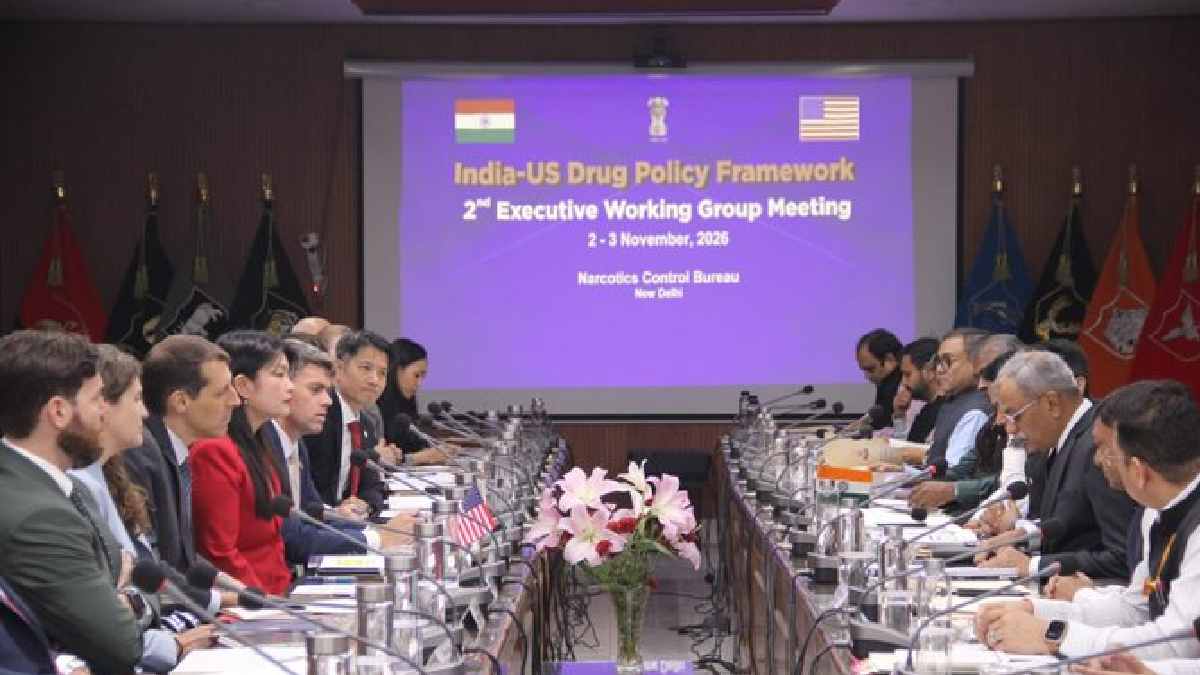
Senior policymakers and law enforcement officials from both countries met to review ongoing cooperation and identify new areas for joint action against international drug networks.
The Indian delegation was led by Anurag Garg, Director General of the NCB and the US delegation was led by Debbie Seguin Acting Deputy Director ONDCP.
In the discussions both sides reviewed their existing efforts to combat illicit drug trafficking and discussed how intelligence sharing, law enforcement operations coordination, precursor chemical control and pharmaceutical supply chain security could be enhanced.
One of the main issues was to prevent misuse and diversion of chemicals that can be used in the manufacture of synthetic drugs. Authorities from both countries agreed that these substances should be monitored so criminal organisations cannot get them through commercial supply chains.
India Vision Roadmap 2026–29 by Anurag Garg introduced India’s strategy to combat illegal narcotics activities. It has network based investigations, financial investigations, precursor control, prevention and rehabilitation components.
India also said it targets the whole ecosystem behind drug trafficking networks financiers, suppliers, facilitators and logistical networks that back illegal activities.
The US delegation also emphasised the need for international partnerships to tackle sophisticated drug trafficking organisations. ONDCP Director Sara Carter said stronger cross border cooperation was needed so that criminal networks were not able to exploit international supply chains.
US Ambassador to India Sergio Gor also stressed the need for cooperation between Indian and American law enforcement agencies. “These joint efforts are preventing diversion of illegal precursor chemicals, securing commercial supply chains and disrupting drug trafficking networks”, he said.
Both countries also welcomed several joint and national initiatives (Operation MedMax, Operation WIPE, India’s Voluntary Code of Conduct) to prevent diversion of precursor chemicals used in synthetic drug manufacturing.
The discussions also built on the progress made at the first India-US Drug Policy Executive Working Group meeting (Washington DC, January 2026). Officials reviewed emerging drug trafficking trends and ways to improve coordination in addressing new threats.
Another topic was how to reduce drug demand through prevention and sharing practices between the two countries. Both sides agreed enforcement measures need to be accompanied by broader initiatives (protection of communities; impact of substance abuse) if they are to work.
The latest meeting shows how important India-US cooperation is in international narcotics fight: stronger intelligence exchange, joint investigations and better regulation will disrupt illegal drug networks and prevent dangerous substances from reaching communities.
The renewed commitment shows their shared goal of strengthening public safety and building an international response to drug trafficking more effectively.


Comments