
Pakistan and Qatar have proposed a new diplomatic compromise to prevent a new war between the United States and Iran. The plan includes a financial commitment to hold back $6 billion in frozen Iranian cash and secret inspections of Iran's nuclear facilities.
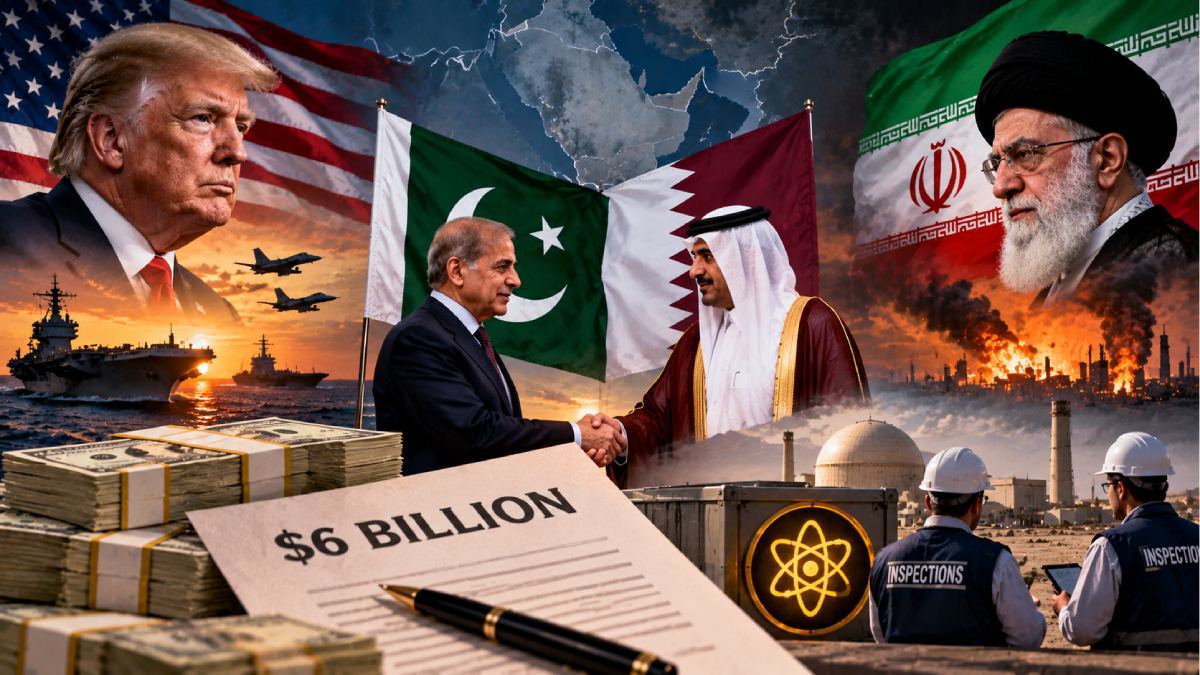
The proposal comes amid growing concerns that diplomatic efforts to resolve the conflict may collapse, resulting in a fresh round of fighting. Pakistan Army Chief Field Marshal Asim Munir traveled to Tehran on October 20 to meet Iranian officials as Islamabad intensified its mediation efforts.
According to the discussions, the proposal seeks to address two of the main obstacles to a successful deal: Iran's demand for access to its frozen money and Washington's insistence on stronger oversight of Tehran’s nuclear programme, the report said.
But the reported framework is not yet a final agreement by the US or Iranian governments. There are also signs that there are still big differences between the two sides.
What Is the $6 Billion Pakistan-Qatar Proposal?
The proposal is based on two possible concessions to bring Washington and Tehran closer to negotiations.
The first involves the interest accumulated on about $6 billion worth of Iranian money frozen in Qatari banks. Rather than releasing the entire amount, the proposal suggests Iran could obtain interest on those funds.
The second involves secret, unannounced inspections of Iranian nuclear facilities by the International Atomic Energy Agency (IAEA), the United Nations' nuclear watchdog.
The deal is said to be to provide Iran with some financial relief and to answer American concerns over Iran’s nuclear activities.
The proposal was reportedly presented to Iranian officials during Munir's visit to Tehran. Media reports also said that Washington had approved the broad outline and Tehran had responded positively in principle.
These claims are subject to confirmation. A preliminary response to a proposal does not necessarily mean that either government has accepted all its terms or agreed to implement them.
Why are Iranian funds frozen in Qatar?
The funds are part of Iranian oil revenue kept in South Korea and transferred to limited accounts in Qatar in a 2023 deal that was arranged in connection with a US-Iran prisoner exchange.
The money was available for authorised humanitarian purchases, including food and medicine, under restrictions on how it could be used. It was not intended to provide Iran with unrestricted access to the funds.
Access to frozen assets is still an issue of dispute between Tehran and Washington. Iran has repeatedly called for restrictions to be lifted and the US has maintained sanctions and financial controls against the country.
The latest proposal appears to involve a small amount of concession in terms of interest received on frozen funds versus a full release of the outstanding principal.
For Iran, such a move could bring some financial relief. For Washington, a limited financial concession could be part of a larger deal for nuclear oversight and to reduce the threat of renewed fighting.
The level of interest involved and the mechanism for releasing it have not been fully established in publicly confirmed terms.
What Nuclear Concessions are Being Discussed?
The framework of the report includes the possibility of unannounced visits by IAEA inspectors to Iranian nuclear sites.
The IAEA monitors nuclear activities and checks for compliance with applicable international safeguards. Inspections can help determine if nuclear materials and facilities are being used for declared purposes.
The proposal would be for confidential inspections to address US concerns about Iran's nuclear programme. Details of access, including the facilities to be visited and the scope of inspections, have not been publicly confirmed.
The nuclear issue has continued to be at the heart of the dispute between Washington and Tehran. The U.S. has sought limits on Iran’s uranium enrichment and stronger guarantees that Iran will not make nuclear weapons.
Iran maintains that its nuclear programme is for peaceful purposes, but its enrichment activities and restrictions on international monitoring have fuelled concerns among the US and its allies.
An inspection arrangement could give them a way to rebuild confidence, but whether it will work will depend on the level of access provided, the verification, and whether the two sides accept the results.
Why are Pakistan and Qatar leading the mediation effort?
Pakistan and Qatar have played an important role in diplomatic communication between Washington and Tehran.
Pakistan has tried to position itself as a mediator with the chance to maintain contact with both sides. Munir’s trip to Iran reflects Islamabad’s move to reopen negotiations and avoid a wider regional escalation.
Qatar has long been used as a diplomatic broker for regional disputes. Through relationships with multiple parties, it can communicate when the negotiations aren’t easy.
The proposed proposal combines these roles. Pakistan is a vehicle for high-level political engagement, whereas Qatar is linked to the financial arrangement and wider mediation efforts.
Both nations have a stake in preventing a longer-term regional conflict. Fighting would disrupt trade and push up energy prices and put pressure on countries in the Middle East as well as others.
However, mediation works only if the parties are prepared to compromise and come up with a workable framework.
Why would the plan fail?
Despite the reported diplomatic activity, there are still obstacles.
Iran wants sanctions relief
Iran has said sanctions must be dealt with before meaningful negotiations can resume. Its leadership has also called for an end to the US maritime blockade and restrictions on Iranian oil exports.
Iranian officials have reiterated these demands in talks with Munir in Tehran. President Masoud Pezeshkian said in Tehran that Washington must address its pressure and sanctions policy before negotiations can be hopeful.
This position indicates that a proposal focused on the interest of frozen funds and nuclear inspections may not be enough to resolve the wider dispute.
Washington wants more nuclear safeguards.
The U.S. has said Iran must comply with reasonable restrictions and oversight of its nuclear programme.
Any agreement would need to address the scope of inspections, the level of uranium enrichment permitted, and the mechanisms for verification. Disagreements over these conditions could prevent the reported proposal from advancing.
The two sides are not trusting one another.
Previous diplomatic efforts and ceasefire agreements have been unsuccessful in reaching a lasting solution with no lasting peace. The conflict has increased mistrust and it has become more difficult for both sides to rely on the other side’s assurances.
Iran has warned it is preparing for more US or Israeli attacks. Washington is pressing for concessions on Iran's nuclear activities.
This environment makes even a limited agreement difficult to negotiate and implement.
Could the Proposal prevent another US-Iran war?
If both sides agreed to settle on these terms, then the proposal would constitute a starting point for new diplomacy. A small financial hand-off could be made, and stronger monitoring of nuclear inspections may make room for further talks. There is a difference between reaching an agreement to discuss a proposal and reaching a deal that can delay a war.
There were reports on October 20 that a breakthrough might be possible during the week. But other accounts of the discussions noted Iran's persistent requests for sanctions relief and a lack of agreement on key conditions.
The plan reported then is still an uncertain diplomatic initiative and not an official agreement.
Even if financial and inspection proposals move forward, wider questions about the US blockade, Iranian oil exports, regional security and the future of the conflict would still need to be addressed.
What is the impact of the proposal on the world oil market?
And the diplomatic effort goes beyond a dispute between Washington and Tehran.
The conflict has raised questions about energy supplies and shipping through the Strait of Hormuz, a strategically important waterway through which a significant share of global oil trade normally passes.
If shipping and oil exports are disrupted, energy prices could increase, which could increase costs for countries with import-dependent economies. India is especially susceptible to moves in the international crude market as it imports much of its oil.
Some news of a possible diplomatic compromise helped to support financial markets and pressure oil prices on October 20. But the market reaction was less of hope and more a declaration that progress is being made than of a deal being reached.
If talks fail and hostilities flare back up, the prospect of supply disruptions and the cost of supply disruption could be felt at once. On the other hand, a credible agreement and long-lasting deal might alleviate the geopolitical risk premium in oil prices.
What is next?
The immediate question is whether Washington and Tehran will formally engage with the reported Pakistan-Qatar framework and whether the proposed concessions can be translated into an agreed negotiating process.
Further discussions would need to clarify how the interest on frozen Iranian funds would be handled, what access the IAEA would receive and which sanctions or other restrictions might be addressed.
Both sides would also need to establish a mechanism to verify compliance and to resolve disputes if either party believes the terms have been violated.
The proposal by the author is a possible diplomatic route out of the impasse, but it is not yet clear that there is going to be a ceasefire or a complete agreement.
The coming days will determine whether Pakistan and Qatar can turn the reported compromise into formal negotiations or whether disagreements over sanctions, nuclear inspections and regional security continue to block progress.
The bottom line: The $6 billion proposal is an attempt to bridge the gap between Iran’s desire for financial relief and Washington’s insistence on nuclear oversight. If it can prevent renewed fighting, both sides will have to give up.






Comments
Leave a Comment