
Sadhguru, a spiritual leader and environmental advocate, has expressed his alarm at the way soil fertility is diminishing throughout the world and warned that if we don’t take action, we will come out of this world with a lot of food and food security problems.
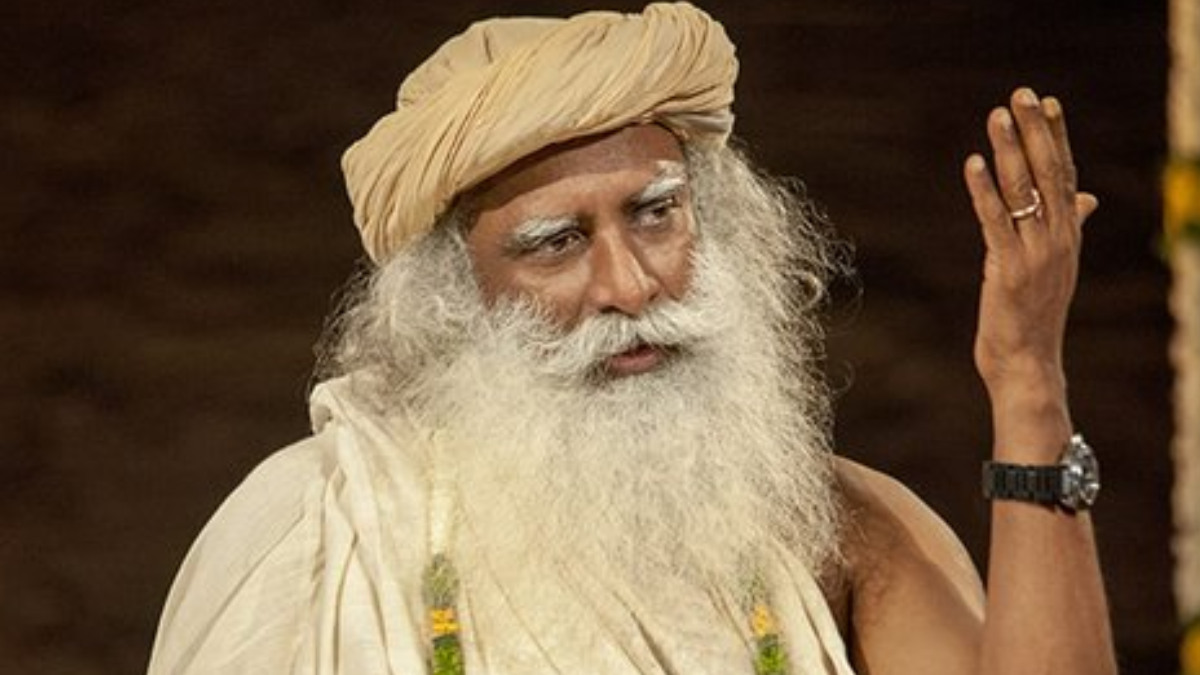
On October 7, at the ‘Building a Conscious World’ (Kuala Lumpur, Malaysia) programme, Sadhguru said we need to protect agricultural land and restore soil health. The problem, he says, is that if we do not do something about the soil degradation, we will get hungry, and we need food for the future.
Sadhguru then addressed a warning about the diminishing harvests in the world's agricultural soil. The United Nations had even said the earth might have only 60 more harvests, which he estimated to be 40-45 years, he said. This should be a serious warning to us to take agriculture and the food supply issue seriously. If governments and communities don’t act now to protect the land, he warned, soil fertility would get worse, and food production would become very difficult.
‘We Are Eating the Food of Children Yet to Be Born’
Sadhguru’s greatest message in this programme was about the responsibilities of the present generation to future generations. He warned that we are using resources that should be available for children who have not yet been born, and he explained that people were not just eating their own food and the food that was meant for their children, but, in fact, they were using up resources that future generations would depend on.
Sadhguru said people need to see the long-term effects of soil degradation and the abuse of natural resources. He said farming practices and consumption practices in the present generation are damaging for future generations to grow food. And while he said the issue is not just about environmental protection, it is also a question of humanity’s future.
Sadhguru calls for Soil-Focused Government Policies
Sadhguru said governments across the world should have policies that prioritise soil fertility and agricultural sustainability. He went on to say that protecting soil should be a key element of national agricultural and environmental policy, and that a policy-oriented approach is needed in every country to improve soil health and not let more decay lead to lower agricultural productivity.
Public participation would be necessary to achieve policy change, Sadhguru also argued. He called on citizens to constantly push governments, policymakers and agricultural authorities to give soil conservation more importance. He said people should advocate for better soil fertility and that agricultural practices are good for long-term sustainability.
Soil health, he added, shouldn’t be considered a secondary environmental issue. Rather, it should be the basis of farming, land management, economic development and environmental protection. Sadhguru urged governments, farmers, businesses and citizens to come together to address the problems of soil degradation.
Malaysia Soil Fertility Policy Shared With Government
In the programme, Sadhguru also referred to a soil fertility policy developed for Malaysia around four years ago. He said it had been prepared with the aim of improving the country’s soil health and strengthening its agricultural sustainability.
Sadhguru asked the participants to share the document with Malaysia’s Prime Minister, Agriculture Minister and Environment Minister and take the recommendations to the relevant government. He encouraged people to help ensure that soil fertility became an integral part of the country’s policymaking process.
The policy was to put into place for soil degradation and to promote better agricultural practices, he said. So for that to happen, he said government departments and the public would have to be working together to get to the root of soil conservation, and that will only happen in the future.
Soil policies developed for 192 countries
Sadhguru estimated that preparing soil fertility policies for countries around the world had taken about two to two-and-a-half years. Policies were developed for 192 countries and had to address their geographical conditions, soil characteristics, economic circumstances and agricultural practices.
He said that a uniform approach would not be suitable for every country as soil conditions and farming systems differ from one region to another. So the policies were tailored to the specific requirements of each country.
Sadhguru also mentioned that 72 to 74 countries have already accepted the policies fully or partially. He said the development and adoption of these recommendations is a critical step towards addressing soil degradation worldwide.
CEOs and Business Leaders Attend Programme
The 'Building a Conscious World' programme in Kuala Lumpur brought together several high-level business leaders and senior executives. Chief executive officers, company founders, directors and senior staff from major organisations also participated.
The discussion stressed how the environment should be addressed from all parts of society, and from the bottom up. Sadhguru said that soil conservation is about partnership between government, businesses, agricultural communities and people.
His remarks put soil fertility at the centre of talking about food production and environmental sustainability. Sadhguru was calling for collective action to solve agricultural land problems by calling on governments to put in place policy and for citizens to push for action.
The central message of his speech was that protecting soil today is critical to ensuring food access in the future. Failure to do so could endanger future generations, he said, and so it is vital we do so right now to restore soil fertility. His appeal was to governments, policymakers and the public to see soil health as a collective responsibility and as the bedrock of well-being over the long run.





Comments
Leave a Comment