
The proposed increase in milk prices in Karnataka has triggered a warning from the hotel industry, with the hotel association saying that higher milk costs may force restaurants and eateries to revise the prices of tea, coffee and several food items.
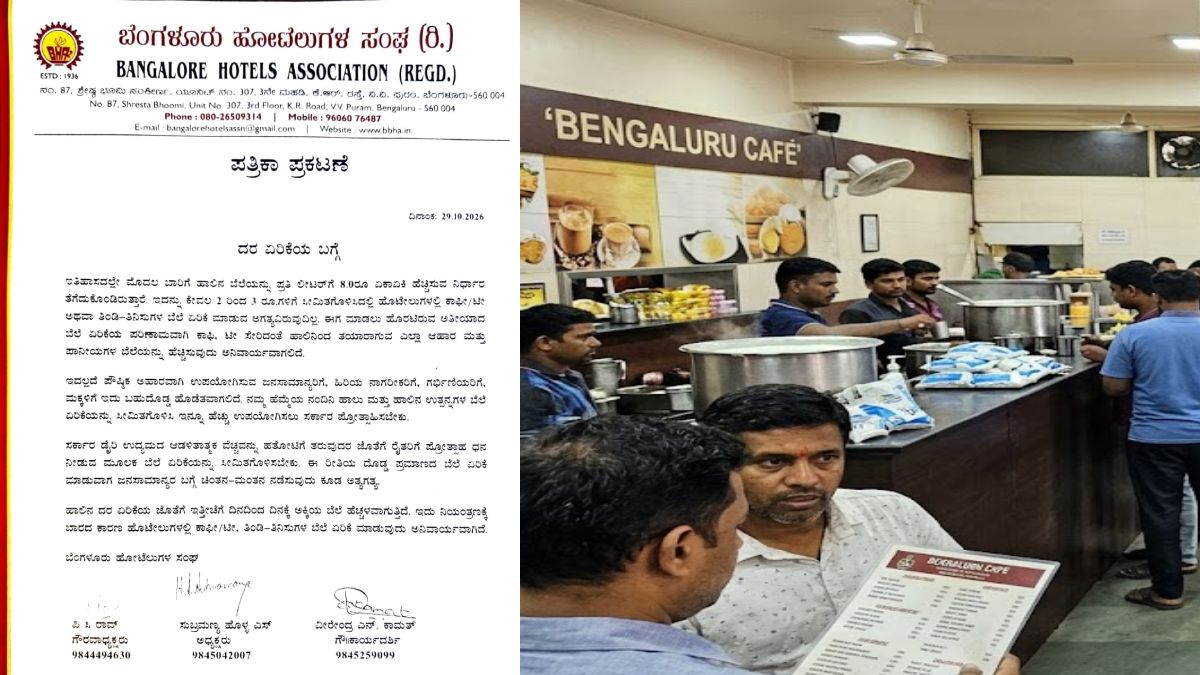
The hotel association has been asking the state government to reconsider the proposed hike, warning that a steep increase would put more pressure on hotel operators and eventually customers. The ultimate impact on consumers will depend on the extent of the milk price revision.
According to the hotel association, a small increase of ₹2–3 per litre would be fine, but a larger hike of ₹7–8 per litre would be hard for hotels to bear. Milk is a fundamental ingredient in many common beverages and food preparations provided by hotels, restaurants, bakeries and small eateries. Tea and coffee are daily foods for the vast majority of customers. The cost of milk will affect the operating cost of shops which sell these products in large quantities.
The association has said if the government agrees to a large increase in milk prices, hotels will have little choice but to modify their menus. Tea and coffee prices could be among the first to suffer because milk is a key ingredient in their preparation.
Other milk-based beverages, sweets, desserts and certain foods could also rise in price depending on how much of the additional cost businesses can absorb. But the warning from the association does not mean every hotel will immediately increase prices. It is up to individual establishments to decide on their costs, margins, as well as how the market is in place.
For hotel owners, the price hike will be one step forward and a step back in terms of the cost of cooking gas, electricity, staff salaries, rent and other raw materials to pay for. Milk is routinely used in commercial kitchens, and even a small increase can be significant for operators who buy huge quantities of it every day.
Smaller hotels, tea stalls and local restaurants are especially susceptible to rising input costs, as they run with less profit margin. If milk prices increase greatly, these businesses will need to price differently in order to remain in business.
The association has recommended that the state government re-examine the hike before deciding. The hotel industry says that a small increase would be easier for the sector to manage, with a price increase of ₹7 to ₹8 per litre. In a larger sense, the industry is warning that changes in basic commodity prices have a big impact on businesses, not just in dairy.
The implications are not limited to the price of milk bought for household consumption; consumers will face more than that. People who regularly purchase tea, coffee, breakfast and snacks from hotels also could be paying more for their breakfast and snacks if the businesses pass on their costs. Students, office workers, commuters and other customers who depend on cheap restaurant meals may suffer the most if menu prices rise. The actual increase will depend on the final price of milk and the specific pricing policies of hotels.
The government will need to balance this against dairy farmers’ interests, the financial state of milk producers’ cooperatives, and the cost of milk to consumers and businesses. While higher procurement prices may be intended as a way to support farmers, a rise in retail prices can be a blow to household budgets and businesses that depend on milk consumption.
At present, the hotel association's statement is a warning of the possible impact of such a large milk price hike, not an affirmation that tea, coffee and other menu prices have already increased. The government's final decision will be of interest both to consumers and hotel operators. If the proposed increase is approved at the higher level, hotels will need to rearrange prices to absorb some of the extra cost. What will happen to milk prices and hotel rates if the government finally makes it public, and how much will it cost on each side?






Comments