
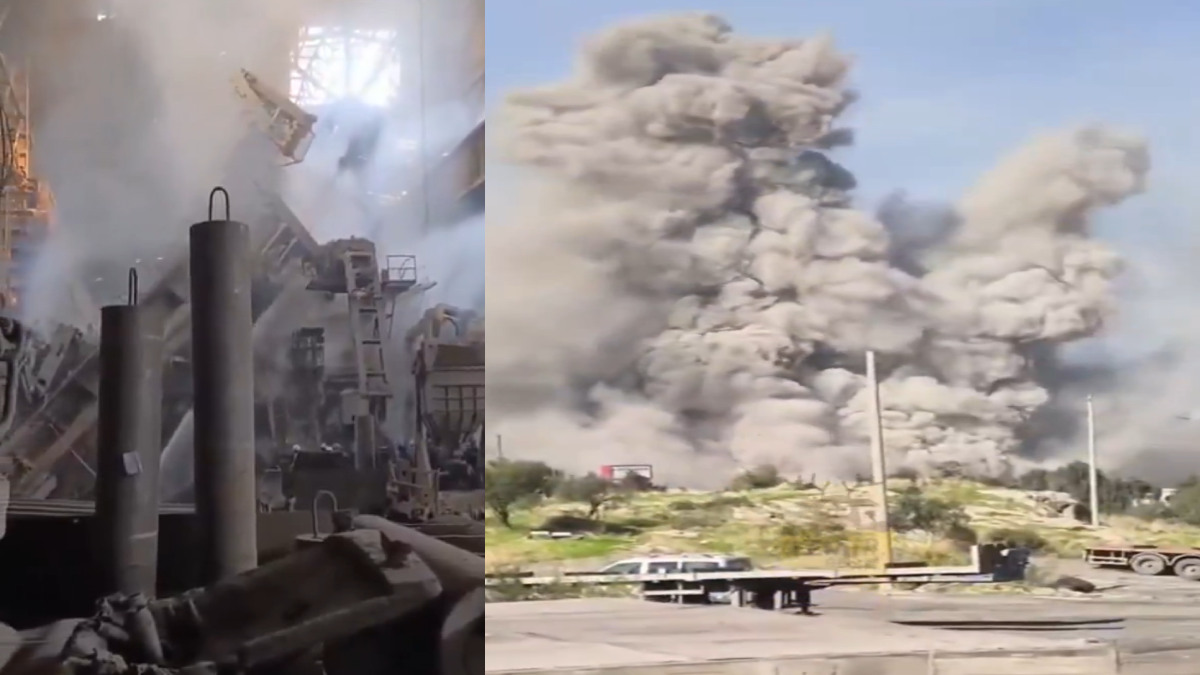
An explosion at the HABAS iron and steel plant in western Turkey’s Izmir province has killed 17 workers and left several others seriously injured. The massive industrial accident took place on Monday afternoon at the company’s steel production facility in Aliağa district (60 kilometres north of the port city of Izmir).
It has raised concerns over safety standards at factories and working conditions there. Initially, 16 people were reported dead, but later another critically injured worker died at the hospital after being treated for his injuries.
According to reports, the explosion happened when a boiler used in molten steel casting was replaced. The scale of the disaster raises serious questions about workplace safety arrangements and how hazardous operations are handled.
According to preliminary reports and eyewitness accounts, a giant overhead crane collapsed during the boiler replacement operation and fell into a large industrial furnace. The workers were pouring and handling molten steel at the time. One of the workers who witnessed the accident, Yasin Çetiner, said that a cable of the crane broke and about 120 tons of boiling molten steel fell on the furnace area.
Chain reaction inside the industrial facility started then. Water in the water-cooled panels of the furnace came into contact with extremely hot molten steel (hydrogen gas is believed to have been involved in the explosion). The factory was destroyed by blast, and several workers were seriously injured.
The explosion was so strong that workers and people around them were violently shaken as if by an earthquake. Another eyewitness, Deniz Ülker, said afterwards the situation looked like the apocalypse: “The factory roof was melting, burning stuff came down like water”.
The description shows how intense the explosion was (it’s described as ‘like a bomb’) and how dangerous conditions were inside the steel manufacturing facility; panic among employees and emergency responders too, as they tried to deal with the aftermath of the blast and help trapped or injured people.
Public anger over alleged safety breaches at the HABAS steel plant has been stirred up. Questions have been raised about maintenance of heavy industrial equipment, crane safety, boiler replacement procedures and precautions taken when handling extremely hot molten steel.
The failure of a crane cable is said to be the main issue in discussions around the accident. Workers’ safety organisations and activists reportedly criticised factory management, saying industrial facilities must follow strict safety protocols (heavy machinery and high-temperature materials involved). The tragedy has also revived doubts about whether adequate inspections and preventive measures were taken before the accident happened.
The tragedy has also triggered an emotional protest outside the factory. A man who lost his brother in the explosion set himself on fire outside the industrial unit as a public protest against alleged safety failures. People present at the site saw the shocking incident and rushed to help him. He was taken to hospital for treatment. His protest showed the anger and frustration of families whose loved ones died in the industrial disaster. Relatives of workers killed in the blast are demanding accountability from the management of the factory over circumstances leading to the explosion.
Meanwhile, tensions rose when two representatives of the Aegean Workers’ Collective tried to issue a statement condemning alleged safety violations. Police arrested them outside the hospital, reports said. The organisation has severely criticised factory management for the incident.
Spokesperson Oktay Türk said the tragedy was the result of HABAS management's greed for profit. It reportedly demanded accountability and stronger protection for industrial workers. Arrests have added another dimension to the controversy as well: concerns have been raised about how labour representatives are being treated when they try to ask questions about workplace safety.
The explosion also brought the factory’s previous accident record into question. 11 workers have died in accidents at the same facility over the past 10 years, media said. Worse still is that the latest disaster was reported as the third major accident at the plant in three weeks.
These figures have fuelled criticism of safety arrangements at the factory and questioned whether corrective measures were taken after earlier incidents. Labour leaders and families affected by the tragedy are demanding a full inquiry into safety arrangements at the factory to prevent such tragedies from happening again.
Molten steel accidents are especially dangerous because of the extremely high temperatures involved and violent reactions when molten metal comes into contact with water. Steel mills need special safety systems, cranes and lifting equipment to be inspected regularly, and furnace maintenance and replacement operations to be carried out in a strict manner, etc.
Any mechanical failure during such processes can have catastrophic consequences for workers operating nearby. The crane cable failure and explosion reported here therefore emphasise preventive maintenance and workplace safety standards in heavy industries.
The 17 deaths have made the HABAS factory explosion into a major industrial tragedy in Turkey. Injured workers are still being treated, and questions about the crane collapse, the alleged hydrogen explosion, and the factory’s previous accident history remain central to the controversy. The incident has reignited calls for tougher safety standards in industry, transparent investigations and accountability from factory management. An investigation will be needed to establish exactly what happened and whether negligence or safety violations caused the disaster.



Comments