India is emerging as one of the most significant testing grounds for understanding how artificial intelligence is transforming employment, with new data suggesting that the technology is creating more jobs than it is eliminating.
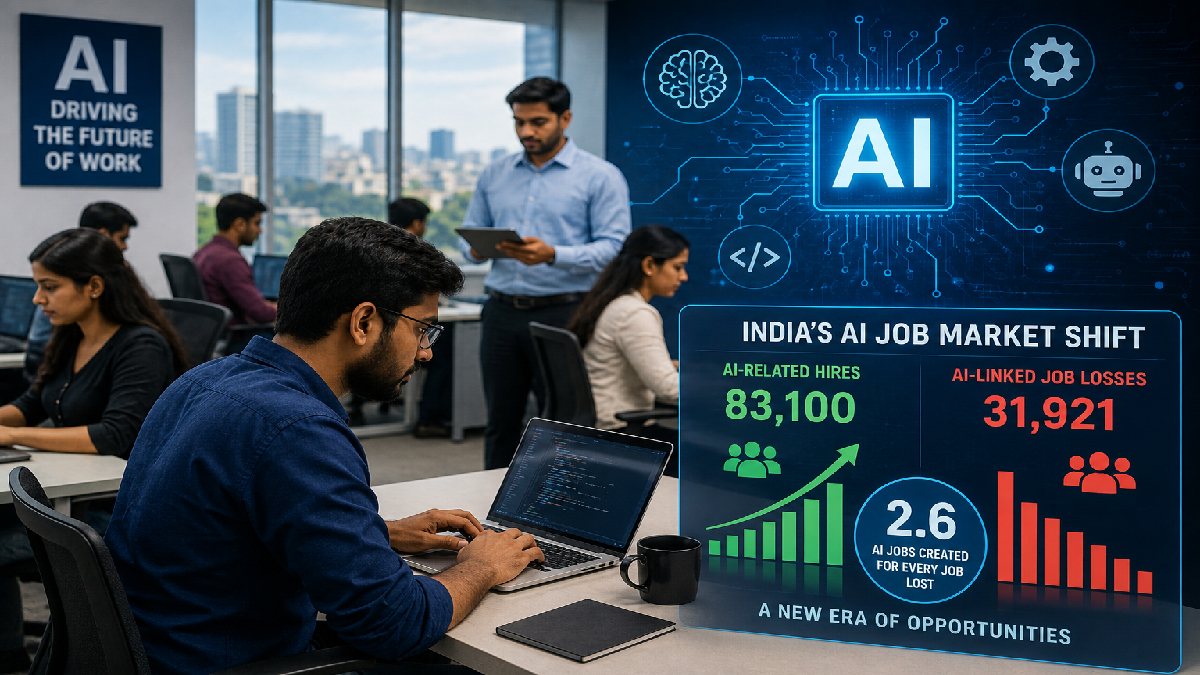
According to global financial services firm Nomura, India recorded more than 83,100 AI-related hires in the first quarter of 2023 (as compared to 31,921 layoffs and attrition cases linked to artificial intelligence). And for every job lost or impacted by AI, about 2.6 new AI-related jobs were created, the figures show.
The findings are more hopeful than anticipated because of widespread fears that artificial intelligence will cause major job losses across all sectors. AI is not only reducing the demand for some roles (for example, in technology and support services), but in fact it is creating a substantial demand for new skills and for specialised jobs.
Nomura economists Sonal Varma and Si Ying Toh examined 69 employment-related cases across Asia between 2022 and August 2026 and found that India experienced the greatest absolute impact from AI-related hiring and job displacement among all countries examined. The economists identified India as “ground zero” for understanding AI’s impact on employment due to its huge workforce and heavy reliance on information technology services and business process outsourcing (BPO) industries.
For decades, India's competitive advantage in the global services sector has been its large pool of educated and skilled workers. For over a decade now, companies have been relying on Indian professionals for customer support, software testing, data processing, back-office operations and a wide variety of technology services. But artificial intelligence is altering many of those traditional employment models.

The report also found that most of the job losses were in customer support and regular service roles where chatbots and automated systems are replacing human workers. And then there are so many companies hiring thousands of professionals with deep experience in AI, machine learning, data science, cloud computing, and AI implementation. This is a change in the way jobs are being replaced by AI; AI is not only reducing jobs but also changing the skills that companies want to hire.
But the transition is not without challenge. New jobs are often technical in nature and require specialised training and skills that many workers who are displaced don't have. A customer support executive who is automated cannot automatically slide into an AI engineering position. And hiring figures for all can mask the challenges faced by those who are doing the job that automation has taken over.
The situation is even more important for India because every year millions of young people enter the workforce. Graduates in India start working in entry-level jobs and have limited experience and career paths. If AI makes this a hard job to do, then new job prospects will be more difficult to come into the job market.
Nomura describes the emerging scenario as a two-tier labour market. On the one hand, demand is increasing for experienced professionals who know AI technologies and their business applications. On the other hand, there is less demand for entry-level and repetitive work as automation becomes more sophisticated. And so reskilling and upskilling programs are needed for workers to adapt to changing workforce requirements.
The trend extends beyond India. In Asia, Nomura found around 130,758 AI-related hires compared to 60,654 job losses because of the technology. More than 90% of AI-related hiring was within the technology sector, and nearly 60% of job losses were in financial services and other industries that are at high risk of automation.
Experts contend that the report does not represent all AI jobs that have been created or lost, since it is based on cases rather than on a comprehensive labour market survey. But it is an undeniable trend: artificial intelligence is transforming jobs rather than killing them.
How well is it possible for Indian workers to adjust to these changes in the long term? If they learn new AI-related skills and businesses continue investing in advanced technologies, the country will become a global tech hub as well as the world’s next tech capital. The challenge will be to make sure that those who are cut off from the jobs that are lost and those who are fired will find a place in the new opportunities in the AI-driven economy.
But the latest data point out that India is not simply substituting human workers for machines. The way work is changing now is that it’s changing in how we do work, how jobs are being created and how people are always needing new skills and so on.