The Expectation of Extreme Longevity
The expectation that humans would survive 150 to 200 years used to sound like a stretch of science fiction. But new advances in biology, genetics and medicine have sparked significant talks among scientists about extending the human life span far beyond what we see today. Now no one has established that humans can live for 200 years, but new research suggests the limits of the human lifespan may change in the future.
The Current World Record of Human Lifespan
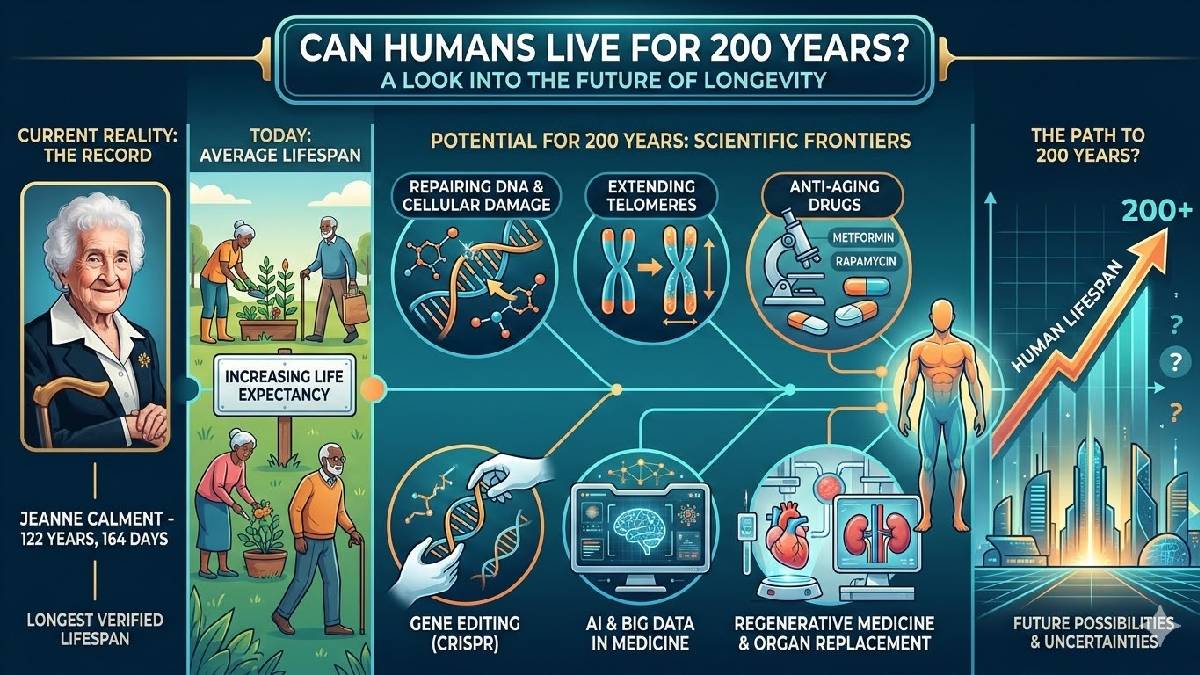
Jeanne Calment, a French woman who lived 122 years and 164 days, is the longest verified human lifespan. Her life has been declared the longest confirmed human lifespan in history and scientific record. For all this progress, no one has yet achieved this record.
Why Some Scientists Think Humans Could Live 200 Years
Biology of Aging: What We Know
Today’s scientists are convinced that aging is not just natural, but also biological: It’s a process that, they think, is possible to slow down or even alter. It also means that, according to that research, aging is primarily caused by damage to DNA and cells. Some scientists are tracking ways to repair or slow this harm. Several researchers are looking for ways to change DNA mutations in cells and aging mechanisms that delay these things. One of the most widely publicized aging researchers is David Sinclair, who believes aging might be a disease in the future.
Telomeres, Cells, and Aging
At the ends of our chromosomes are structures known as telomeres, which shorten as a cell divides. When they are too short, cells won’t function properly. Scientists are investigating if guarding against or restoring telomeres can slow aging and extend lifespan.
Anti‑Aging Drugs
Scientists are also exploring drugs that might slow aging. There are two medications scientists are looking into:
- Metformin – used extensively for diabetes treatment, but under examination for possible life‑extending effects.
- Rapamycin – suggested, in animal studies, to assist in aging functions. But there are still large human studies going on.
Gene Editing Technology
Contemporary genetic tools might allow scientists to fix or alter genes linked to aging and disease. One of the most appealing technologies involves CRISPR gene editing which allows researchers to make precise changes to DNA. Maybe one day, it could potentially prevent disease from developing in old age.
AI in Medicine
AI is fast tracking medical discoveries. Using massive data sets, AI can sift through this enormous amount of information to detect trends in diseases and make new treatments much more quickly than ever from the sea of disease material. However, it also aims to be more specific in their approach and method for tackling problems of disease prevention. As Google teams up with big manufacturers like Calico, companies such as Calico are pouring billions of dollars into research to add longevity.
Regenerative Medicine and Organ Replacement Research
A new area that I am excited about is through regenerative medicine, which means scientists build new tissues or organs from stem cells. Eventually, damaged organs could be replaced with healthy replacements — potentially long‑lived, potentially giving people a much longer life.
Why It Is Still Uncertain to Live 200 Years
While some exciting scientific advances are coming, there is much to concern about as biological limits exist on the human lifespan. Some scholars suggest that humans actually live between 120 and 125 years, so to top 200 would necessitate discoveries that are, I would argue, way beyond what medicine can bring to this day.
Challenges include:
- The accumulation of cellular damage.
- Age‑related diseases.
- Limits of human biology.
The Future of Human Longevity
Living 200 years is still a mystery, but scientists do think that one thing: human life expectancy will probably continue to increase. We could have over the next several decades:
- More humans living more than 100 years.
- Better therapies for age‑related diseases.
- Technologies that slow aging.
The idea that humans will live for 200 years is only in theory useful but genetic/medical/technological research is advancing so quickly. While we may not see that day when we reach this target very soon, the future of longevity for human beings could be far longer than we thought it would be.