Laparoscopic kidney donation: Making organ donation safer and recovery faster. IntroductionLiving kidney donation has become an increasingly important way to save lives. Each year more Canadians make the thoughtful choice to donate one of their kidneys to a family member or close friend suffering from kidney disease.
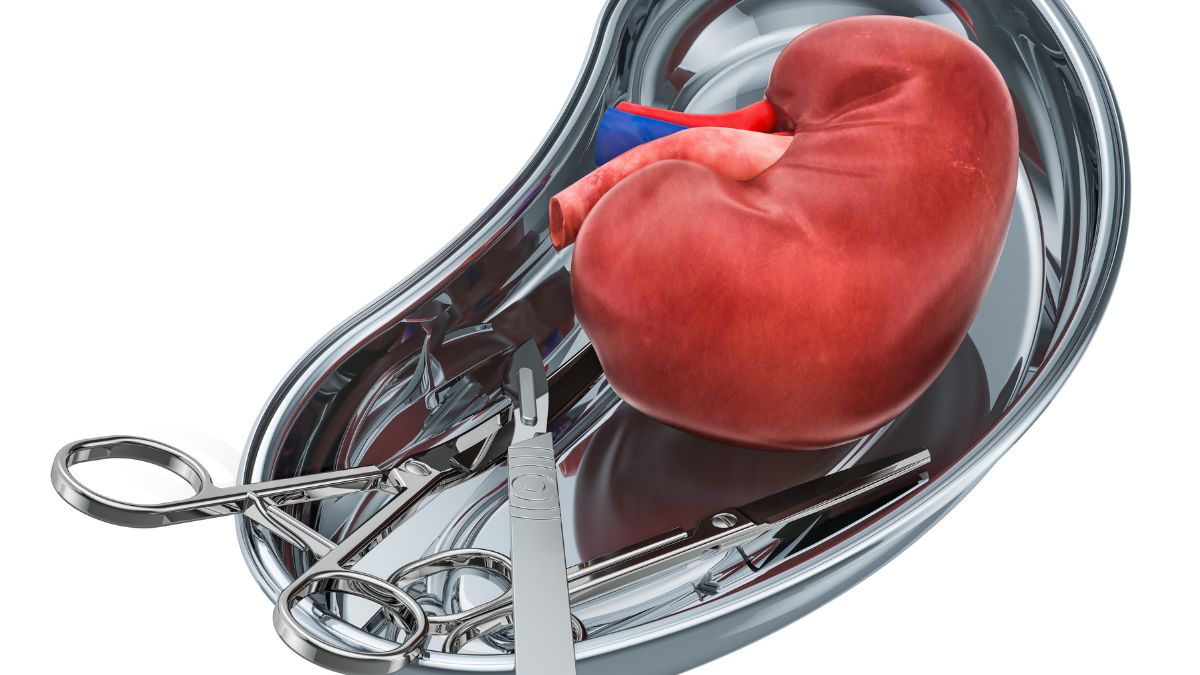
Although this selfless act offers recipients the chance to live again, many potential donors have been worried about the pain, recovery time, and surgical risks associated with kidney donation.Fortunately, the development of minimally invasive surgery has transformed the donation process. Laparoscopic kidney donation, also known as keyhole surgery, has made organ donation less invasive and less painful for donors (i.e. less time between diagnosis and recovery).
Traditional Kidney Donation Surgery.
For many years kidney removal required a major surgical procedure involving a large incision across the donor's side.
Traditional surgery typically involved:
A 20 to 30 centimeter incision. Cutting through two or three layers of muscle. Removing about 10 centimeters of rib. Significant postoperative pain. Noticeable scarring. Several months of recovery.Such physical obstacles understandably discouraged some people from becoming living kidney donors even though they have a desire to help a loved one.
What is laparoscopic kidney donation?
Laparoscopic kidney donation is a minimally invasive surgical technique that allows surgeons to remove a donor kidney through much smaller incisions.Instead of one big opening, surgeons make several small "keyhole" incisions in the abdomen.
During the procedure:
The abdomen is gently inflated to create working space. A laparoscope (a tiny fiber-optic camera) is inserted through one incision. Special surgical instruments are inserted through the other small openings. Blood vessels and the surrounding tissue are carefully separated. The kidney is removed through a tiny incision, usually 8 to 10 cm long, near the groin.This advanced treatment is able to minimize the trauma to muscles and surrounding tissues.
Benefits of Keyhole Surgery
According to Dr. Joseph Mamazza, lead surgeon and Medical Director of the Minimal Access Therapeutic Program at St. Michael's Hospital in Toronto, laparoscopic surgery has many important benefits over traditional kidney removal procedures.
These benefits include:
- Smaller surgical incisions
- Reduced postoperative pain
- Less muscle damage
- Lower risk of infection
- Less visible scarring
- Shorter hospital stays
Faster return to normal activities. For many donors, recovery takes only days rather than months.
A Life-Changing Gift
Glenn Collins of Southern Alberta is an example of a laparoscopic kidney donation success story.In an attempt to save his elder brother Michael, who had developed kidney disease after diabetes, Glenn offered to be a living kidney donor.Michael had been diagnosed in 1997 with kidney disease and because of his age and medical history, he was considered an unlikely candidate for a deceased donor transplant.Glenn learned about laparoscopic kidney donation and contacted a transplant clinic to decide whether he could donate.After extensive medical testing he was found to be a suitable donor.
"It was an easy decision because Michael needed help," Glenn said. “Anyone in our large family might have offered, but I was the youngest, healthiest and fortunately qualified.”A Surprisingly Quick Recovery.Glenn’s greatest concern before surgery was the recovery process.Much to his surprise, it was far easier to accomplish.The day after surgery Glenn was already walking the hospital corridors to visit his brother.
Reflecting on the experience he said:
"If it wasn’t for the scar, I would never have believed I’d had surgery."His experience illustrates one of the greatest benefits of laparoscopic kidney donation—to return to normal life much earlier than traditional surgery.
What is living kidney donation?
In most cases living donor kidneys will have better outcomes than kidneys donated after death.
Research has shown that kidneys from living donors often:
- Function immediately after transplantation
- Last significantly longer
- Reduce waiting times for recipients
- Improve long-term survival rates
A living donor kidney can last almost twice as long as one obtained from a deceased donor in many cases.These improved outcomes put living donation at the forefront of transplant medicine.This is the growing popularity of living donation.Living kidney donation is increasing worldwide.Today, almost 40 percent of kidney transplants are performed with living donors.As less invasive means of operation are made available, people will be more likely to donate.
We have seen reduced pain, shorter recovery time, and lower complication rates have helped to remove many of the fears that once put people off in the donor pipeline.Advancing Organ Donation Through Innovation.The world's first laparoscopic live-donor kidney removal was successfully performed in February 1995 at Johns Hopkins Hospital in Baltimore.Since then the procedure has become more and more common in transplant centers around the world.In Canada, organizations such as the Kidney Foundation of Canada have been instrumental in research on laparoscopic surgical methods and transplant success.
The Role of The Kidney Foundation of Canada.
As Canada’s national organization for kidney health, The Kidney Foundation of Canada provides essential services including:
- Funding kidney disease research
- Supporting innovation in transplant medicine
- Providing education for patients and families
- Offering emotional support services
- Advocating for access to quality healthcare
- Promoting awareness of organ donation
The Foundation still believes in organ donation as a way to save lives and to make kidney care safer for Canadians.Laparoscopic kidney donation has transformed the experience of living organ donation. Keyhole surgery can provide donors with a safer procedure, less postoperative pain, less scarring, and a much quicker recovery.
A living donor kidney provides longer-lasting function as well as a much better quality of life for the recipient.As surgical technology improves and awareness of organ donation increases, more people can feel empowered to make the extraordinary decision to give the gift of life. Living kidney donation is by far the most generous thing one can do for another person and with a new laparoscopic approach it is easier and more accessible than ever before.