From what May 2026 looks like to skywatchers and astronomy fans: a celestial spectacle seldom seen before, named a “Blue Moon.” It might convey a change of complexion, but full moon definitions and definitions of moon masses are, in fact, infinitely more about the time lag between the red to the grey and so on.
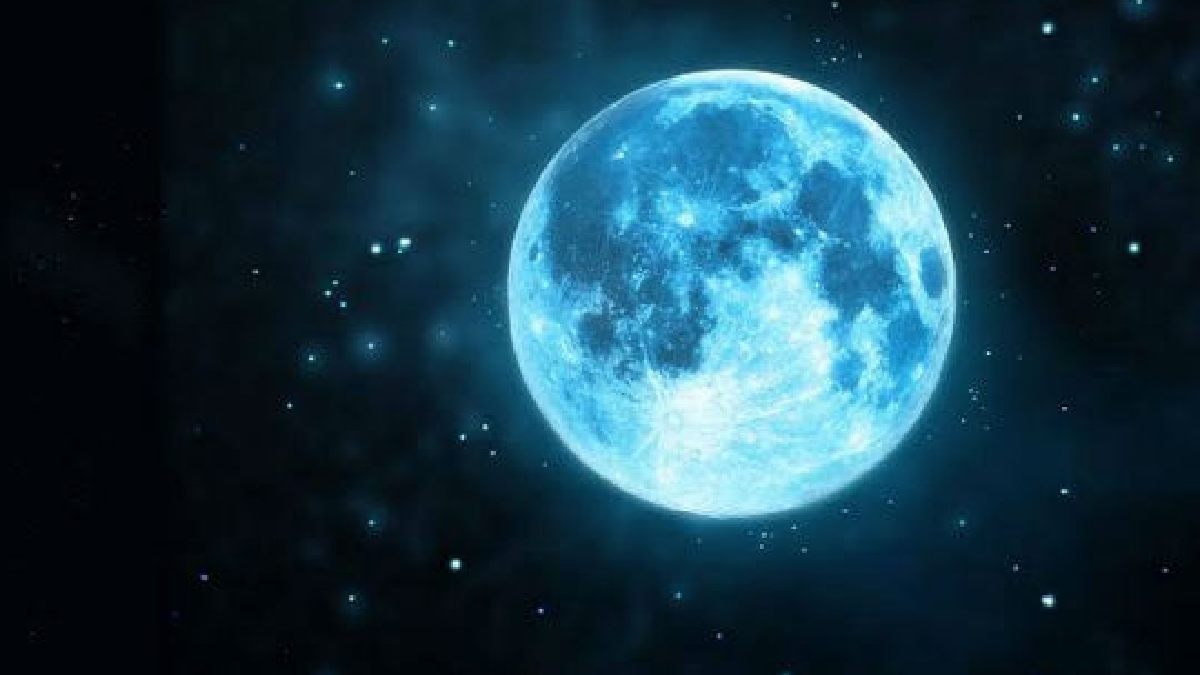
What is a Blue Moon?
Not all Moons are going to be blue; a Blue Moon does not mean a blue Moon. No, it is, of course, an event that happens at a definite point on the lunar calendar; rather, two of the most frequently published definitions of Blue Moon are:
- a seasonal Blue Moon, the third full moon of a season with four full Moons.
- The second full moon of a calendar month is a Blue Moon.
This event in May 2026 can be considered seasonal, so it is a truly unique astronomical event.
Date and Timing in India
As long as the weather is right, then May 31, 2026, would be the date of the Blue Moon in May 2026 – eg, full eclipse over India with panoramic view across the state of Bengaluru, Delhi, Mumbai, Chennai and the like.
The event is not too late either at IST, a perfect time for stargazers to check the Moon for its full glowing phase. For optimal viewing, they recommend enough time to look up at the eastern horizon shortly after sunset, when the Moon appears larger because of a phenomenon called the “moon illusion.”
Why is the Blue Moon Special?
Blue Moons are considered rare because lunar cycles match up with the Gregorian calendar. They happen every 2.5 to 3 years on average, so this is a term we use to describe things: 'once in a blue moon' means it’s rare.
Although this isn’t a very common thing to see, the Blue Moon, in other ways, is like any full moon: bright, round, beautiful. But its meaning isn’t so much in its appearance as in the never-realised, never-measurable timing in which it seems to count.
Cool Stuff About the Blue Moon.
- The moon is neither blue nor only a symbol.
- 'Blue Moon' has been around for thousands of years and remains one of the modern-day fads.
- Under unusual circumstances in the atmosphere after volcanic eruptions or wildfires, for instance, the moon will tint blue against the particles suspended in the air, so the Moon can tint blue against the atmosphere, etc.
- The lunar cycle takes about 29.5 days (or lunar phase cycle, more properly known), which is why there are so many interludes resulting in blue moon events.
Best Ways to Watch
To enjoy the blue moon:
- Choose a space with the least light pollution possible.
- Look at it for the first time either with binoculars or a telescope.
- Look up some weather reports from that area for clear skies.
- Photographic Coverage at the Moonrise.
Significance to Cultures and Astronomical Sciences
As far as most of the world knows, full moons are symbols of significant cultural and religious importance. Because the Blue Moon doesn’t have any real impacts on Earth, it remains a phenomenon of public interest due to its rarity. A straightforward view of celestial phenomena can tell you so much.
It represents a microcosm of how celestial mechanics can be both inevitable and exciting, manifesting in radically different ways in the sky.
Final Thoughts
A Blue Moon in May 2026 is when you peer up at the night sky and get to see the rarefied lunar cycle. May seems like just the average full moon, but in its timing, it’s a nice time to search for.