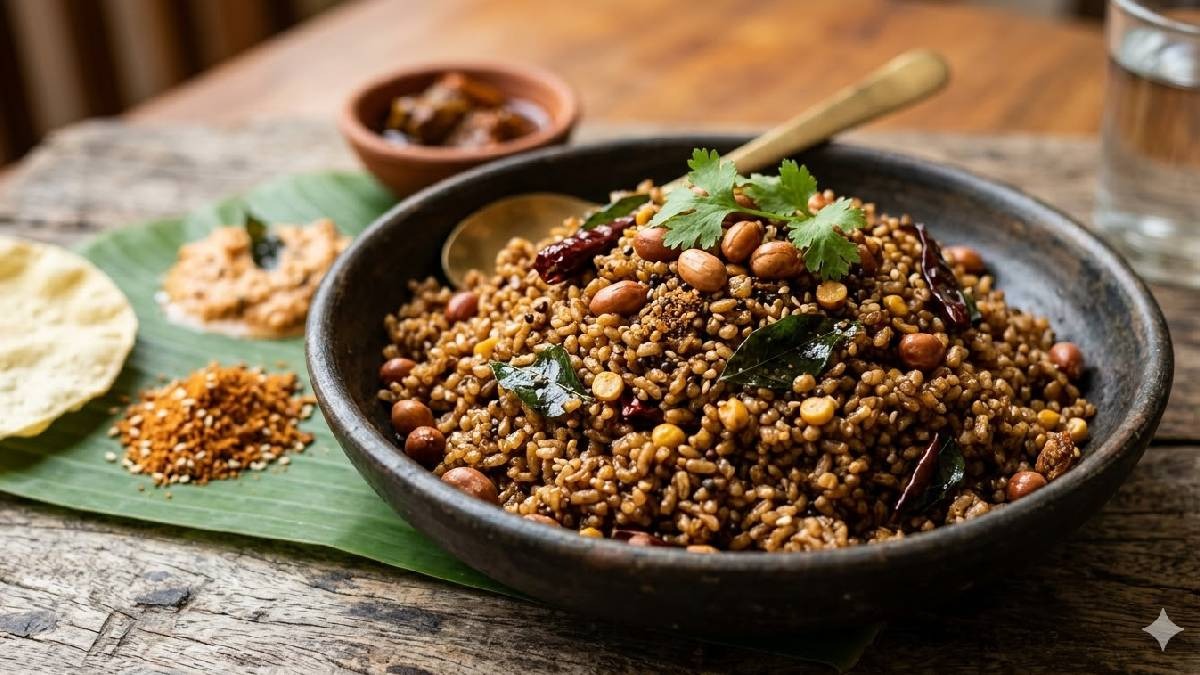
Puliyogare, also known as tamarind rice, is one of the most loved dishes of South India. It is tangy, spicy, and slightly sweet, making it a perfect balance of flavors. More than just food, Puliyogare carries cultural and spiritual importance. It is often served as prasadam in temples, offered during festivals, and cooked in homes as a comfort dish. This rice preparation has stood the test of time, connecting generations through taste and tradition.
History of Puliyogare
The word Puliyogare comes from two Kannada words: puli meaning tamarind and ogare meaning rice. Historical records suggest that tamarind rice was prepared in temple kitchens as early as the 11th century. In Karnataka, the Melukote temple is famous for its Iyengar‑style Puliyogare, which is considered divine prasadam.
Over time, Puliyogare spread across South India with regional variations. In Tamil Nadu, it is called Puliyodharai, in Andhra Pradesh Pulihora, and in Kerala Puliyodarai. Each version has slight differences in spices and preparation, but the soul of the dish remains the same, rice flavored with tamarind paste and aromatic spices.
Why Puliyogare is Special
Puliyogare is not just about taste; it is about practicality and tradition.
- Travel‑friendly: It stays fresh for hours, making it ideal for journeys and picnics.
- Festival food: It is commonly prepared during Ugadi, Ramzan, and temple feasts.
- Balanced flavors: Tamarind gives sourness, jaggery adds sweetness, peanuts bring crunch, and spices add depth.
- Cultural symbol: Sharing Puliyogare during festivals represents unity and togetherness.
Authentic Puliyogare Recipe
Ingredients (for Tamarind Paste or Gojju):
- Tamarind – 1 cup (soaked in hot water)
- Jaggery – ¼ cup
- Puliyogare powder (roasted spices: sesame, coriander, cumin, red chillies, coconut, curry leaves, hing, turmeric)
- Oil – ½ cup
- Mustard seeds – 1 tsp
- Peanuts – ¼ cup
- Cashews – 2 tbsp
- Urad dal – 1 tsp
- Chana dal – 1 tsp
- Curry leaves – few
- Salt – 2 tbsp
Preparation:
- Puliyogare Powder: Dry roast sesame, methi, mustard, pepper, cumin, coriander seeds, curry leaves, red chillies, and coconut. Grind with hing and turmeric to make a fine powder.
- Tamarind Paste (Gojju): Extract tamarind pulp, boil with jaggery, turmeric, and salt until thick. Add puliyogare powder and tempering of mustard, peanuts, dals, cashews, and curry leaves. Cook until oil separates.
- Mix with Rice: Add 2–3 tablespoons of gojju to 4 cups of cooked rice. Mix evenly. Garnish with fried peanuts.
Tips for Perfect Puliyogare
- Use aged tamarind for deeper flavor.
- Balance tamarind and jaggery for the right sweet‑sour taste.
- Prepare the gojju in advance; it can be stored for weeks.
- Mix rice only after it cools slightly to avoid mushiness.
- Always use fresh curry leaves and roasted peanuts for aroma and crunch.
Puliyogare in Everyday Life
In Karnataka, Puliyogare is often the first choice for temple offerings. Families prepare it during festivals and special occasions. It is also a popular dish for travel, as it does not spoil quickly. The dish represents simplicity, yet it carries a depth of flavor that makes it unforgettable.

Puliyogare is more than tamarind rice; it is a dish that carries history, culture, and devotion. From temple kitchens to family dining tables, it has remained a symbol of South Indian tradition. Its tangy taste, balanced with sweetness and spice, makes it a timeless recipe. Whether enjoyed during festivals, journeys, or as a daily meal, Puliyogare continues to remind us that food is not just about filling the stomach, but also about connecting with heritage and community.