In Tiruvannamalai’s temple town, a very peculiar and enigmatic woman, known as “Toppī Amma,” has become a focus of extreme devotion and heated arguments.
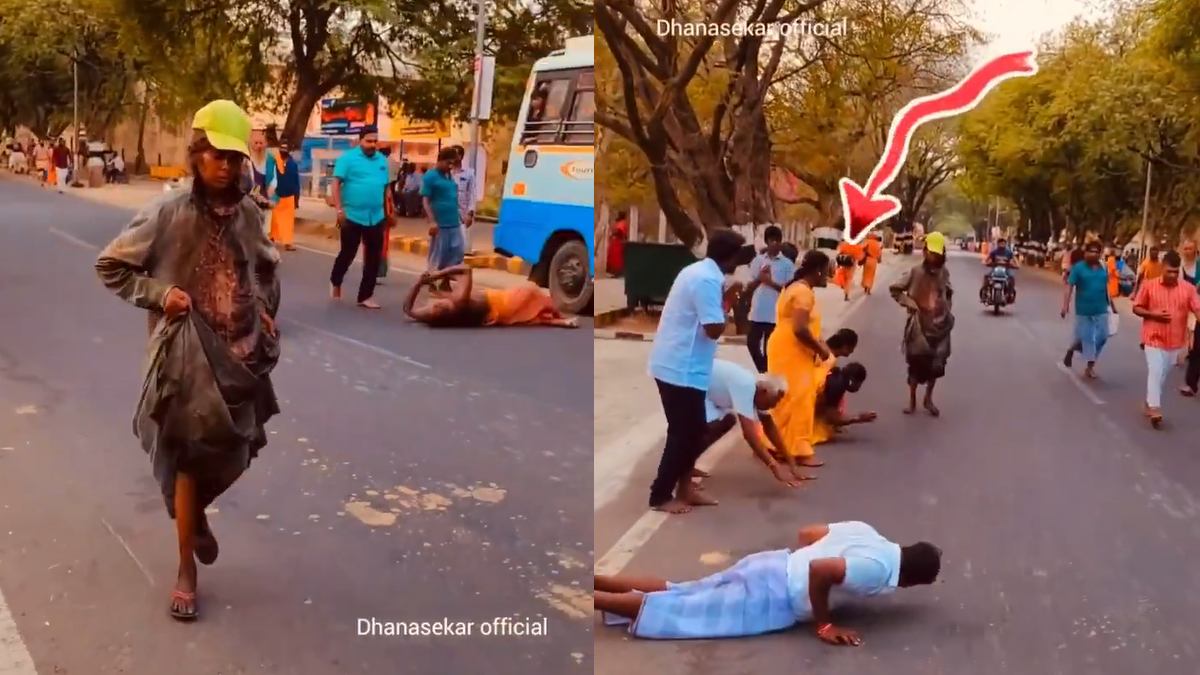
Dressed in shabby clothes and often seen wearing a cap, Toppī Amma has drawn a generation of people who like to think about her as somebody who is not just normal. To some, she is a saint or Siddha, someone who would like to believe in the spiritual life even though no one has seen her.
They crowd around her every day, leaning in to kiss her feet in reverence. She also serves some of her leftover coffee or food as prasad in hopes that it will also be spiritually beneficial. For them, Toppī Amma represents faith that transcends rationale it’s the very manifestation of a God-like existence in us.
However, there is also not everybody who sides with this view.
Faith vs Concern
The local and social commentators have raised serious doubts. They believe that the woman is suffering from serious mental health issues and that her experience is misunderstood or even romanticized as spirituality.
Those critics say blind devotion can be hazardous not only for the individual at the focal point but the whole society. Treating a potentially vulnerable person as a divine figure may prevent them from receiving the care and support they genuinely need.
Tiruvannamalai, Toppi Amma (Thoppi Amma) — a woman in shabby clothes and a cap — is worshipped by many as a living saint or Siddha.
— ThamiZh (@ThamizhTharmar) March 31, 2026
Devotees crowd around her, touch her feet, and rush to drink her leftover coffee or prasad, believing it sacred.
Others see a woman likely… pic.twitter.com/ua6S1PgEzU
The Role of Belief Systems
Tiruvannamalai is one of the most important spiritual places for pilgrims and seekers who come for inspiration. In that world, unusual spiritual figures are not unknown; faith in some cultures tends to transcend a narrow and generic model of meaning and the traditional world.
And for some devotees, questioning such beliefs is tantamount to failing to have faith. They contend that spiritual experiences cannot always be explained through science and logic.
A Larger Social Question
The Toppī Amma case brings up a deeper issue: where do you draw the line between faith and responsibility?
Mental health awareness in India has been increasing in the past few years, but stigma and misunderstanding on mental health in various locations continue. It shows we have to be sensitive to our personal beliefs and to individuals who may require medical treatment.
Need for Balance
However, to respect religious sentiments is important, but when it comes to vulnerable people, we need to take care of them too so that we don’t leave them as vulnerable people in the name of religion.
The government has so far not formally intervened in such an incident, so concern for them has probably led to an ongoing discussion of responsibility for how we tackle such situations.
As crowds continue to gather around Toppī Amma, her condition as a spiritual figure or as a woman in need of care really depends on us—if we are able to balance compassion with awareness, self-respect, and understanding.