
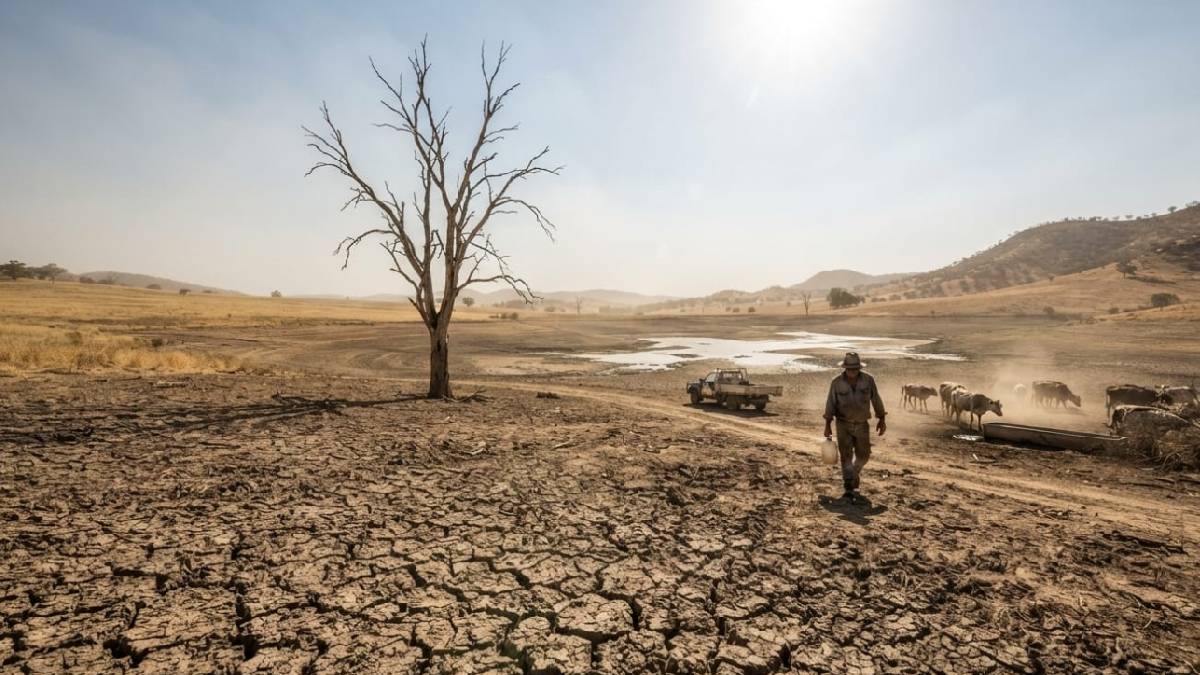
Maharashtra is facing growing concerns over below-average rainfall, drought-like conditions and the potential impact on rabi crops as El Niño strengthens across the Pacific Ocean. Several districts have already experienced rainfall deficits, while weather forecasts indicate warmer-than-normal conditions and the possibility of summer-like temperatures arriving as early as February 2027.
What Is El Niño?
El Niño is a naturally occurring climate phenomenon that develops in the tropical Pacific Ocean, typically every two to seven years. The name, which means “the Christ Child” in Spanish, was given by South American fishermen because the phenomenon was often noticed around Christmas.
Under normal conditions, easterly trade winds push warm surface water towards the western Pacific, while cooler water rises near the western coast of South America. During El Niño, these trade winds weaken, allowing warmer water to spread eastwards across the equatorial Pacific and changing atmospheric circulation patterns.
These changes influence rainfall and temperatures around the world. Parts of South and Southeast Asia can experience reduced rainfall, Australia can face drier conditions and increased wildfire risk, while some parts of South America may receive heavier rainfall. Though, the precise effects vary between regions and individual El Niño events.
Could El Niño Affect Maharashtra's Weather?
The developing El Niño is particularly concerning for Maharashtra because the state is already facing rainfall deficiencies and drought conditions in several areas. The India Meteorological Department has forecast below-normal rainfall across much of Maharashtra during October–December 2026, alongside above-normal temperatures across large parts of the state.
Reduced rainfall and warmer conditions can increase evaporation, worsen soil moisture, and place additional pressure on reservoirs and groundwater. These conditions could affect rabi crops, which depend on adequate soil moisture and irrigation during the winter growing season.
Could This Be the Strongest El Niño on Record?
International forecasts indicate that the current El Niño could become exceptionally strong, potentially rivaling the most intense events recorded since 1950. Some projections suggest it could reach historic levels during late 2026 and early 2027, although the final intensity remains uncertain.
The concern is greater because the world is already experiencing human-induced climate change. Global temperatures have risen significantly, and 2024 recorded an annual global average approximately 1.55°C above pre-industrial levels.
As El Niño strengthens, its interaction with global warming could increase the risks of heat, drought and other extreme weather events. For Maharashtra, the immediate priorities remain monitoring rainfall, conserving water and preparing farmers for a potentially difficult rabi season.





Comments
Leave a Comment