
Delhi’s air pollution crisis has worsened. The AQI in the national capital was 331 on Tuesday morning (November 3), and it is now firmly ‘very poor’. The sudden rise in AQI has been attributed to stubble-burning incidents in Punjab and Haryana (many of them reportedly happened after NASA’s satellite had passed over these states).
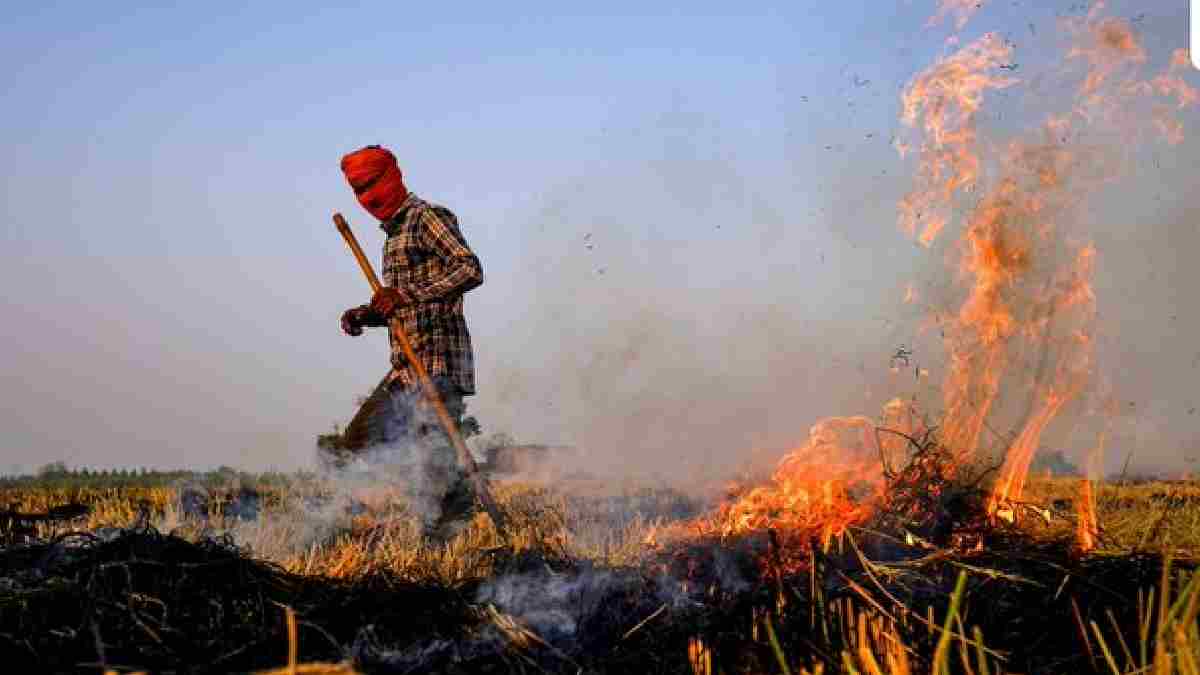
Changing patterns of crop-residue burning and unfavourable winds have pushed smoke from agricultural areas towards Delhi, Hindustan Times (HT) has said in an analysis. The study has also raised questions about whether conventional satellite monitoring methods are actually capturing the number of farm fires.
Delhi’s AQI has risen sharply over the last three days. It was 117 on Saturday and 261 on Sunday — by Monday, November 2, it had reached 324 (for the first time this season, the AQI had entered the ‘very poor’ category). At 7 am Tuesday, it was 331.
Why NASA Satellite Is Missing Stubble-Burning Fires
NASA satellites are used widely to track and estimate the number of stubble-burning incidents in northern India. The timing of satellite observations may be creating gaps in reported numbers.
The satellite which is used to detect these fires passes over Punjab at 1.30 pm. But farmers are setting fire to agricultural residue during the evening (after 3 pm) now. So some of these fires may not be detected even by the satellite’s daily observation period.
HT referred to the iFOREST Stubble Burning Status Report 2025 for this analysis. It said that more than 90% of large fires reported in Punjab during 2024 and 2025 were started after 3 pm (in 2021 only 3% of large fires were reported during the period).
The trend is that if we only use afternoon satellite observations, then the actual scale of agricultural burning may be underestimated.
Evening Farm Fires Witness Sharp Increase
Data from India’s INSAT-3DS satellite — which measures weather and atmospheric conditions throughout the day — also showed an increase in evening stubble burning.
From 17 fires detected on October 29 to 90 on November 1. NASA satellites also detected 171 fires on November 1 — a seasonal high.
These figures show that agricultural fires are still an issue during the current post-harvest season. The fact that satellites monitor at different times also shows why continuous monitoring is necessary to know how much stubble is actually being burned.
North-Westerly Winds Carry Smoke Towards Delhi
The direction of winds has been a major factor in Delhi’s deteriorating air quality. The HT analysis showed that winds at higher altitudes were blowing from north-west on October 31 and November 1.
These winds brought air from Punjab and Haryana — two states where crop-residue burning has been reported. Weather models showed that the air reaching Delhi on November 1 had travelled over these states during the previous three days.
Polluted air moving from agricultural areas to the national capital may have caused the sudden increase in pollution levels.
But stubble burning is not the only source of Delhi’s poor air quality. Vehicle emissions, construction dust, industrial pollution, and other local sources also add to the city’s overall pollution burden.
PM2.5 Pollution Crosses India's Daily Limit
The rise in Delhi’s AQI was accompanied by increases in fine particulate matter (PM2.5) concentrations.
According to the analysis, Delhi’s average PM2.5 concentration between 10 pm on November 1 and 6 am on November 2 was 194 micrograms per cubic metre — more than three times India’s daily permissible limit of 60 micrograms per cubic metre.
The report also compared the pollution pattern with weather conditions on October 18 and October 28. Atmospheric conditions were similar on those days, but Delhi did not see as sharp an increase in pollution.
One important difference was that PM2.5 concentrations didn’t fall in the afternoon of November 1. This meant that polluted air was still entering the city from outside rather than pollution being driven entirely by local sources.
Humidity May Have Added to Pollution Levels
The analysis also showed that weather conditions may have played a role in the deteriorating air quality: Rain on October 29 and 30 was followed by high humidity, which might have promoted fine particulate matter formation in the atmosphere.
Such conditions can affect how pollutants behave and lead to the accumulation of harmful particles near the ground.
However, the report said it was not possible to quantify exactly how much stubble burning added to Delhi’s overall pollution levels.
The latest deterioration shows that more needs to be done to monitor agricultural fires (especially those after sunset). More satellite observations, stronger enforcement against crop-residue burning and coordinated pollution-control measures across northern India could all help tackle the recurring winter air pollution crisis.
Delhi’s AQI is now in the ‘very poor’ category and it will be days to see if changes in wind patterns and weather bring relief to residents.






Comments