Bonnie Greer, the Chicago-born writer, playwright, novelist and broadcaster who has been a pillar of British culture for decades, has died at the age of 77. Greer died on September 15 of a short illness, and her husband David Hutchins confirmed her death. Her career ran through theatre, literature, television and some of Britain’s most important cultural institutions and she was in many ways the transatlantic voice of British culture for many years.
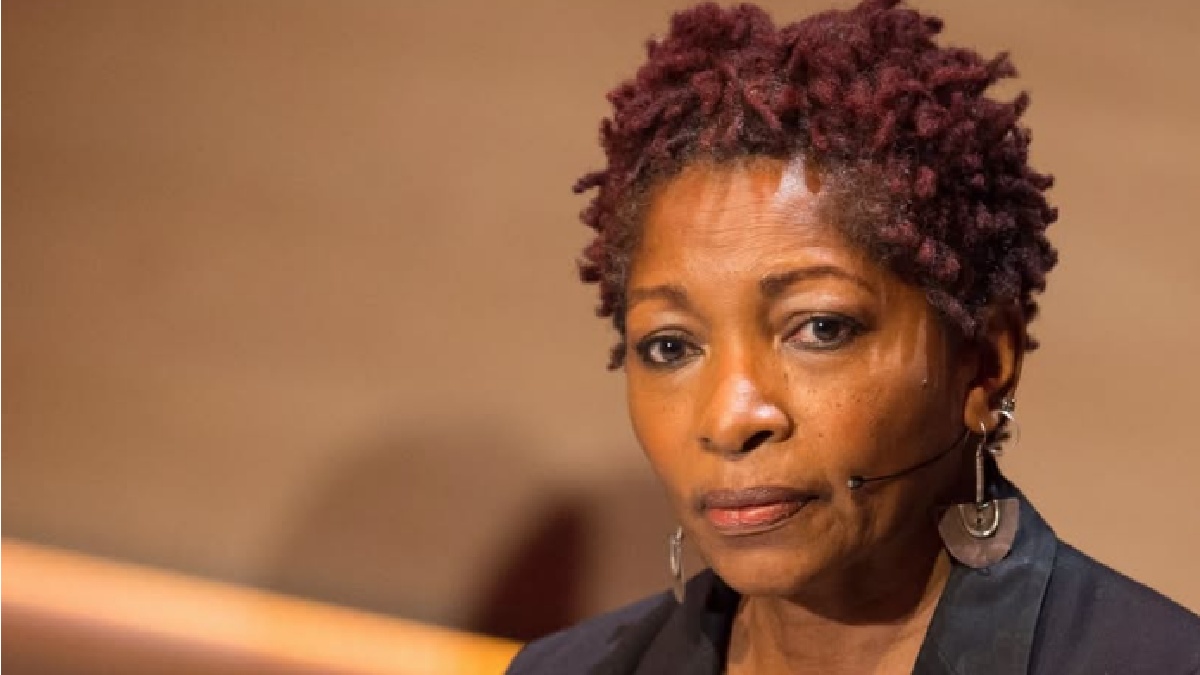
Greer’s journey from the United States to Britain was central to the career she had. She was born in Chicago in 1948 and is the eldest of seven children and grew up in a working class family. She was interested in theatre and began to study it in New York, and she came to know playwright David Mamet and director Elia Kazan.
She moved to Britain in 1986 when Black theatre was gaining more visibility. Greer had followed developments in British theatre from the United States, from Talawa to Theatre of Black Women. The new creative scene encouraged her to work in Britain and have a long and successful career.
As an American living and working in Britain, Greer had a unique perspective. She could examine British society from the perspective of someone who had chosen to make the country her home and yet still have the perspective of outsiders. Race, identity, class, culture and belonging came up with her times and times again in her works.
Greer achieved a significant early success when her play "Munda Negra" won the Verity Bargate Award in 1993. She produced a wide range of work, theatre, novels, essays and cultural commentary. Her novels included "Hanging by Her Teeth" and "Entropy", while "Obama Music" was memoir plus reflections on Chicago’s South Side and the larger cultural significance of Barack Obama’s political rise.
Her interest in famous figures of culture also influenced many of her projects. Greer wrote about American poet Langston Hughes and created "Marilyn and Ella", a book about Hollywood icon Marilyn Monroe and celebrated jazz singer Ella Fitzgerald.
Greer’s influence was not limited to literature or the stage. She was a familiar figure on British television and regularly appeared on such programmes as "Newsnight Review" and "Question Time". On television she was included in discussions about politics, culture and society and thus brought her style into a wider audience.
One of her most well-known TV appearances was on the 2009 edition of "Question Time" with BNP leader Nick Griffin. Griffin’s participation was so great that it attracted a lot of interest and Greer’s contribution was incorporated into the larger discussion of race and British society.
Besides being a broadcaster, Greer was also involved with major British cultural institutions in addition to broadcasting. In 2005 she joined the Board of the British Museum and then served as its deputy chair from 2009 to 2013. She was its first female trustee of African descent and its first American-born trustee, the museum said.
Her work also had an institutional dimension. Greer was on the boards of the Royal Opera House and London Film School and became Chancellor of Kingston University. Her contribution to British culture and public life was also acknowledged when she was made an OBE in 2010. In 2022 she was elected Fellow of the Royal Society of Literature.
Greer’s career ultimately refused easy categorisation. She was an American by birth who spent much of her career in Britain, a playwright who became a novelist, a writer who became a broadcaster and a cultural commentator who also had a big profile in the institutions of power.
Her transatlantic identity wasn’t simply a biographical detail; it was a big aspect of her creative standpoint. Between two cultures Greer was able to investigate differences and similarities between Britain and the United States and to explore more universal questions of identity and belonging.
With her death, British cultural life loses a figure whose career ranged from a wide variety of disciplines and generations. Bonnie Greer leaves behind a body of literature and theatre and a public record of work influenced by television, cultural institutions and commentary. Her contribution was a career in which she challenged accepted boundaries between writer, critic, broadcaster and public intellectual.