China has said it has “taken note” of India’s bid for a non-permanent seat on the United Nations Security Council but hasn’t said it will give a formal response.
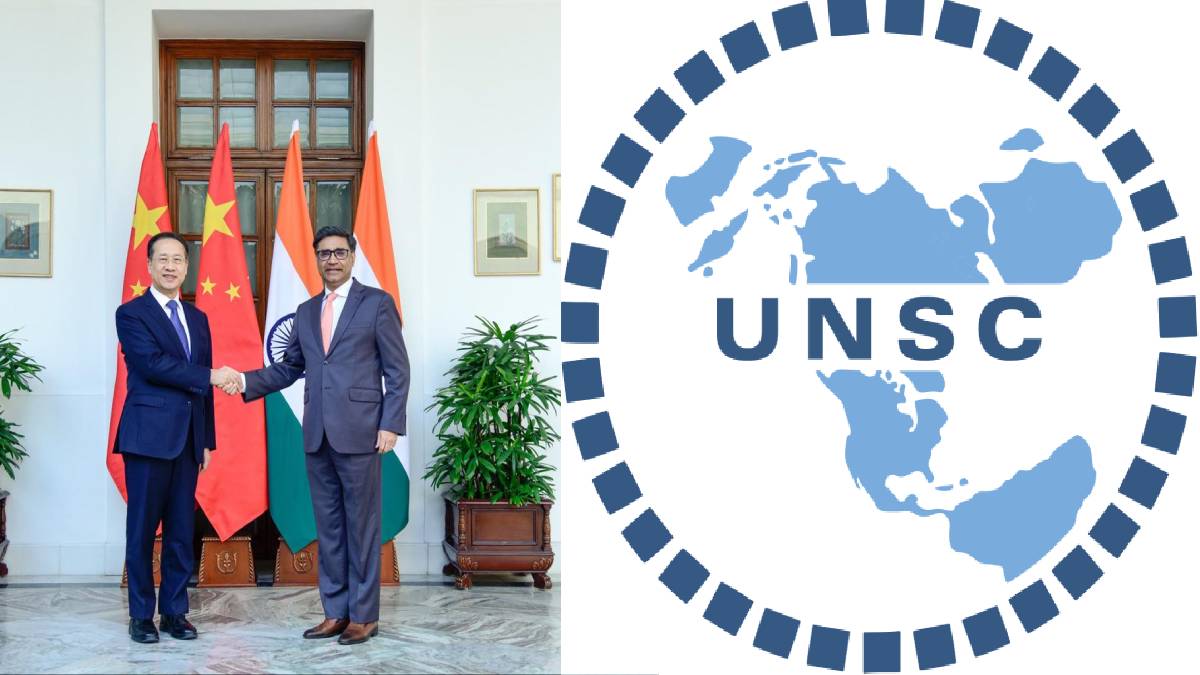
Even as India continues its diplomatic campaign to secure election as a non-permanent member of the 15-member UN Security Council, one of the world’s most influential bodies responsible for maintaining international peace and security.
When asked about India's candidacy, Chinese officials admitted to the reports but did not offer any indication of Beijing’s voting intention. Beijing's cautious reply has drawn attention from diplomats as China is one of the five permanent members of the Security Council and is heavily involved in UN relations.
India has been actively engaging with countries in the world to support its candidacy. New Delhi has always been committed to multilateralism, international cooperation, peacekeeping, sustainable development, and the interests of developing countries on the global stage.
This non-permanent seat on the Security Council has a two-year term. Non-permanent members do not have veto power, but they take part in debates, write resolutions, and vote on matters of international peace, conflict resolution, sanctions, and humanitarian issues.
India has served as a non-permanent member of the UNSC for many years and has repeatedly said that the Council should reflect global affairs as we see them. It has also pushed for major UN reform and the unification of permanent and non-permanent status of the UNSC, including the expansion of permanent and non-permanent membership for better representation by the Council.
The latest comments from Beijing come as India and China have been in such a tangle of relations for years that they have worked together in areas like trade and multilateral forums, but have also been at odds in border disputes and regional strategic interests. But both countries continue to engage via diplomatic channels and international organisations.
Diplomatic experts say countries typically do not announce their support for UN elections publicly until they have formal voting procedures or larger diplomatic talks. So China's answer has only served as an assurance, not as a guarantee, that India will continue to be supported.
India’s campaign for a seat in the Security Council is also in line with the larger vision of its global governance role. One of the world’s fastest-growing major economies and the largest country, India has been saying it deserves to be part of the international institutions and in particular, the Security Council.
In recent years, India has expanded its diplomatic outreach to Asia, Africa, Latin America, Europe and the Indo-Pacific region, and developed collaborations with the G20, BRICS, the Quad and the Shanghai Cooperation Organisation (SCO). These cooperation efforts have not only been critical for India to develop international support for its global stance on issues.
The election of non-permanent seats is conducted by the United Nations General Assembly, where candidate countries need to gain a two-thirds majority of the member states. Diplomatic lobbying and regional endorsements matter a lot in deciding the outcome.
China’s measured response is likely to be closely watched by policymakers and analysts as India’s campaign progresses. Whether Beijing ultimately supports New Delhi’s bid could become clearer as discussions continue ahead of the election.
For now, China's decision to say it has only “taken note” of India's candidacy leaves its official position open, while India is trying to win broad international support for its bid to get back into the UN Security Council as a non-permanent member.