Europe's seas are breaking heat records: Scientists say humans made these extremes possible.
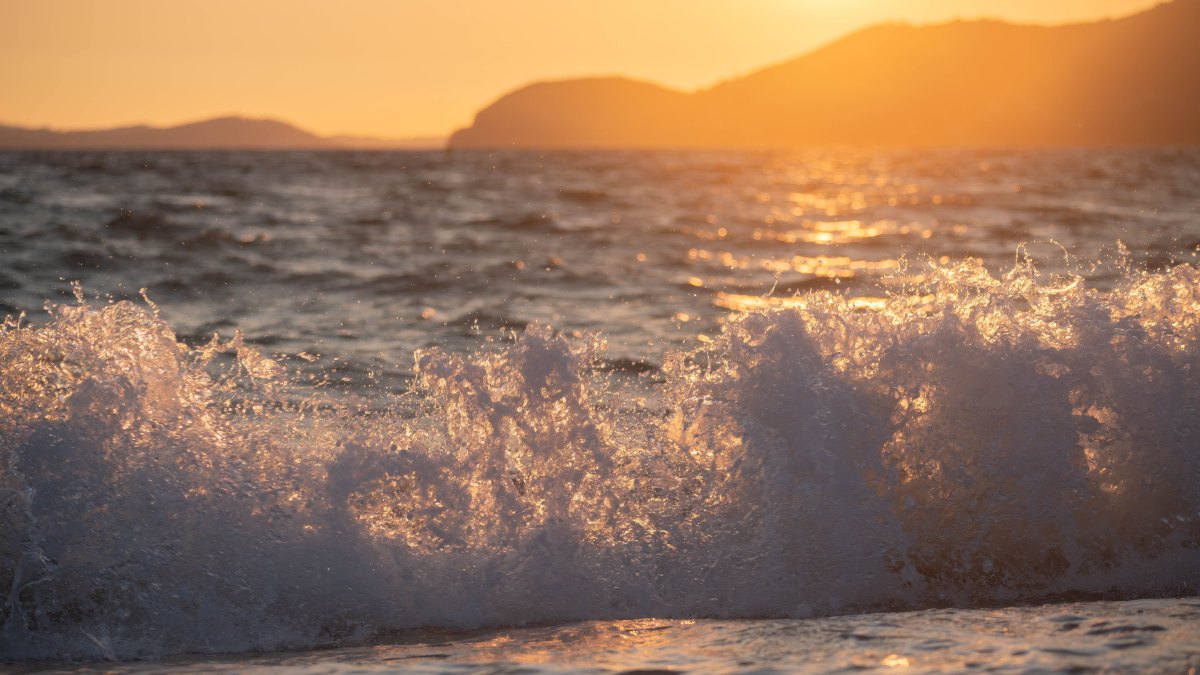
Europe is experiencing another worrying sign of climate change as its seas experience record breaking heat. Scientists say human-caused global warming has been linked to the record sea temperatures in Europe over the last few weeks and global warming that has been so extreme that Europe’s summers are boiling.
The Mediterranean Sea reached its highest average temperature on record in July 2026. The sea averaged around 27°C during the month. In early August, a buoy near Mallorca had an even more extreme temperature of about 33°C.
The unusually warm water is not limited to the Mediterranean. So too are many areas of Western Europe to see major marine heatwaves. Scientists say these conditions are putting pressure on marine life and could pose problems for coastal communities.
According to a recent analysis by the World Weather Attribution group, human-caused climate change was the main reason behind the record sea temperatures. Climate change added about 2°C of warming to the Mediterranean and about 1.4°C to Western European seas, the research team said.
This does not mean that every degree of warming was caused by human activity. And the sea temperature is influenced by natural weather patterns, too. But climate change has set the baseline temperature so high that these extreme events are now more likely.
Why are Europe’s seas getting so hot?
The oceans absorb a huge amount of the extra heat produced by global warming. As greenhouse gases build up in the atmosphere, more heat stays in the Earth’s climate system. A lot of that heat ends up in the oceans. So even people don’t realize the change when they are working at sea.
In 2026, the effect is most visible in Europe. June was the warmest June on record for Western Europe and scientists linked it to unusually high sea surface temperatures.
The Mediterranean has been particularly impacted. Data from Copernicus Marine Service showed that June 2026 was the warmest June on record for the Mediterranean with an average sea surface temperature of about 24.07°C.
Satellite observations also showed areas of the Mediterranean reaching temperatures a few degrees above normal in summer. In some areas, temperatures were 8°C above the average for comparison.
These numbers may seem small compared to air temperatures, but even a few degrees can have a major effect on the sea. Fish, corals, shellfish and other marine organisms depend on temperature ranges. Some species struggle to survive when the water is too warm for too long. Some species may migrate towards cooler waters. Some may not be able to move too quickly (or adapt to changing conditions).
The scientists also warned that marine heatwaves can damage food chains. And if one species disappears or moves away, animals that depend on it for food may also suffer.
Warming also leads to better conditions for invasive species. Scientists already know that warmer water has helped some species from warmer regions reach areas where they were previously absent, and have already noted big changes in the Mediterranean.
What Could Record Sea Heat Mean for Europe?
The consequences might extend to life outside the marine environment. Warmer seas can influence weather around coastal areas. Extreme marine heat can lead to higher humidity and influence atmospheric conditions that lead to heavy rainfall and storms, scientists say. The warmer water can also pose problems for coastal economies.
Fishing communities depend on healthy marine ecosystems. If fish populations move due to changing water temperatures, fishermen may have to travel farther to find them. Some traditional fishing areas could become less productive.
The tourism impact could also be felt if marine heatwaves change the appearance and health of coastal waters or increase the presence of some marine species.
At the same time, it also shows how climate change can create more than one problem and more than one solution.
And Europe is already dealing with extreme heat, drought and wildfires this summer. The continent has experienced repeated heatwaves, and several countries have battled destructive fires.
The unusually warm seas are another part of the same larger climate problem.
Scientists stress that the current conditions would have been extremely unlikely without human-caused climate change. World Weather Attribution analysis found that the extreme sea temperatures would have been nearly impossible in a world without the warming caused by human activities.
That is not to say every future summer will produce the same temperatures. Weather patterns will continue to produce natural variations from one year to another. But as the planet continues to warm, the starting point is higher. Extreme heat events then develop to levels that were previously thought to be unusual.
The warning from scientists is therefore not only for one hot summer. It is about the direction in which Europe's climate is moving. The Mediterranean and other European seas are critical to the region’s environment, economy and weather. If these waters warm at the current pace, marine ecosystems will be even more under pressure.
The reduction in greenhouse gas emissions is a fundamental part of curbing further warming. But countries will also have to prepare for the change that is already taking place. But Europe’s record sea temperatures are a clear reminder that climate change is not only about hot days on land. The oceans are heating too. And this year’s extreme marine heat shows just how deeply human-caused warming is changing the environment around us.