A new industry report has raised fears of a global supply of dynamic random access memory (DRAM) shortages by the end of the decade, warning that the demand for memory chips may surge ahead of production. By 2030, worldwide DRAM demand could exceed supply by more than 28.7 exabytes, or almost one third of the total annual production of DRAM worldwide.
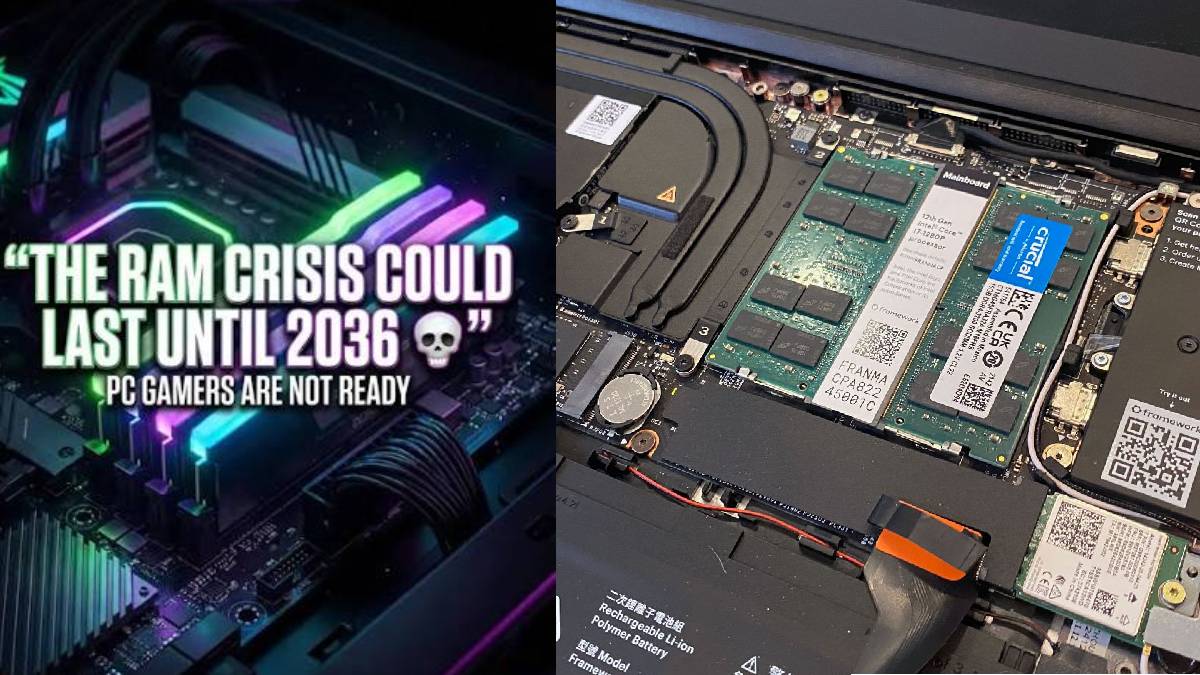
The projected shortfall is largely driven by the explosive growth of artificial intelligence (AI), cloud computing, high-performance computing (HPC), and data center expansion. AI models are becoming very sophisticated today and need a lot of memory to train, deploy, and work with large datasets. The rapid increase in AI adoption is putting enormous pressure on the semiconductor industry worldwide.
A new report warns of a serious RAM shortage by 2030, researchers estimate DRAM demand could exceed supply by 28.7 exabytes about half the world’s current annual DRAM production.
— Pirat_Nation 🔴 (@Pirat_Nation) July 15, 2026
The main cause is AI. Companies are building more AI servers, and memory makers are shifting… pic.twitter.com/Yu8Iwe9RKT
DRAM is one of the most critical components of modern computing. It stores data that processors need to access quickly and is crucial for everything from smartphones and laptops to servers, gaming systems, autonomous cars and AI accelerators. DRAM is a temporary storage device, unlike solid-state drives (SSDs), and as such, it has fast access to active data that is directly correlated with the performance of the system.
The report suggests that while semiconductor manufacturers continue investing billions of dollars in expanding production capacity, the pace of demand growth is expected to outstrip manufacturing capabilities. AI-powered applications are becoming more memory-intensive, especially large language models (LLMs), generative AI systems, digital twins, robotics, and advanced scientific simulations.
One of the biggest drivers of future demand is the continued rapid growth of hyperscale data centers operated by tech companies. Cloud providers are producing thousands of AI servers with advanced GPUs that require much higher-speed DRAM than traditional computing infrastructure. Modern AI servers consume several times more memory per system than traditional enterprise servers.
Another reason is that High-Bandwidth Memory (HBM) is a specialized form of DRAM built for AI processors. HBM offers much higher performance, whereas manufacturing is more complex and storage capacity is quite limited. With the demand for AI accelerators increasing, competition for advanced memory chips is going to become even more acute.
The automotive industry is also driving memory demand. Modern electric vehicles and autonomous driving platforms have powerful onboard computers to process data from cameras, radar, lidar, and many sensors in real time. These devices also consume a lot of memory and are thus increasing global DRAM consumption.
Consumer electronics are still very much involved. Smartphones, gaming consoles, augmented reality (AR), virtual reality (VR), and edge AI devices are all getting more powerful and memory-hungry each and every generation. With users seeking faster multitasking and more advanced AI-driven features, manufacturers are adding a larger memory capacity to everyday devices.
And if production capacity does not grow fast enough, the market could see a sharp increase in DRAM prices as in previous semiconductor shortages. Memory constraints could increase the cost of AI infrastructure, consumer electronics, enterprise servers, and cloud services. Companies dependent on AI may face higher operating costs as competition for memory chips intensifies.
Semiconductor manufacturers are spending billions on new fabrication facilities, packaging technologies, and next-generation memory architectures to tackle this issue. Governments in the USA, Europe, Japan, South Korea, Taiwan, and India also support semiconductor manufacturing through incentive programs to improve supply chains and reduce dependence on limited production hubs.
Researchers also believe that advances in memory efficiency, AI model optimization, and emerging memory technologies can alleviate the pressure on DRAM demand. Memory compression, software optimization, and more efficient AI algorithms may partly offset future shortages.
But despite the efforts, the report says, the problem of balancing supply and rapidly increasing AI-driven demand will remain one of the semiconductor industry’s greatest challenges through the rest of the decade. If current trends persist, we may enter a time in which memory is one of the most significant resources in the digital world.
As artificial intelligence revolutionizes industries worldwide, a stable and scalable supply of DRAM will be necessary for technological innovation, cloud infrastructure, and the next generation of intelligent computing systems.