Pakistan’s efforts to position itself as a regional center of cryptocurrency and blockchain innovation are being undermined by one of the country’s most influential Islamic scholars who declared cryptocurrency trading “haram” (forbidden) under Islamic law.
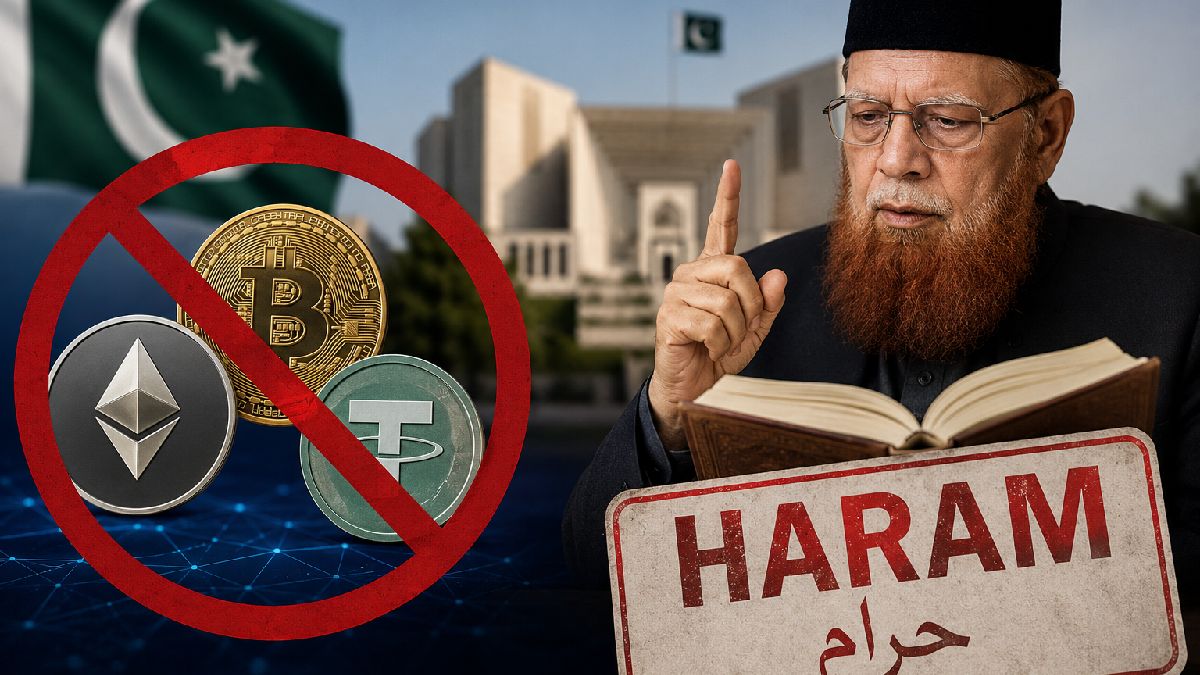
Mufti Muhammad Taqi Usmani's fatwa has raised the level of debate among investors (in Pakistan and the world) and Islamic finance experts especially in Muslim-majority countries. Pakistan’s cryptocurrency legal framework would not change but the fatwa, to an extent, will impact investor sentiments and the digital asset ecosystem in Pakistan.
A fatwa is a religious opinion by an Islamic scholar about Islamic law (Sharia). Unlike government legislation, a fatwa is not legally binding. But the views of very high-quality scholars can have a significant influence on the followers.
Mufti Taqi Usmani is a world champion for Islamic finance with a wide audience of followers and is one of the world’s most respected scholars. He is one of the top scholars at Darul Uloom Karachi as well as in South Asia, the Middle East and in many other Muslim communities worldwide.
In his recent ruling, Usmani argued that cryptocurrencies such as Bitcoin, Ethereum and even stablecoins do not support the Islamic principles governing legitimate wealth and financial transactions.

Why are the Cryptocurrencies considered 'Haram'?
According to the fatwa, cryptocurrencies are high in uncertainty, known as gharar in Islamic jurisprudence and encourage speculative trading similar to gambling, or maysir. In the ruling, most digital assets have no intrinsic or widely known value which makes them unfit to be investible under Sharia law.
Islamic finance does not accept transactions involving too much uncertainty, gambling, interest (riba) and investments that do not represent tangible or productive assets. Based on these arguments, the fatwa states that cryptocurrency trading and investment are not allowed.
Timing Raises Questions
The religious ruling comes at a particularly sensitive time for Pakistan.
The government has been actively promoting digital assets in the past year as part of a much broader financial innovation strategy. Pakistan Crypto Council and Pakistan Virtual Assets Regulatory Authority (PVARA) were established to foster a regulatory framework for cryptocurrencies and blockchain-based businesses.
Also, officials have promoted blockchain technology as an alternative to improve financial inclusion, modernise payment systems and attract international investors into Pakistan’s digital economy.
The fatwa has therefore complicated the government’s efforts to present Pakistan as a crypto-friendly destination.
Does the Fatwa make Crypto illegal?
Despite the widespread attention, the fatwa does not make cryptocurrency illegal in Pakistan.
It remains a religious opinion, not a legal directive or court order. Pakistan's cryptocurrency regulations have evolved in their own way with government institutions.
But financial analysts say the ruling might encourage many religious investors to withdraw from cryptocurrency markets by themselves and especially those who follow Mufti Usmani.
So far limited market impact
According to the reports, the announcement caused some religious investors in Pakistan, India and the United Arab Emirates to reduce their cryptocurrency holdings after the fatwa was issued.
Some crypto companies also said there were concerns that similar rulings from other prominent Islamic scholars could affect investor confidence in Muslim-majority markets.
But the global cryptocurrency market has not had any major sell-off due to the announcement and Bitcoin and other key digital currencies continue to be affected most by international economic factors and institutional investment in digital assets.
What lies ahead?
The debate demonstrates the increasingly interlinked relationship between new financial technology and traditional religion. The cryptocurrency movement has said that regulation is better than restriction; but critics argue that digital assets are not morally sound according to Islamic finance.
The difficulty in Pakistan as it continues to develop cryptocurrency regulations will be the balance between technological innovation and the concerns of religious scholars and conservative investors.
Whether Mufti Taqi Usmani’s ruling is an isolated religious opinion or inspires similar declarations across the Islamic world could play a major role in defining how cryptocurrency is adopted in many Muslim-majority countries in the future.