The India-Middle East-Europe Economic Corridor (IMEC) has been revived since U.S. President Donald Trump endorsed the connectivity project when major Middle Eastern energy and shipping routes are increasingly disrupted.
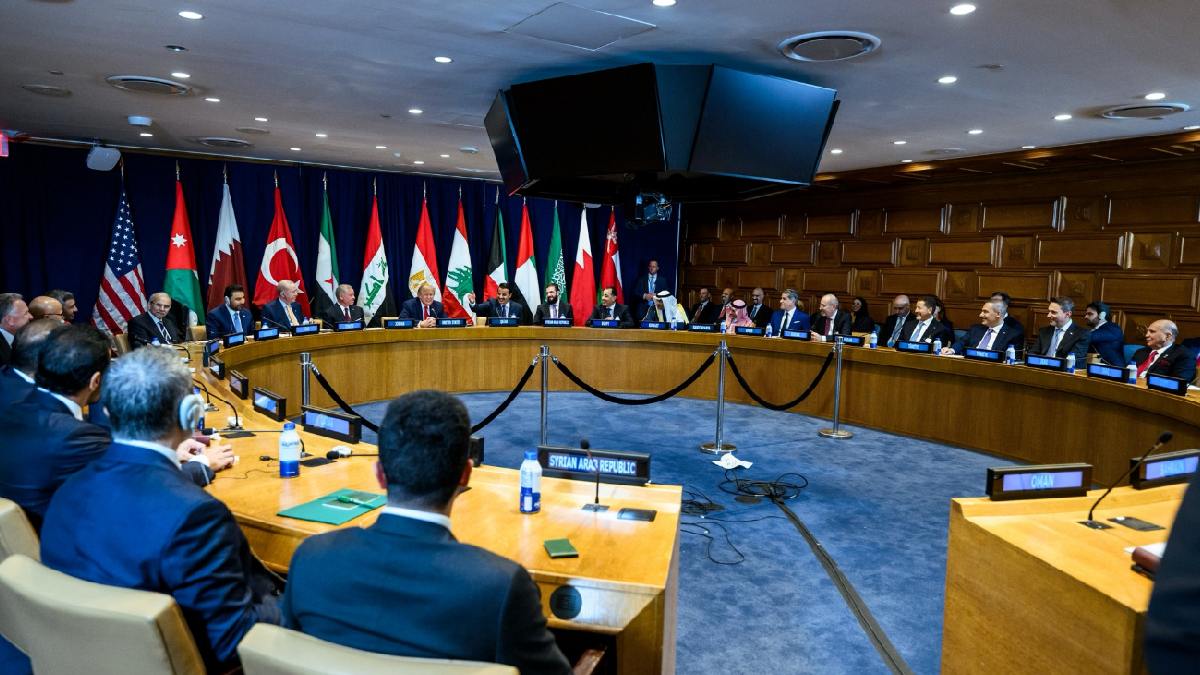
Trump said the regional conflict has shown that alternative infrastructure for moving energy and reducing the dependence on routes at the center of geopolitical conflicts must be built.
Trump, speaking to Gulf Cooperation Council and Arab leaders on the sidelines of the United Nations General Assembly, said attacks on commercial shipping had highlighted the dangers involving existing energy infrastructure. He argued that Middle Eastern energy networks should have alternative pathways and said his administration would heavily support IMEC and other infrastructure solutions to move oil.
The comments come at a time when the Strait of Hormuz has become a global focal point. The waterway is one of the central points for global energy shipments and disrupted traffic through the strait has forced producers and buyers to look for alternatives.
Gulf producers have already begun adapting their export strategies in response to the regional conflict, Reuters reported, and supplies are being moved away from Hormuz through different routes.
What is IMEC?
The India-Middle East-Europe Economic Corridor is a proposed connectivity network that would link India to the Arabian Gulf and Europe by way of maritime and land-based infrastructure. The project was unveiled at the 2023 G20 Summit in New Delhi with India, Saudi Arabia, the United Arab Emirates, the United States and European partners.
According to the memorandum of understanding, IMEC consists of two main corridors. The Eastern Corridor will connect India to the Arabian Gulf, and the Northern Corridor will link the Gulf region to Europe. The network will include rail links to supplement the existing maritime and road transportation routes.
The proposed infrastructure is broader than a traditional trade route. The IMEC framework also envisages electricity and digital connectivity infrastructure, along with pipelines for clean hydrogen exports. The countries involved have said the corridor would enhance supply chain connectivity, trade opportunities and make connections between Asia, the Middle East and Europe more seamless.
How Could IMEC Connect India, Gulf And Europe?
Under the proposed plan, goods would be shipped via sea from Indian ports to the Gulf and then travel through a planned rail network through the Middle East. The land-based section of the corridor is meant to connect Gulf countries with Jordan and Israel and then on to European maritime gateways.
The project therefore includes multiple modes of transport instead of only one shipping route. The multimodal approach will facilitate the movement of goods and energy-related infrastructure through a more open path among major economic centers.
India’s Ministry of External Affairs has described IMEC as an initiative to strengthen connectivity and economic integration between Asia, the Arabian Gulf and Europe. The official framework also lists supply chain resilience and trade facilitation among its objectives.
Why has Hormuz become so important?
The Strait of Hormuz is one of the world’s most strategically important energy corridors. If the disruption is sustained, crude oil and other energy products could be harder to transport, driving up transportation costs and creating pressure on international markets.
The current regional conflict has already encouraged energy producers to seek alternative plans of transportation. Saudi Arabia resumed oil exports through the Red Sea but other Gulf producers have tried to keep the flow of oil moving through the Red Sea in the face of disruption to other routes, Reuters reported.
The Trump administration also proposed a $5 billion investment fund to help Gulf countries rebuild and diversify energy infrastructure after damage caused during the conflict, it said in the article.
The proposal is intended to reduce reliance on the Strait of Hormuz; however, the contents of the reported proposal could not be independently verified by Reuters.
What is Trump’s IMEC Support?
Trump’s backing brings political attention back to a project that was initially conceived as a long-term connectivity and economic project. His remarks connect IMEC to the larger issue of energy security and the need for alternative infrastructure at times of geopolitical instability.
But IMEC is still an enormous infrastructure construction project and requires cooperation among various countries and the construction of rail, port, energy and digital links.
Its development is also dependent on regional political and security conditions as parts of the proposed route pass through a region that is still in a state of conflict.
India has continued to see IMEC as strategically important. In 2023, External Affairs Minister S Jaishankar said the corridor retained its economic logic because India and Europe are major production and consumption hubs and the region has historically been an important route for trade between them.
For India, the corridor could further strengthen its commercial relationship with Gulf economies and European markets and serve as another mechanism for regional connectivity. For Europe and Gulf countries, the project provides another multimodal network to link major markets.
Trump’s comments thus add another dimension to the IMEC discussion. But the corridor was conceived as a long-term trade and connectivity project, and the disruption of the traditional Middle Eastern routes has brought its potential for energy and supply chain resilience back into focus.