Narendra Modi’s visit to Australia has culminated in a landmark agreement that is going to advance India’s clean energy ambitions and long-term energy security in a big way. India and Australia have signed an agreement on a uranium supply contract to be able to export uranium to India as part of India’s civilian nuclear energy sector.
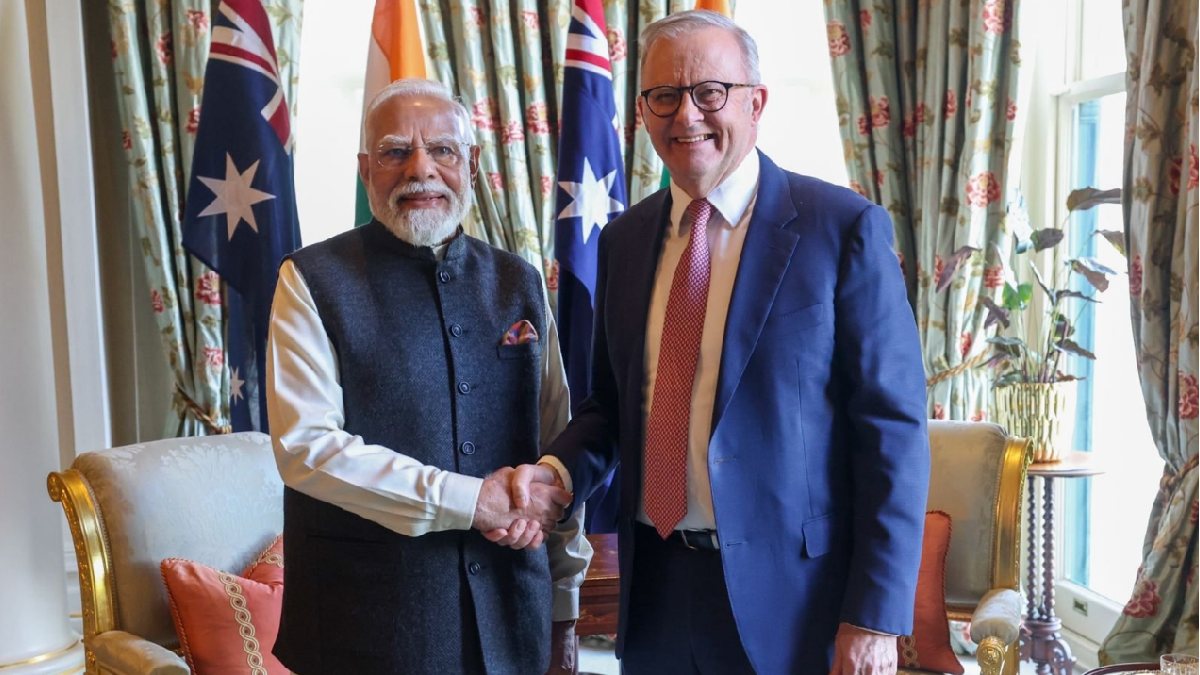
But Modi said the agreement will drive up India’s clean energy agenda. “It’s an important agreement,” PM Modi said.
We have signed an important agreement today on nuclear energy. This will pave the way for uranium supplies from Australia to India and give our clean energy objectives fresh momentum," the Prime Minister said after bilateral talks with Australian Prime Minister Anthony Albanese.
Albanese also welcomed the agreement, saying it would help India to move toward cleaner energy. All uranium provided by Australia to the IAEA will be under the International Atomic Energy Agency (IAEA) safeguards and will only be used for peaceful civilian purposes, the deal reads.
Why does India need more Uranium?
India's electricity demand is increasing rapidly as the country's economy continues to expand. Industrial growth, increasing urbanisation, the adoption of electric vehicles, and the rapid development of artificial intelligence-powered data centres are expected to greatly increase power consumption over the next decades.
To meet this consumption but curb carbon emissions, India is expanding the share of non-fossil fuel energy sources. Nuclear energy has been an important part of this effort, because it generates huge quantities of electricity without greenhouse gas emissions in operation.
But nuclear power plants must have a regular and reliable supply of uranium fuel to run efficiently.
How Australia Deal Helps
Australia has some of the world’s largest uranium reserves, and is a reliable long-term supplier.
The agreement will help India diversify uranium imports rather than rely on a few countries to supply it. The supplier base of larger suppliers also enhances India's energy security by minimising the risk of disruption in global supply chains and reducing the impact of disruption in global supply chains on India’s energy security.
If India is able to keep that fuel supply stable, it can also help India to take advantage of a fuel supply that should contribute to a greater scale of its nuclear power program and will be a major factor in the development of the clean energy and climate targets through the next two decades of India's future and the country's clean energy and climate change development will be in line with this very much in the future.
India's Domestic Uranium Production
India has uranium reserves in Jharkhand, Andhra Pradesh, Telangana and Rajasthan. However, domestic production has been below the growing needs of the country.
As a result, India currently imports uranium from countries such as:
Kazakhstan, Canada, Russia, Uzbekistan, Namibia.
The addition of Australia to this list is expected to improve India’s long-term fuel security for its expanding nuclear reactors fleet.
In order to go beyond energy and have a Strategic Partnership Beyond Energy, we need to have a partnership where we can partner with each other.
Beyond meeting fuel requirements, the uranium agreement is indicative of an even stronger partnership between India and Australia in terms of strategic partnership. It builds stronger cooperation in the Indo-Pacific region to achieve India’s vision of generating clean energy for the future and for energy security of the country.
If India looks to rapidly expand its nuclear capacity, the agreement will be a cornerstone of its long-term energy strategy, and in order to satisfy the increasing electricity demand and to further the country’s aspiration to create a sustainable world with less carbon emissions, the same agreement will be the key to this.