India has reaffirmed its support for Afghanistan’s sovereignty, unity and territorial integrity during the eighth Moscow Format Consultations on Afghanistan, as tensions between the Taliban government and Pakistan overshadowed the regional meeting.
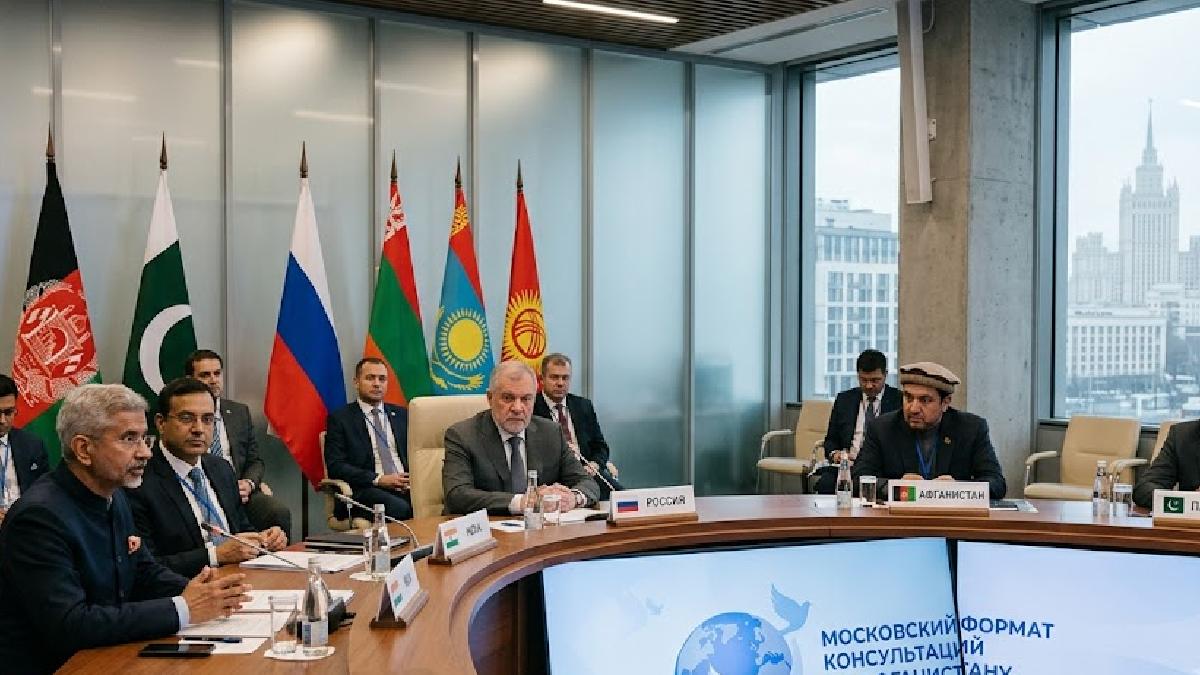
The consultations were hosted by Russia in Moscow and brought together representatives from India, Afghanistan, Pakistan, China, Iran, Kazakhstan, Kyrgyzstan, Tajikistan, Uzbekistan and Russia.
Belarus and Egypt also came as guest countries. India’s delegation was led by Ambassador to Russia Vinay Kumar and Joint Secretary (PAI) Dr M. Suresh Kumar.
The Indian delegation reiterated New Delhi’s long-standing stance that it remains committed to the welfare of the Afghan people. The Embassy of India in Russia said Afghanistan’s sovereignty, unity and territorial integrity was supported as well by India, and it is still in contact with Afghanistan, given the complicated political environment in which the Taliban government operates.
The release comes at a time of increasing tension between Afghanistan and Pakistan. The two sides have been accused of attacks across the border and Pakistan has been carrying out strikes inside Afghan territory. The worsening relationship between Kabul and Islamabad became one of the most challenging aspects of Moscow’s talks.
The disagreements were also reflected in the final result of the meeting. Afghanistan and Pakistan failed to agree on the wording of a joint statement, so the consultations ended with no final document.
Russian presidential envoy for Afghanistan Zamir Kabulov said Moscow regretted that the Afghan and Pakistani delegations did not reach a single agreement on the text.
Afghan Foreign Minister Amir Khan Muttaqi also accused Pakistan of pursuing actions that could jeopardise the stability of Afghanistan and the rest of the region.
The Taliban delegation also pointed to language that put too much emphasis on Afghanistan in relation to terrorism, they said, the Taliban delegation also protested the language used to the media and media reports on the talks said.
Pakistan, however, has raised concerns about militants that operate from Afghan territory. Islamabad has accused the Taliban authorities of allowing militant organisations to operate from Afghanistan so they can be given safe harbor, but Kabul has denied that. The dispute has only worsened the already fragile security situation in regional areas.
Russia has offered to help to reduce tensions between Afghanistan and Pakistan. Russian officials have also stressed regional cooperation, humanitarian assistance and Kabul engagement.
Regional powers have a growing role in Afghanistan’s political, economic and security affairs, the consultations showed.
India’s position has now become one that is able to balance support for the Afghan people and it needs to be part of the regional dynamic. New Delhi also has to be on top of its focus on sovereignty and territorial integrity and a stable and independent Afghanistan.
The Moscow talks also highlighted two contrasting developments: growing regional engagement with Afghanistan and continuing friction between Kabul and Islamabad.
With Pakistan and the Taliban unable to come to a joint statement, the tension between the two neighbours is still a major concern to the rest of the world.