India and South Korea are inching towards the implementation of a potentially transformative upgrade of their Comprehensive Economic Partnership Agreement (CEPA) which both countries aim to do by the first half of 2027. The proposed upgrade follows a growing engagement of bilateral economic relations beyond their traditional trade and increasingly in investment, technology, supply chain resilience and strategic partnership.
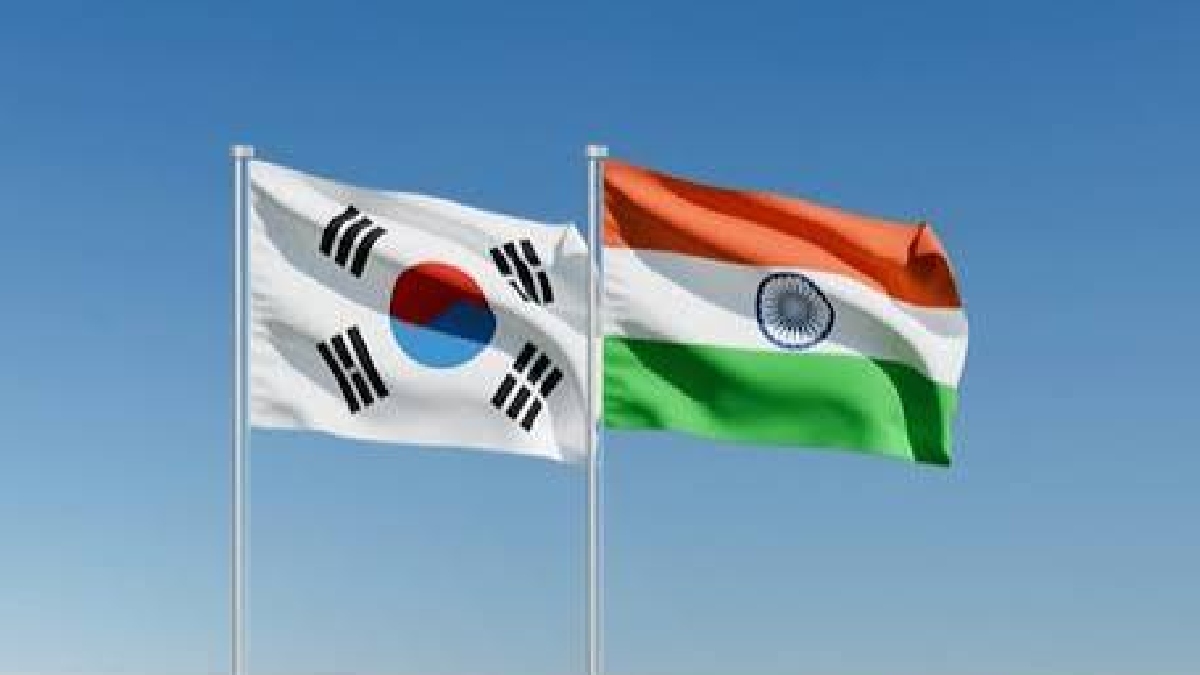
The 13th round of CEPA upgrade negotiations, held in Seoul from 19 to 21 August 2026, indicated a renewed momentum between the two sides. Although tariffs and market access are still at the heart of the talks, the negotiating agenda has broadened considerably. Goods and services, rules of origin, investment, non-tariff measures, digital commerce, supply chains and industrial cooperation are now a part of a much wider economic conversation.
The need for an improved agreement is driven in part by an imbalance of bilateral trade. India had a trade deficit of almost $15.15 billion with South Korea in 2025, while imports were around $21.16 billion versus exports of about $6 billion. New Delhi is thus looking for an agreement which gives Indian businesses more access to the Korean market rather than a list of tariff concessions.
Indian exporters are looking for more opportunities in sectors like steel, chemicals, pharmaceuticals, agricultural and food products, engineering goods, machinery and other manufactured products. However, companies have often encountered technical standards, certification requirements, regulatory procedures and other non-tariff barriers when trying to enter the South Korean market. Negotiating these barriers will be one of the most important tests of the upgraded CEPA.
The objective for India is to ensure that the access to market that is negotiated is converted into commercial opportunities. Lower tariffs will not mean much if exporters are still stuck with complex certification procedures or regulations that add to the cost of doing business. In the near future, India will be looking to have more transparency and predictability in Korean regulations.
South Korea, on the other hand, wants to get more access to India’s expanding economy. Korean companies have vast interest in automobiles and components, electronics, machinery, steel, petrochemicals, advanced manufacturing, services and digital industries. The companies in India see India’s huge consumer market and growing manufacturing ecosystem as key investment and expansion opportunities.
This creates a difficult negotiating balance. Korea wants access to India’s market more than India does, and India wants to redress the uneven distribution of benefits of the existing CEPA. Finding a compromise that is acceptable to both sides is critical to getting the agreement in place on time.
The automobile sector will remain particularly sensitive. Korean automakers and component manufacturers will be looking to expand access to India’s growing automobile market, such as electric vehicles and other fast growing segments. But India still sees the automobile industry as a key to domestic manufacturing, localization, employment and technology development.
A pathway forward could be through phased tariff reductions, carefully negotiated quotas, different treatment for electric vehicles and components and investment in India. This approach might allow Korean companies to gain market access and drive more manufacturing and technology investment in the country.
Steel is another sector where the interests of both countries are not always aligned. India wants to protect domestic steel producers from excessive import competition and Korean companies want to have predictable access to the Indian market. So tariffs, safeguards, quotas and rules of origin are likely to be central to the negotiations.
The rules of origin could be an opportunity for some practical progress. The existing requirements can increase the compliance costs and make it difficult for companies to take full advantage of preferential tariff arrangements. Simplifying administrative procedures and increasing flexibility may help to improve CEPA utilization without any kind of big concessions in politically sensitive sectors.
Services are another point where India is seeking stronger commitments. Indian information technology, engineering and professional service companies have enormous global reach, but better access to the Korean market could increase the economic benefit of the agreement. New Delhi is therefore likely to push for progress on Mode 4, which deals with the movement of professionals on a temporary basis across countries.
Digital trade is also becoming increasingly important. Cross-border data flows, cloud computing, artificial intelligence, semiconductors and digitally delivered services were less prominent when the original CEPA was negotiated. The updated agreement therefore offers the chance to define rules that reflect the realities of modern digital commerce and enable both sides to meet legitimate regulatory obligations.
The strategic dimension of the negotiations is also becoming increasingly important. South Korea is a leading global economy with high strengths in semiconductors, automobiles, shipbuilding, batteries, electronics, chemicals and advanced manufacturing. At the same time, its economy is deeply integrated into international supply chains with China as well and has a huge economic relationship with it.
As geopolitical competition intensifies and technology restrictions, export controls and supply-chain disruptions become more prominent, economic diversification has become increasingly important for Seoul. India could be a key partner in that diversification strategy because of its large domestic market, growing manufacturing capabilities, services sector and growing role in Indo-Pacific supply chains.
For India, more economic engagement with South Korea could provide access to capital, advanced technology, industrial expertise and global supply networks. There are some areas of potential collaboration including semiconductors, critical minerals, shipbuilding, renewable energy, electronics, pharmaceuticals, automobiles and infrastructure and advanced manufacturing.
The Industrial Cooperation Committee formed following the April 2026 India-South Korea summit would further strengthen this economic relationship. The committee could link the CEPA upgrade to industrial projects and develop mechanisms for cooperation in strategically important sectors.
It could be that the future agreement would be more than a normal trade deal. Rather than tariff reduction, India and South Korea could use the new CEPA as the foundation for cooperation on the areas of trade, investment, technology, energy, industrial production and economic security.
But the negotiations will require strategic flexibility from both sides. India will need to protect sensitive domestic industries in order to find areas where concessions can be more effective in the long term. South Korea will also have to provide meaningful improvements in market access for Indian goods and services and to overcome non-tariff barriers to Indian exporters.
A successful agreement would also encourage Korean companies to shift from an export-oriented approach to deeper local production and joint investment in India. Korean investment in sectors such as steel, electronics, automobiles and advanced manufacturing could create jobs, strengthen domestic supply chains and facilitate technology cooperation. With both countries looking to achieve CEPA upgrade in the first half of 2027, the next 6 months will be crucial. The question is not so much how many tariff lines the two sides are willing to allow to be liberalised. What will be the result of the talks is whether India and South Korea can develop a bigger economic framework to respond to the reality in global supply chains and geopolitical issues and not the other way round.
The improved CEPA could eventually form the foundation of a stronger India-South Korea strategic economic partnership. If both sides can resolve their issues of market access, automobiles, steel, services, digital trade and non-tariff barriers, the agreement could bring benefits well beyond bilateral commerce.
For India, it could boost industrial development and increase access to world-class technology and global supply chains. And for South Korea, it would help accelerate economic diversification and deeper engagement with one of the world’s fastest-growing major economies. More generally, stronger economic ties between the two countries could lead to a more robust and diversified Indo-Pacific economy.
The future of the negotiations will depend on whether both sides can do more than give in to short-term concessions and appreciate the long-run strategic value of their relationship. An ambitious and balanced CEPA upgrade can take India and South Korea from a trade partnership to a full economic package.