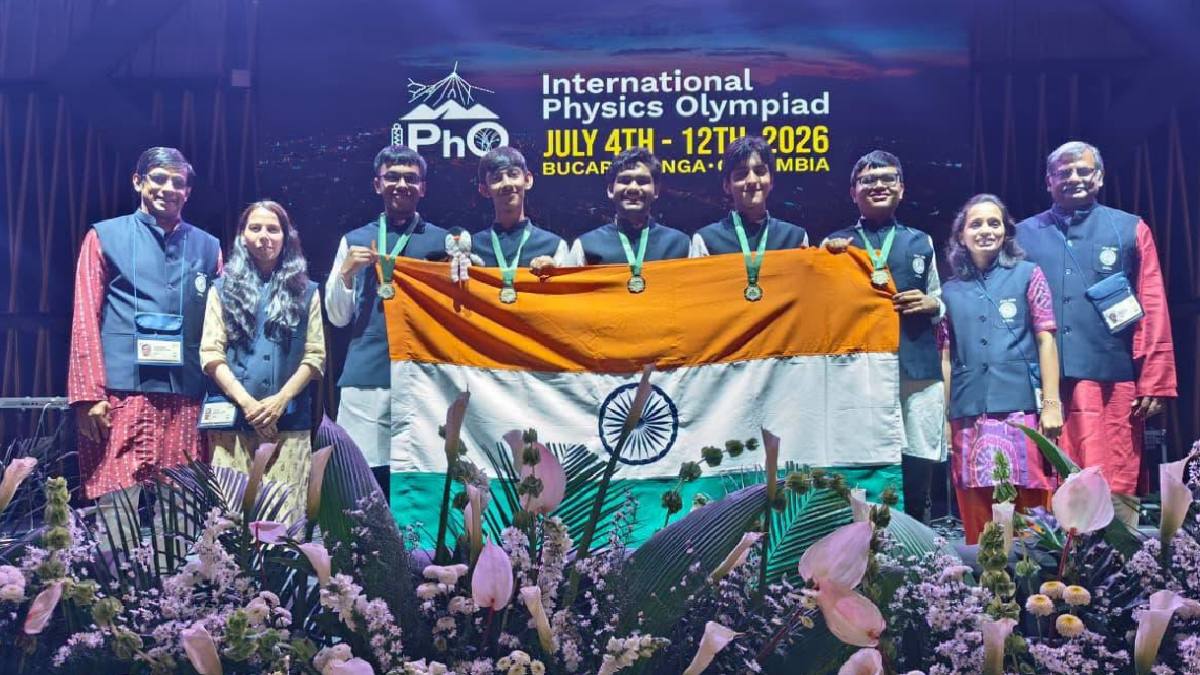
India has scripted history at the International Physics Olympiad (IPhO) 2026 as the world’s top performing country with 5 gold medals which underlines the growth in science education and international competition. This has been appreciated by teachers, scientists, policymakers and students throughout the country and is a manifestation of India’s position as an emerging global leader in STEM (Science, Technology, Engineering and Mathematics) education.
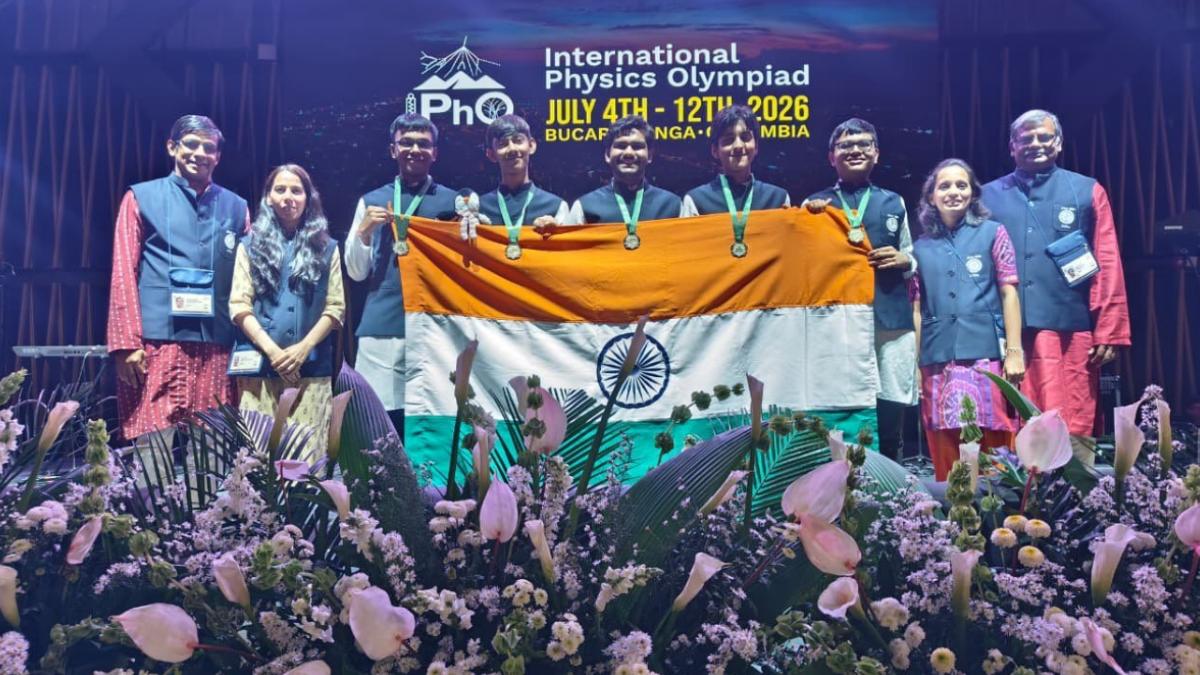
International Physics Olympiad is considered one of the most prestigious physics competitions for high school students worldwide. From dozens of countries, students of various levels of education take tests every year which question not only theoretical and experimental knowledge but also analytical thinking, creativity, and problem solving skills.
The country's clean sweep of five gold medals is one of the country's best results in the history of the competition. There is a sense of the nation showing its ability to acquire gold medals in all areas of the team's work, from theoretical knowledge to laboratory practice and it is in line with the performance of many of the country’s top international science scholars.
The achievement comes after years of preparation by the students, their teachers, mentors and academic institutions. India’s Olympiad has a multi-stage selection process that starts with nationwide exams on thousands of students. Good students are invited again and again to take more and more challenging tests to prepare for the final national team.
The students receive intensive residential training at specialized institutes after their selection where they get top-level training from top physicists, researchers and former Olympiad medalists. The training covers complex areas of physics including classical mechanics, electromagnetism, thermodynamics, quantum physics, optics, relativity, and experimental techniques.
Education experts maintain that India's success at the IPhO is a result of sustained investment in nurturing scientific talent from an early age. Olympiad programs place great emphasis on conceptual understanding, logical reasoning, mathematical rigor, and experimental problem-solving in the students. These are skills that are not only very helpful in academic research, but also in emerging areas such as artificial intelligence, semiconductor technology, quantum computing, aerospace engineering, renewable energy and advanced manufacturing.
The achievement also demonstrates the continued development of India’s scientific ecosystem. In the last 10 years the country has strengthened research institutions, encouraged innovation through startup ecosystems, invested in space exploration and made a push for international scientific cooperation. Success in international Olympiads is an important indicator of the level of general science education and the number of young scientists available to it.
Olympiad competitions are different from school exams, experts say. Students have to solve difficult problems that often involve multiple areas of physics and require deep conceptual understanding rather than memorization. Students' ability to design measurements, analyze data, estimate uncertainties and draw scientifically valid conclusions under time pressure is tested in experiments.
The success of the Indian team will inspire thousands of high school students to study science and research. Many former Olympiad participants have gone on to study at top universities in the world and contribute to scientific research, technology development, engineering innovation and entrepreneurship.
Government officials and academic leaders were proud of the students’ achievements, they said. They said such accomplishments highlight the potential of India’s youth and it is crucial to increase science education at every level.
Teachers and mentors also stressed the motivation of medal winners and said to be excellent at the International Physics Olympiad should be a work of discipline, curiosity and persistence. Many students have to do Olympiad training and work at school and also maintain good math and science skills.
The success is also expected to drive schools and educational institutions to foster inquiry-based learning, laboratory research and participation in national and international science competitions. Educators say the ability to foster scientific curiosity and develop a sense of curiosity in young people is all that is required to build the next generation of researchers, innovators, and technology leaders.
India celebrates a moment of pride as our young physics champions shine on the global stage.
— Om Birla (@ombirlakota) July 13, 2026
Heartiest congratulations to Kanishk Jain, Riddhesh Anant Bendale, Rishit Garg, Shresth Suraiya and Svarit Joshi for winning Gold Medals at the 56th International Physics Olympiad (IPhO)… pic.twitter.com/2QNO2FQBhg
India’s impressive performance at the International Physics Olympiad 2026 shows that it is increasingly becoming a global centre of science research, technology innovation and advanced manufacturing. With quantum technologies, clean energy, semiconductor design, biotechnology and space science growing, young scientific talent will be key for long-term national development.
Thus, the five gold medals in the history of India are as much a measure of India’s education system and the commitment of its scientific community as it is the great potential of the country’s young minds. The success of the Indian team in all aspects will motivate all future scientists to dream bigger and to be at the forefront of the development of science and innovation.