India's economic growth has been praised by Uzbekistan’s ambassador in India, Sardor Mirzayusupovich Rustambaev, who hailed the country’s 7.8% GDP growth as a great achievement in difficult global conditions.
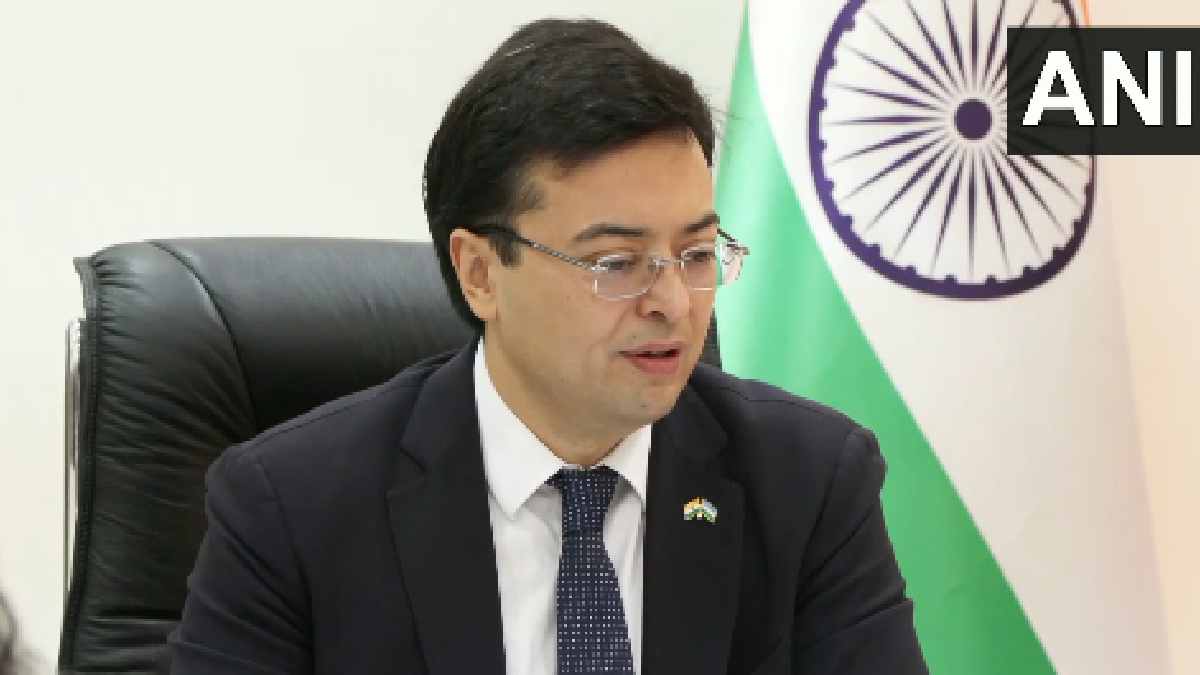
Rustambaev said India and Uzbekistan should not see each other as competing economies. The two countries have complementary economic strengths and can benefit from closer cooperation, he said.
“We're not competing economies,” the ambassador said. “We are very complementary to each other. We need to grow together,” he said.
Rustambaev congratulated India for what he called a historic accomplishment and called this 7.8% growth figure a breakthrough on the world stage.
He said this achievement is particularly significant when the geopolitical and economic climate is so difficult for countries around the world.
According to the Uzbek envoy, India’s ability to maintain strong economic momentum under such circumstances makes it a testament to the resilience of its economy. He also pointed out a comparison with Uzbekistan, saying the Central Asian nation has grown at a rate close to India’s, although it hasn't reached the same 7.8 percent level.
“Uzbekistan is very close to it, not as big as 7.8, but very close to it,” Rustambaev said.
Both countries are now more and more focused on economic cooperation and mutually beneficial trade, they say. India and Uzbekistan can have mutually beneficial economic cooperation rather than competition for the same markets.
#WATCH | Delhi: On 7.8% GDP growth, Uzbekistan Ambassador to India, Sardor Mirzayusupovich Rustambaev says, "... We are not competing economies. We are very complementary to each other. We need to grow together. I would like to congratulate India on the milestone achievement of… pic.twitter.com/R3XaNmQK0z
— ANI (@ANI) September 4, 2026
India is now expanding its engagement with Central Asian countries in all fields of cooperation including connectivity, trade, investment, pharmaceuticals, agriculture, information technology and energy.
Uzbekistan, at the heart of Central Asia, wants closer economic ties with major Asian economies. In this regard.
if India can engage with Uzbekistan in an even stronger way it can expand its commercial presence in Central Asia and strengthen wider regional connectivity, it will do more good for India.
Rustambaev’s comments also reflect the diplomatic relationship between the two countries. India and Uzbekistan have longstanding bilateral ties and both countries regularly talk about trade, investment and people-to-people relations.
The ambassador’s call for economic complementarity comes at a time when geopolitical uncertainties are changing the international trade and investment landscape.
For emerging countries, partnerships of complementary strengths may create new markets and not become so dependent on one market.
India’s growth performance has taken up more and more international attention as major economies struggle with inflation, geopolitical tensions and uneven global demand.
Uzbekistan’s interest in working with India suggests that economic cooperation between South and Central Asia might be a better option.
Rustambaev concluded with a call to the two countries to support and complement one another. His remarks imply that the next phase of relations might be based on shared economic opportunities and not competition.
For India and Uzbekistan, stronger bilateral cooperation would open up new markets for businesses, investors and exporters, and bring economic ties between the two regions to a higher level.