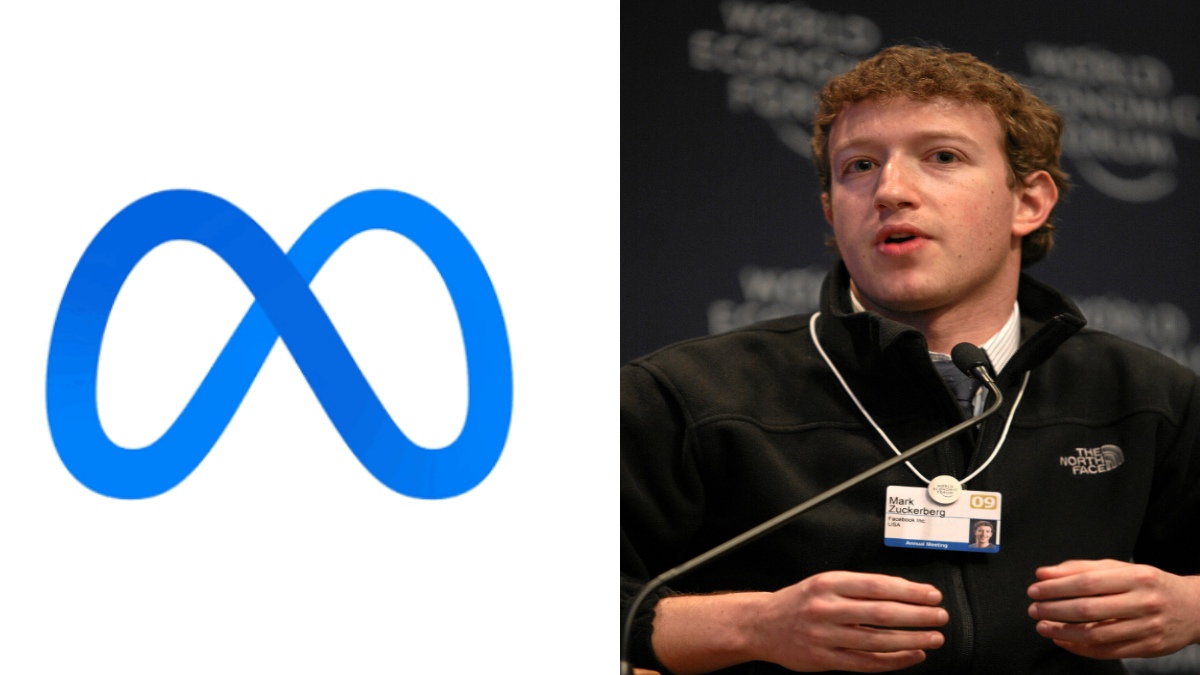
Meta CEO Mark Zuckerberg believes the future of artificial intelligence cannot be about one giant AI model. Rather, he insists, the industry is moving toward an ecosystem where powerful “teacher” models continuously train smaller specialized AI systems. This concept—the 405B teacher-model flywheel—is against the idea that one large AI model is going to do it all.
The idea is gaining attention as AI companies are racing to develop more capable large language models and looking for ways to lower computing costs and better deploy them over a broad range of devices.
What is the 405B Teacher Model?
The 405B teacher model refers to Meta's largest Llama model with about 405 billion parameters. It is not for everyday consumer use; Zuckerberg describes it as a very powerful model that serves as a "teacher."
Instead of putting this huge model everywhere, Meta uses it to produce high-quality responses, reasoning patterns, and training data. These outputs are then used to train smaller "student" models through knowledge distillation.
The result is a collection of AI models that retain much of the intelligence of the teacher model but require far less computational power.

Understanding the Teacher-Model Flywheel
The flywheel works as a continuous improvement cycle.
First, engineers build a truly powerful large-scale AI model. They then use this model to build training examples, synthetic datasets, and reasoning demonstrations. Smaller AI models learn from these examples and improve their performance without needing hundreds of billions of parameters.
As the student models improve, researchers collect more data, refine training approaches, and create more powerful teacher models. If the teacher models become more powerful, then they can be used to build better student models and so on in a cycle of continuous AI improvement.
In this way, organizations can create more advanced AI systems without the need for super AI systems for each application.
Why One Giant AI May Not Be the Final Goal
Many thought that simply scaling AI models would eventually produce artificial general intelligence. Zuckerberg points out that this assumption may be incomplete.
Different AI applications have different requirements. A coding assistant, customer service chatbot, scientific research assistant, and mobile AI companion benefit from models optimized for their specific tasks.
Smaller distilled models can provide almost the same quality but work faster, consume less memory, and reduce inference costs dramatically. That makes them suitable for smartphones, laptops, enterprise software, and edge devices.
Instead of one universal AI that handles every request, future AI ecosystems may consist of many specialized models trained by a few powerful teacher models.
The Benefits of AI Distillation
Knowledge distillation has become one of the most important techniques of modern AI development.
It enables developers to:
Reduce computing costs. Increase response speed. Lower energy consumption. Deploy AI on consumer hardware. Scale AI services more efficiently. Maintain high performance with fewer parameters.
This strategy also makes open-source AI development more accessible and opens it up for developers to develop advanced applications without needing huge data centers to build them.
Implications for the AI Industry
Zuckerberg’s vision is part of a larger change in the AI landscape. Frontier models are still an important framework to build AI capabilities, but businesses now need efficient models that can serve millions of users economically.
The teacher-student model could change how AI companies invest in infrastructure, model training, and deployment. Instead of focusing only on the number of parameters, future progress might be measured by how powerful models can teach smaller, more specialized systems.
This philosophy also aligns with Meta's philosophy of open-source AI, where developers can build customized solutions using distilled versions of larger foundation models.
Looking Ahead
The 405B teacher-model flywheel is a significant evolution in AI strategy. Meta doesn’t want to build a giant AI to conquer the world; instead, it wants to build an ecosystem with the best teacher models continuing to evolve new-generation AI systems (smaller, more efficient, and better at the end of the day).
As AI adoption spreads to new industries, this teacher-student model could become a signature of the AI landscape, allowing advanced intelligence to enter more devices, businesses, and users as well as a much lower-cost solution (when computing is considered). If Zuckerberg’s dream becomes reality, the future of AI will not be defined by a single colossal model but by a network of intelligent models working together.