Australia media has placed Prime Minister Narendra Modi in the spotlight following a landmark .
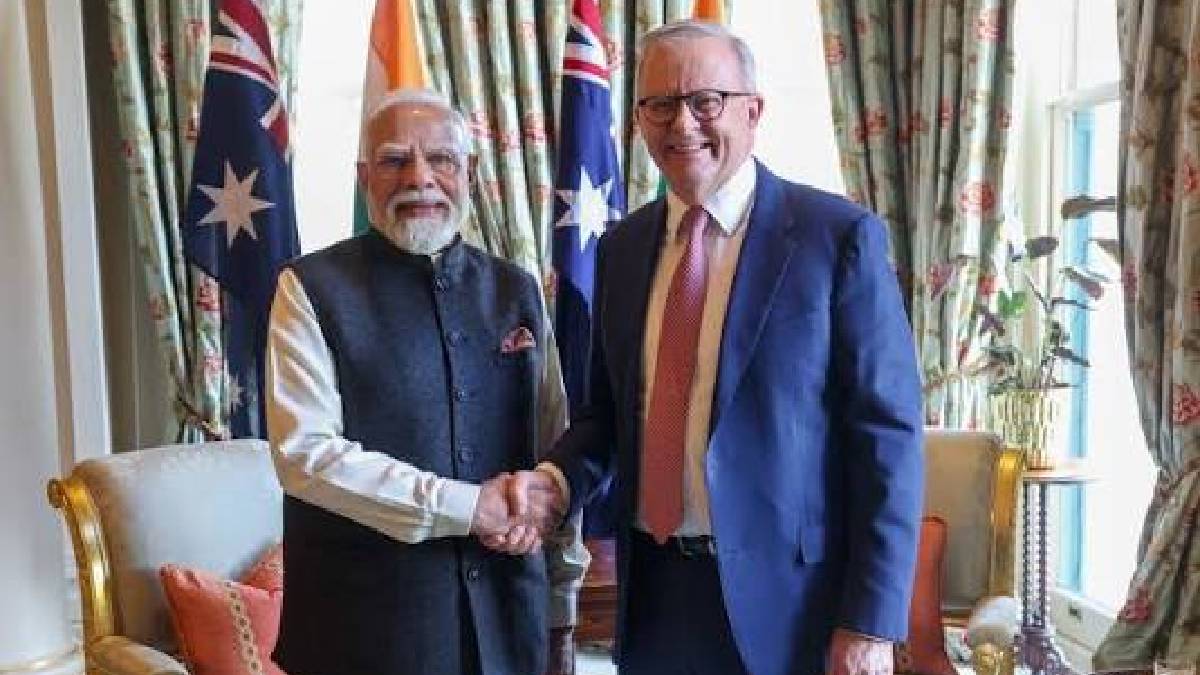
India-Australia summit that saw 18 major agreements reached in connection with relations between the two countries, including four of Australia and India, which could help strengthen ties between the two nations.
The Australian newspaper, for example, called Modi “Mr India” about his growing global clout and importance of India to Australia’s foreign and economic policy in relation to India.
The summit was attended by senior government officials, business leaders and policy makers from both nations and focused on increasing cooperation in the areas of trade, defense, technology, education, critical minerals, renewable energy and regional security.
The agreements are the most extensive reached by India-Australia bilateral talks in recent years.
Australian media coverage highlighted the magnitude of the deals and their importance and how they were clearly indicative of the rapidly evolving relationship between Canberra and Delhi.
India has become a key economic and strategic partner for Australia as the Indo-Pacific region changes in geopolitics is moving in a very big way.
Among the big announcements were proposals to enhance bilateral trade, develop supply chains and drive more investment in both countries.
The cooperation in the critical minerals area was of particular importance as Australia has been in the lead in helping India’s manufacturing and clean energy sectors and coal industry to grow in the near future from reliable access to key minerals.
Defense and security cooperation were also at the heart of the summit. Both countries reaffirmed their commitment to a free, open and rules-based Indo-Pacific.
Improved military cooperation, intelligence sharing, maritime security and joint exercises were also welcomed as important steps in the direction of regional peace.
Technology and innovation also emerged as a key focus of the discussions. Agreement on artificial intelligence, digital infrastructure, cybersecurity and research partnerships will lead to a deeper collaboration between academic institutions, startups and technology companies.
Education projects were also announced, providing expanded opportunities for student exchanges, research programs, and skill development.
Clean energy and climate cooperation were high on the agenda with both governments taking responsibility for accelerating efforts in renewable energy, hydrogen development and sustainable infrastructure.
To us these agreements are crucial to the long-term climate and economic objectives of the two countries.
The huge media attention in the name of Narendra Modi shows his growing visibility on the international stage. Australian commentators pointed out his role in consolidating India’s global reach and forging good relations with key partners.
The coverage also highlighted India’s stature up there as one of the world’s fastest-growing major economies and a key player in regional issues.
The 18 agreements will be seen to create long-term benefits for both countries as they will create business opportunities, enhance security cooperation and drive innovation.
All results of the summit are indicative of a common approach to building a strong, long-term partnership and a partnership that can meet challenges and geopolitical uncertainty and build on those.
The landmark summit is considered a turning point in India-Australia relations.
So far the Australian media has been putting Narendra Modi at the centre of the event and it has served to make the partnership very clear that both countries are going to be a huge part of the future of the Indo-Pacific region.