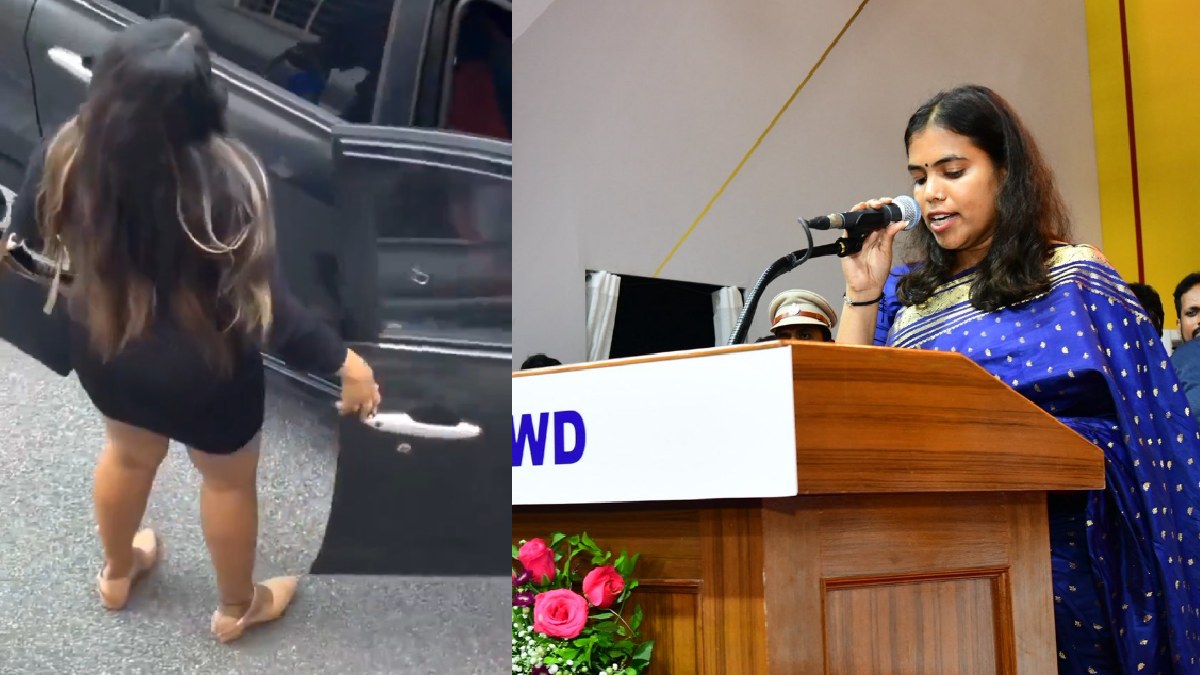
A viral video on social media has triggered a political controversy in Tamil Nadu after a woman seen getting out of a car was mistakenly identified online as Industries and Investment Promotion Minister S Keerthana. The minister has categorically denied that she is the woman shown in the video but the controversy has evolved well beyond the question of identity and has led to Keerthana’s challenge to a larger argument of the way women are vilified based on their clothes and appearance.
Keerthana asked why a woman’s clothing should be subject to public discussion or political attack in a post on X. She said that the whole incident was indicative of a “fragile, regressive mindset” and said women shouldn’t be judged by appearance, clothing or personal choices.
The video featured a woman wearing a short black dress as she stepped out of a car. Some social media sites distributed the video and questioned whether the person was Keerthana. The claims then drew comments and trolling online before the minister confirmed that the woman was not her.
Keerthana said the identity issue itself was not enough to justify the criticism. She questioned why the clothes, appearance or lifestyle of a woman should become a political matter even if the person in the video had actually been her.
The minister also gave the woman who appears in the video some sympathy, saying she was drawn into the controversy because of her similarity to her. Keerthana apologised to the woman for the unwanted attention she received and complimented her appearance, and told her to stay on her own path.
The minister also linked the controversy to the larger political situation in Tamil Nadu. In a crude swipe at her political opponents, she claimed that personal attacks are often made when there are no substantive issues to challenge a government’s policies or performance.
“Misogyny is the oldest weapon of those who have nothing substantive to positively contribute,” Keerthana said, framing the episode as an example of how gender-based attacks can be used in political battles.
Keerthana Accuses Parties Of Online Campaigns
Keerthana also said that DMK and AIADMK are both involved in what she described as false campaigns against women on social media. She added that the woman shown in the viral video was not her and warned against the circulation of things that could damage a person’s reputation.
Her comments added another political dimension to an incident that had initially revolved around an unverified identity claim. The controversy has since led to a wider debate about the use of social media in political campaigning and the boundaries between criticism and personal harassment.
The allegations also drew a response from DMK IT wing secretary TRB Rajaa who condemned the online abuse. “I am absolutely disgusted by social media accounts that are trying to degrade women and criticize their personal choices,” Rajaa said, and the media was spreading such an accusation because people who had nothing to do with the political dispute were being dragged into the controversy.
Rajaa added, “Women should be free to make their own choices without being targeted by online attacks.” He also said the DMK would not support behaviour that crossed the boundaries of decency.
Rajaa said that the party is for women’s dignity, rights and freedom and actions which violate those principles should not be tolerated irrespective of who is responsible.
Social Media And Political Attacks
The episode has exposed the increasing influence of social media on Tamil Nadu’s politics. Political parties and their supporters often use digital platforms to attack opponents but the spread of unverified claims and personal material can quickly turn political disagreements into personal attacks.
This case is such that the mistake of identifying the woman in the video has also brought into focus the role of social media users in providing the information on social media before posting it. Once videos spread beyond one person in the video, it is difficult to correct the original claim and the person depicted has no connection with the political conflict.
சமூக வலைதளங்களில் வைரலாகும் வீடியோவில் இருப்பது நான் அல்ல. அது நானாக இருந்தாலும் அதனால் என்ன? பெண்ணின் உடை, தோற்றம், மகிழ்ச்சி ஏன் பொது விவாதமாகிறது? அரசியல் விவாதம் முடியாதவர்கள் தனிப்பட்ட வாழ்க்கையை விமர்சிப்பதாக குற்றச்சாட்டு
— Dr. தீபக் (@nikaran_tn) August 23, 2026
- கீர்த்தனா காரு
TVK தற்குறிகளுக்கு செருப்படி 🤣💥 pic.twitter.com/beno6zg8Wd
For Keerthana, the issue is bigger than the viral video. Her response has drawn attention to the ever-increasing pressure women are facing over clothes and personal choices and to the political reaction that has turned the incident into another point of conflict between rival camps in Tamil Nadu.
The controversy therefore lies at the intersection of politics, social media and gender. Keerthana’s clarification dealt with the false identification but her larger message was that a woman's appearance should not serve as a tool for political humiliation or public judgment.
The exchange between Keerthana and Rajaa has also demonstrated a rare piece of agreement in a political rivalry: women should not be subject to degrading online abuse just because of what they wear or how they live. But the episode is still at least a question that is about how far political criticism can go in the age of viral social media content.