Bengaluru’s airport metro project to connect Silk Board Junction to Kempegowda International Airport via KR Puram and Hebbal is on the verge of being delayed yet again, the much-anticipated corridor now expected to be completed by March 2028. The new timeline will not be welcomed by commuters who have been waiting for a faster and more reliable public transport link between the city and the airport.
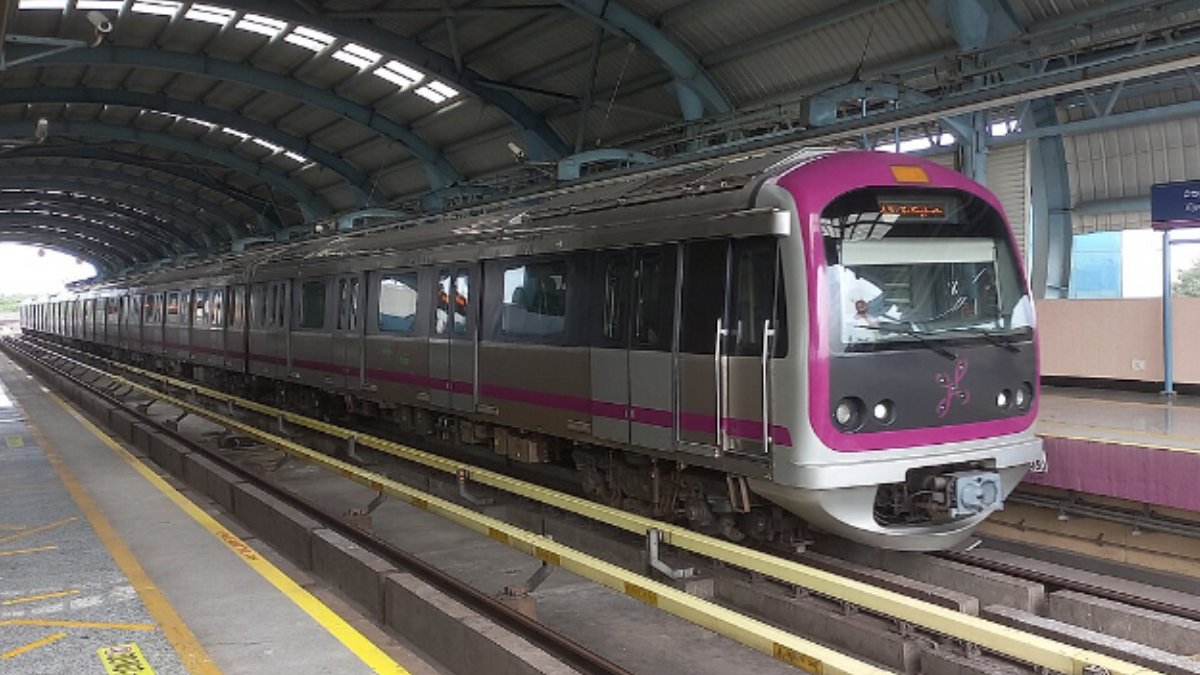
The proposed airport metro corridor is one of Bengaluru’s largest infrastructure projects. In particular, it is expected to provide a direct fast-transit connection between some of the major areas of the city and Kempegowda International Airport and reduce road transport for passengers going to and from the airport. Once operational, the corridor will bring much better connectivity across Bengaluru’s eastern and northern regions.
The line will connect Silk Board Junction to Kempegowda International Airport passing through the key points of transportation and employment in Bengaluru and KR Puram and Hebbal. These are some of Bengaluru’s busiest places of transportation and jobs, and therefore the proposed metro line will be particularly essential for commuters as well as airport passengers.
The current March 2028 completion date means residents will have to wait longer for the full benefits of the project. Bengaluru has seen the city's population increase and traffic congestion grow with it for many years and road infrastructure cannot keep up with the city’s expansion. A high-capacity airport metro line therefore is viewed as a solution to some of these transportation problems.
The corridor should provide an alternative to road trips in Bengaluru’s traffic-dense city. During peak periods, travel from the city to the airport can take a long time, especially when congestion is high on major arterial roads. A metro connection would provide passengers with a much more predictable journey time and relieve pressure on roads.
The project also has implications for Bengaluru's wider public transportation network. Connectivity with existing metro corridors would allow passengers to cross the city and airport in different parts and not rely on private vehicles or taxis for the entire journey. Such integration could make public transport more attractive to residents and visitors.
Airport connectivity is very important for the technology and business sector in Bengaluru. In the city, there are many technology companies, startups, educational institutions, and business centres, and many of these receive visitors coming from India and abroad. Better metro connections to the airport and commercial districts would make traveling to them easier.
The Silk Board area is especially important because it is one of the city’s major traffic bottlenecks and a key connection point between several employment corridors. Linking Silk Board with the airport through the metro network could provide an alternative route for thousands of commuters.
KR Puram and Hebbal are equally important nodes. Both areas are full of traffic and are strategic gateways to other parts of Bengaluru. The airport metro corridor could thus have benefits beyond airport passengers by connecting people living and working on the route.
But large infrastructure projects of this scale come with heavy engineering, land, construction, and coordination challenges. Delays can be caused by construction progress, approvals, utility movement, integration with existing transportation infrastructure, and other project-related issues. The revised March 2028 timeline shows the complexity of delivering such a major corridor.
For commuters, the delay means that the existing transport options will have to continue to be used until the new line goes into operation. Bengaluru already has metro services, buses, airport shuttle services, taxis, and private vehicles, but congestion is still a big problem. The airport metro is expected to be another high-capacity option for high volumes when completed.
The revised deadline will also mean that construction will be progressing more quickly in the months to come. Residents will closely follow progress as the project passes through some of the most densely populated and heavily trafficked sectors of the city.
Despite the delay, the airport metro remains a strategically important project for Bengaluru. When it is completed, passengers will be able to travel between the city and Kempegowda International Airport with much better connections between major residential, commercial, and transportation hubs.
The March 2028 target is therefore a big goal, although commuters will hope the revised schedule can be maintained and there will be no further setbacks. If it is completed on time, Bengaluru would have another important piece in its metro network and passengers will feel much more comfortable when they are driving through the city’s ever more congested roads.
Once operational, the Silk Board–KR Puram–Hebbal–Kempegowda International Airport corridor could become one of Bengaluru’s most important public transport links. In the meantime, residents and airport travellers will have to wait until March 2028 completion to experience its full benefits.