Indian-born NASA astronaut Anil Menon has brought a little piece of Earth to orbit after growing and harvesting fresh vegetables aboard the International Space Station (ISS). Menon and fellow astronaut Jessica Meir were seen on video taken from the space station in which they were growing kale and wasabi mustard greens that had been cultivated aboard the ISS for about a month. The unusual farm-to-table moment offered an insight into how astronauts could produce their own fresh food during future long-duration missions.
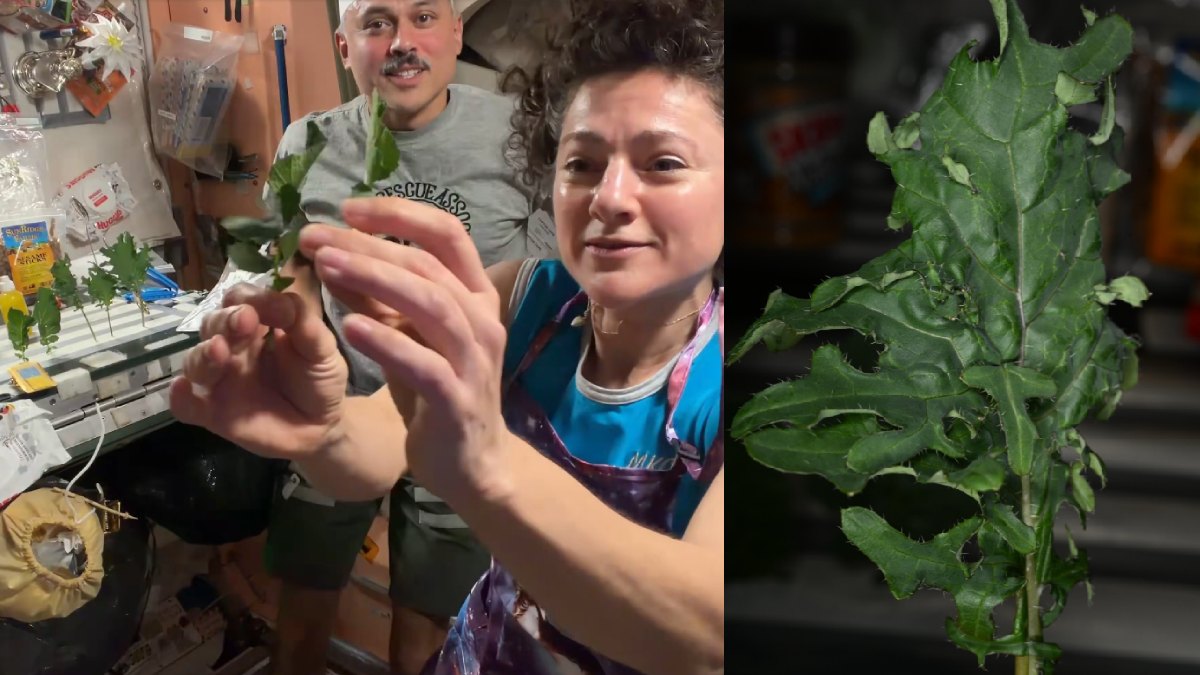
The astronauts recorded the experience in a video entitled “Chez ISS, Cooking on Space Station with Jessica and Anil.” Menon and Meir harvested the leafy greens and prepared a meal on their orbiting laboratory. Menon described the food as possibly the best meal they had made during their time on the space station, turning a science experiment into an all-around meal at about 300 km above Earth.
"On this episode we give you farm to table, simple, and delicious. This Kale and Wasabi Mustard was grown on ISS for more than 1 month. We harvested a few leaves and put them to the test. It might be the best meal we have cooked so far,” Menon said when sharing the video.
The vegetables were grown using NASA’s Veggie plant-growth system, a project to study how plants grow in the unique environment of space. In contrast to the Earth, where gravity, soil conditions, sunlight and natural water movement affect plant growth, the habitats on the ISS provide plants with microgravity and highly controlled artificial conditions.
Understanding how crops develop in space is an important part of preparing for future human exploration beyond low-Earth orbit. Astronauts headed to the Moon, Mars or other far-off destinations could spend months or even years away from Earth. If they all had to take care of all of their food from the planet, then it would take up a lot of space and transportation. And growing some food during the course of these missions could help alleviate some of that burden.
Space-grown vegetables could also have nutritional and psychological benefits. Packaged meals provide astronauts with essentials of nutrition and fresh produce could be a welcome addition to their diets and could add variety to it. Food that is fresh in nature might also help astronauts keep a connection to Earth with their plants and fresh vegetables to keep them connected to Earth in a space off-the-beaten-path environment.
Menon gave the experiment a humorous pop-culture connection with Mark Watney, the fictional astronaut from The Martian who grows potatoes when he is stranded on Mars. “Mark Watney would be proud,” Menon wrote of the NASA Veggie team, who helped astronauts learn how to grow food in space.
Chez ISS - Cooking on @Space_Station with @Astro_Jessica and Anil
— Anil Menon (@astro_anil) August 17, 2026
On this episode we give you farm to table, simple, and delicious. This Kale and Wasabi Mustard was grown on ISS over one month. We harvested several leaves and put them to the test. It might be the best meal we… pic.twitter.com/Oq9narSiu9
The contrast illustrates a serious problem behind the light-hearted moment. Future astronauts could be required to develop skills beyond piloting spacecraft and doing experiments and going on spacewalks. If we build permanent bases on the Moon, or eventually go to Mars, growing food could be a vital part of life off Earth.
The latest harvest is more than a meal. Every successful crop grown aboard the ISS gives scientists new information about how plants respond to spaceflight and how controlled agricultural systems could be improved. And that knowledge could be even more important as space agencies seek to send humans further from Earth.
But for Menon and Meir, the experiment was also something simpler: the satisfaction of harvesting food they’d helped grow and turning it into a meal. Their farm-to-table experience demonstrates how even small agricultural experiments in orbit could eventually contribute to a much larger goal -- making human life sustainable beyond Earth.