Four astronauts from NASA’s Crew-12 mission are preparing to return to Earth in a SpaceX Dragon spacecraft after almost eight months of living and working aboard the International Space Station (ISS). It’s the beginning of another long-term human spaceflight journey that will take place in a planned sequence of undocking from the ISS, orbital departure, atmospheric re-entry, and a dramatic ocean splashdown.
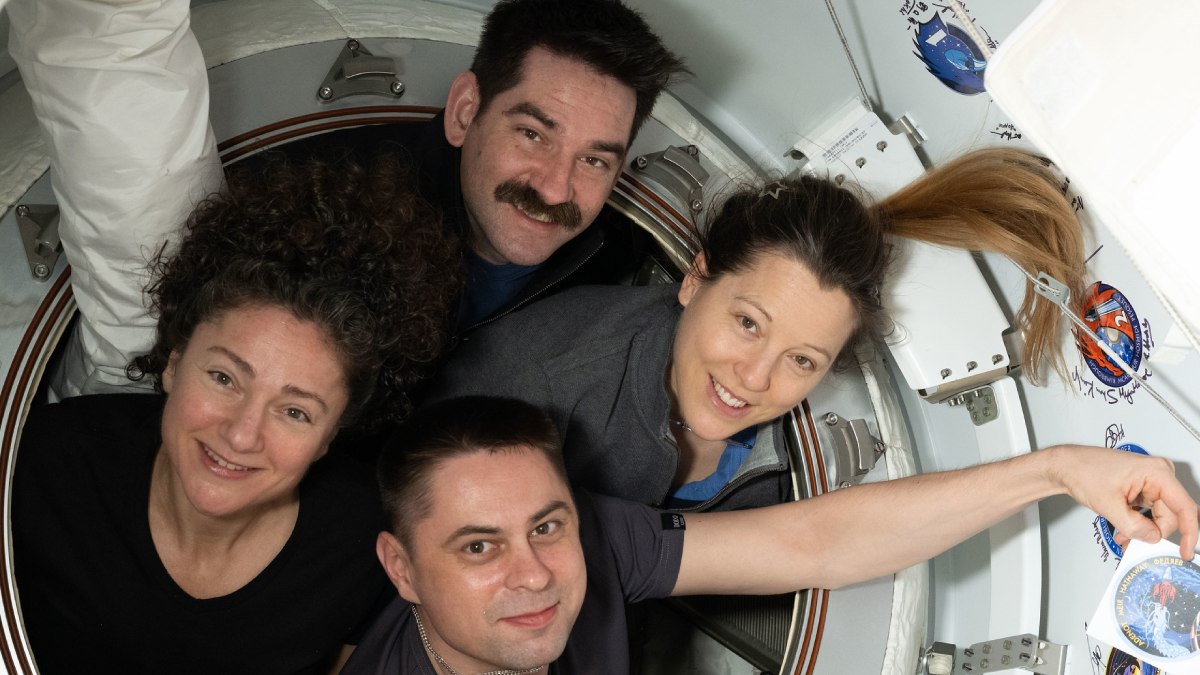
The astronauts who have spent months in the ISS have been involved in many scientific efforts to keep the day-to-day operations of the station running smoothly and to conduct a wide range of research in the microgravity environment of space. Their return will not only bring an end to their long-term stay in space but also provide scientists with a chance to study and analyze the human body’s response to such long periods in a more permanent way.
**Crew-12 astronauts prepare for return**
The Crew-12 mission is a part of NASA’s ongoing collaboration with SpaceX, via the Commercial Crew Program. This is a new initiative that will allow NASA astronauts to travel to and from the ISS with spacecraft that have been commercialized so that all astronauts are regularly in low Earth orbit.
A full list of preparations must be done before the astronauts go on their return flights. This includes moving equipment, moving cargo, checking on the Dragon spacecraft, and checking the procedures for safe return to Earth, and all the usual procedures. Although the spacecraft is mostly autonomous, it still needs crew supervision so the astronauts need to be briefed ahead of undocking.
The return journey is very different from a regular flight due to the complexity involved. The Dragon must conduct a series of precisely timed maneuvers to get away from the ISS and position itself for the atmospheric re-entry process.
**What happens after Dragon undocks?**
Once the spacecraft separates from the International Space Station, both mission controllers and astronauts closely watch Dragon's systems as it navigates its way back to Earth. The spacecraft uses its propulsion system to lower its orbit and establish the correct trajectory for re-entry.
One of the most demanding parts of the mission is when Dragon enters the Earth's atmosphere. At this point, Dragon is traveling at a very high speed and will produce a lot of heat as it enters the atmosphere. The spacecraft has a robust heat shield designed to protect the crew and the spacecraft systems from the extreme temperatures encountered during re-entry.
After passing through the atmosphere, the spacecraft continues on toward the recovery zone. In this phase, its parachute system deploys in stages, significantly slowing Dragon down before it reaches the ocean's surface.
**Dragon splashdown and recovery**
The final stage of the mission is the splashdown - a unique feature of the Crew Dragon capsules. Whereas the spacecraft usually land on solid runways, the Crew Dragon capsules return to Earth by splashing down in the ocean under the guidance of parachutes.
Before the splashdown, recovery teams are strategically positioned in the area to ensure a smooth recovery operation. The very moment Dragon touches the water, recovery teams quickly approach the capsule to secure the spacecraft and ensure safety. The astronauts are then carefully removed from the capsule and transferred for thorough medical evaluation.
The recovery process is essential in the mission as astronauts returning to Earth after long periods in microgravity often experience short-term physical problems. In the long term, weightlessness can affect muscles, bones, balance, and cardiovascular function. So after landing, medical teams are watching the returning astronauts to see if there are any problems.
**India timings and live return**
For viewers in India, the exact timing of key Crew-12 milestones depends on the mission schedule and the planned splashdown location. NASA and SpaceX typically provide live coverage of major events such as the undocking, departure maneuvers, atmospheric re-entry, and the final splashdown.
However, there are always changes in the spaceflight schedule because of weather and sea conditions and technical reasons. At the same time, mission controllers need to constantly evaluate and react to the situation before they commit to a particular return opportunity.
Space enthusiasts in India are eagerly awaiting the next phase of NASA and SpaceX collaboration. The partnership is necessary to ensure regular crew transportation to the ISS, and the international cooperation and science in space supported by the ISS has grown.
**Why long-duration ISS missions are important?**
The Crew-12 astronauts’ eight-month stay in the space station is significant not only because of the duration but also because they are working on significant scientific investigations in the International Space Station. The ISS is a unique laboratory where scientists can do experiments that they cannot conduct on Earth due to the constraints of gravity.
Research conducted on the station covers many areas, from human health, biology, physics, materials science, Earth observation, and technology development. The findings from the studies can be used to improve and help to develop future exploration missions, particularly longer ones beyond low Earth orbit.
For this reason, the return of Crew-12 is not just the end of a flight. It begins the post-mission period during which the astronauts will be studied, and the data collected during their time in space will also be examined.
As the SpaceX Dragon spacecraft is ready to deliver the four astronauts back to Earth, mission teams will monitor every stage of the return operation in intricate detail. From the critical undocking at the ISS to the high-stakes atmospheric re-entry and the final ocean splashdown, each of the steps has to be done exceptionally well. For the astronauts, this is the big moment to return to life on Earth after months spent in the challenging and exhilarating environment of microgravity.