Maharashtra is going to cut 10% water in urban and rural local bodies from October 16. Water supply management will be affected in different parts of the state as water availability and conservation of existing sources are concerns, as the authorities prepare for potentially tighter water conditions.
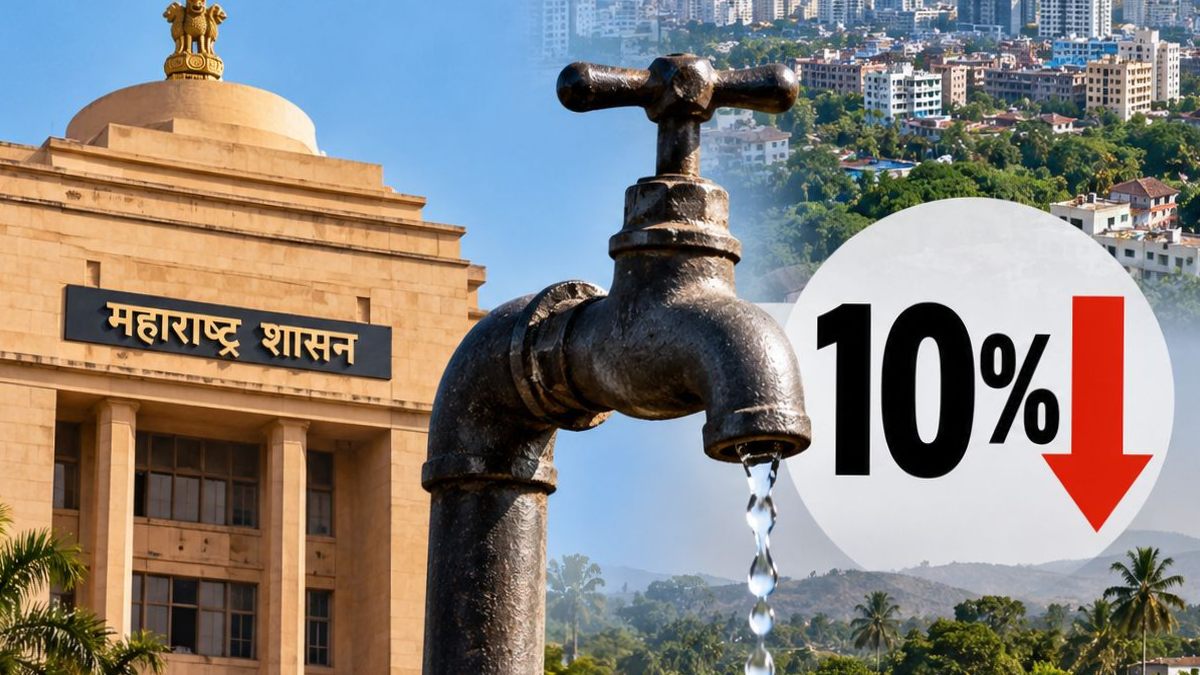
The water reduction will cover urban and rural local bodies and will be a statewide effort rather than limited to large cities. Residents could see changes in supply schedules and water pressure or water distribution patterns depending on local conditions and available water resources.
Water management is now even more crucial in Maharashtra, a state with large centres and several rural areas that depend on reservoirs, rivers, groundwater and other sources of drinking water and agriculture. Managing these resources is particularly difficult when storage levels and rainfall patterns vary substantially between regions.
Why has Maharashtra announced a water cut?
The reduction of water supply is usually made in order to ensure that the water reserves are there and that the current supply lasts for a longer period of time. A minimum 10% cut allows local administrations to reduce consumption while continuing to provide water to households and other users.
But the impact of the decision will not be the same across the entire state. Maharashtra has wide-ranging geographical and climate variation, and different districts are likely to face different water availability conditions from one year to another.
Local bodies may need to modify distribution systems based on the water sources and storage levels available to local government and local water industry so that water availability is not constrained.
Urban areas have a particular challenge because of their rapidly growing population and rising demand from residential, commercial and industrial users. Cities consume huge amounts of water each day, placing substantial pressure on reservoirs and water treatment and distribution infrastructure.
In rural areas, the situation may be more complicated as water is needed not only for households but also for livestock and agriculture. Low water supply can therefore have far-reaching implications for the rural population too.
What does it mean to residents if a 10% water cut is introduced?
For households, a 10% reduction does not necessarily mean that water could be unavailable for a set number of hours every day. When and how it is implemented will depend on the local authority and distribution system.
Residents might see changes in supply duration, delivery times, or lower pressure during certain times. Local agencies will probably announce changes in their schedules in order to manage the availability of water.
People living in affected areas will be encouraged to use water wisely and avoid wasting it. Small conservation measures like fixing leaky taps, not washing excessively, and only storing water for daily needs can assist in adapting to the situation of a reduced supply.
What impact will agriculture and rural communities have on agriculture?
The water cut could also bring attention to the larger issue of balancing drinking-water requirements with agricultural demand. Maharashtra has a huge farming population, and irrigation is a significant part of Maharashtra’s water consumption.
When there is limited supply of drinking water, authorities have to balance the demands of domestic users, agriculture, and industries. The need for drinking water is a priority, but farmers and rural communities may also need to cope with limited irrigation resources.
In the case of water management measures, local planning, reservoir conditions, rainfall, and availability of groundwater would be crucial.
Water conservation becomes crucial
The announcement serves to underline the importance of long-term water conservation. Short-term shortages can be dealt with by a temporary reduction of supply, but sustainable water management needs to come from a much broader perspective.
Rainwater harvesting, restoration of traditional water bodies, improved irrigation efficiency, reduction of distribution losses, and responsible groundwater use can all help in enhancing water security.
Urban local bodies can also play a significant role in this by identifying leaks in pipelines and improving water distribution efficiency. In many cities, a significant amount of treated water can be lost before it is available to consumers due to aging infrastructure and leakages.
Conservation is particularly important in households when supply is limited. Water usage should be minimized, and the local administration can help to provide the right amount of water.
What happens after October 16?
The duration and severity of the water restrictions will depend on how water availability evolves. Rainfall, reservoir storage, groundwater levels, and consumption patterns will determine decision-making by the authorities in the future.
So the minimum 10% cut announced from October 16 is a clear signal for residents, businesses, farmers, and local administration to prepare for tighter water management.
For Maharashtra, the immediate priority is to meet water needs and conserve available resources. Residents need to understand the impact of responsible consumption on the state’s water resources in times of stress.
The reduction will be rolled out to local authorities, and residents should closely monitor official announcements from their local municipal corporations, councils, and rural authorities for specific supply timings and any additional restrictions applicable to their areas.