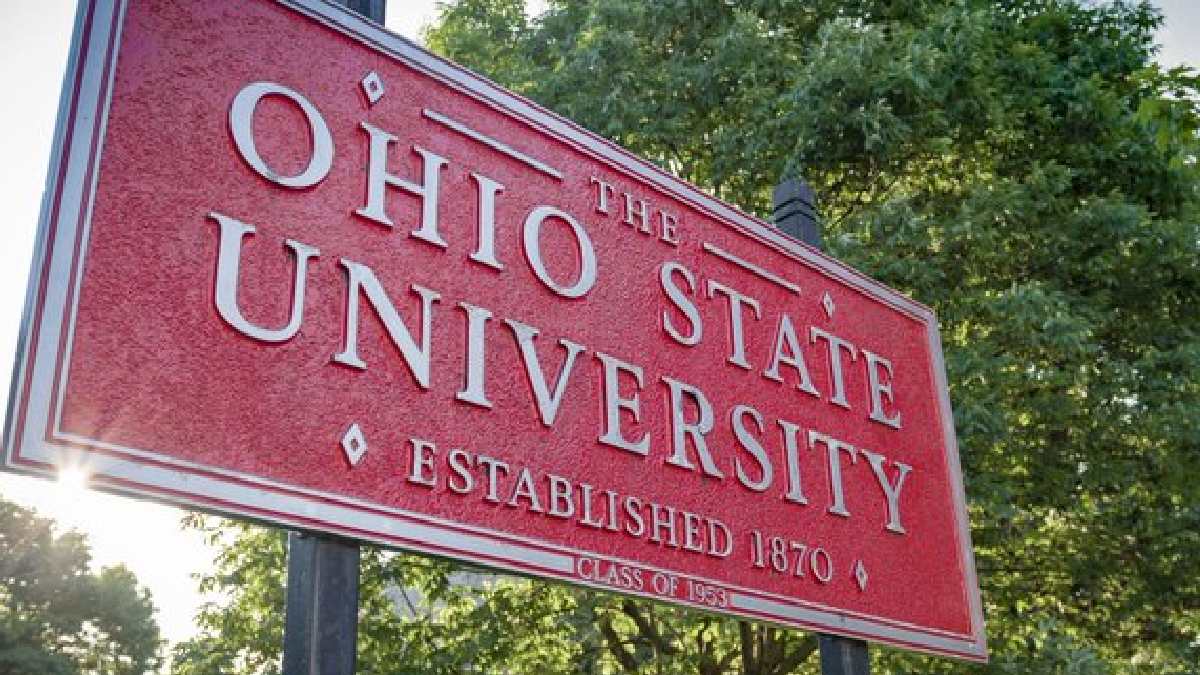
Ohio State University has agreed to pay $2.1 million to the US government for failing to disclose some employees’ affiliations, collaborations and support from China as they applied for federally funded research grants.
The settlement, announced by the US Department of Justice, involves research funding received from NASA and the National Science Foundation (NSF) between November 2012 and August 2023.
Federal officials said information about some China-related connections was stored internally at the university but was not passed on to the relevant federal agencies.
What Did Federal Investigators Allegedly Find
According to the Justice Department, Ohio State's annual Faculty Activity Reports had identified affiliations involving some researchers and Chinese universities or state-run research organisations from 2014 onwards.
But officials said that these affiliations were not disclosed to NASA or the NSF as required during the federal grant application process.
The grants in question also had disclosure requirements regarding foreign government support received by principal investigators and co-principal investigators.
Federal law also restricted the use of the grant funds for collaborations between China, Chinese universities and Chinese-owned companies.
Professor's Thousand Talents Programme Connection
One of the most significant issues investigated by investigators was an Ohio State principal investigator who was working on NASA-funded research.
The university learned in 2019 that the researcher was in China’s “Thousand Talents Programme,” a program set up with the Chinese government to recruit people with access to foreign technology and intellectual property,” the Justice Department reported.
The federal government alleged that NASA and the NSF were not notified about the participation until the fall of 2023, four years after Ohio State discovered it, according to federal investigators.
Also, the investigators identified other university employees involved in the grants who were connected with the programs, or who had ties, collaborations or financial support from China.
Ohio State's Response
Ohio State has said that it looked into it and took action after finding what it described as inappropriate foreign affiliations.
The university suspended the professor's principal investigator privileges, stopped spending on the affected federal awards and repaid the relevant grant funds. The professor is no longer employed by Ohio State.
In an interview, the university has also been in dialogue with the federal government, and there are safeguards to protect research integrity and security, the university said.
Importantly, the $2.1 million settlement does not constitute an admission of liability by Ohio State. The Justice Department referred to the matters resolved by the agreement as allegations.
Why This Case Is Drawing Attention
The settlement comes at a time when the US is increasingly concerned about foreign influence, transparency in federally funded academic research.
American universities often collaborate with institutions and researchers overseas. But federal agencies have increasingly emphasized that researchers and universities must disclose foreign funding, affiliations and other relationships when required by grant rules.
The Ohio State case illustrates how important it is to ensure that information on internal university reporting systems is available to federal agencies when disclosure is required.
For Washington, the situation is also related to concerns over the security of taxpayer-funded research, intellectual property and national security.
The settlement for universities that receive major federal research grants serves as a reminder that “foreign affiliations and funding arrangements can carry significant compliance responsibilities”.
As US authorities seek to look into research links between China and universities, the Ohio State case could put pressure on universities to strengthen their disclosure systems and research-security processes.