Two years after Pakistan declared a National Education Emergency, the country is still dealing with one of the world’s biggest education crises with 25.1 to 26 million children still out of school. A new comparative policy review by the Civil Services Academy (CSA) has concluded that the problem is not policy absence but poor governance, administrative discord, insufficient funding and provincial disparities.
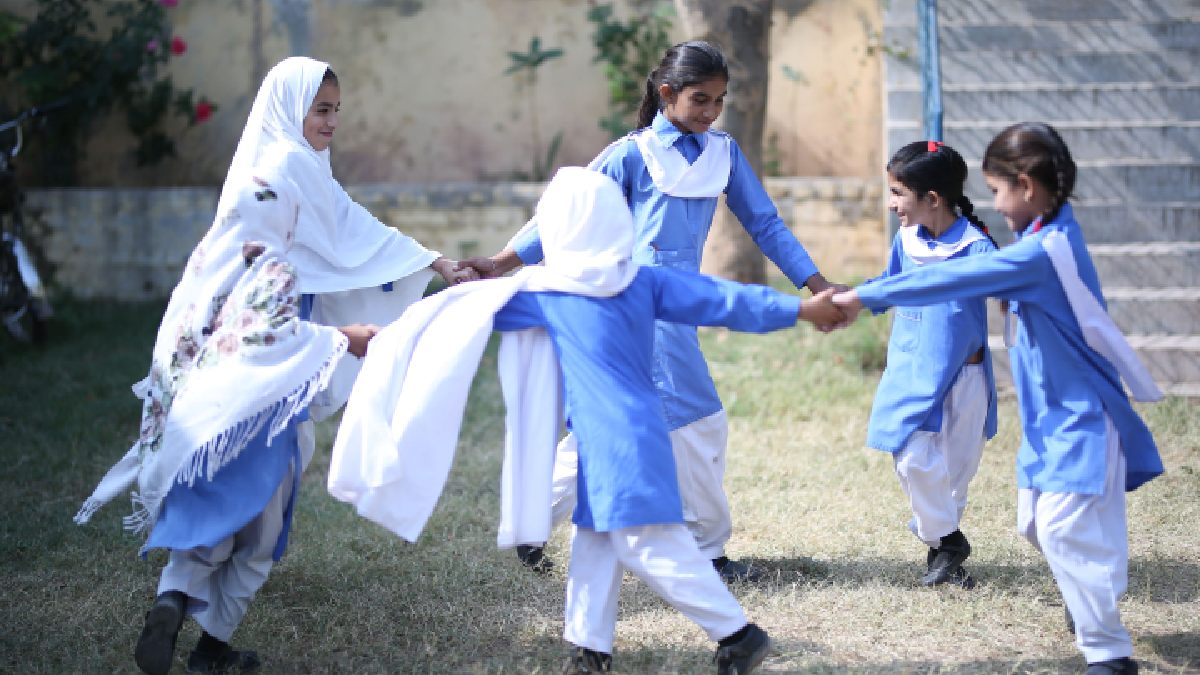
The report paints a very troubling picture of Pakistan’s education system, highlighting that public investment remains critically low. In provinces like Sindh and Balochistan, 81% and 90% of education budgets are spent on salaries, leaving little room for infrastructure development, school expansion or quality improvement.
Education economist Dr. Faisal Bari of Lahore University of Management Sciences (LUMS) said that Pakistan's overall education expenditure has fallen below 1% of its Gross Domestic Product (GDP), far short of the United Nations' recommended benchmark of 4% of GDP for education.
Punjab, the most populous province of Pakistan, is the one with the highest absolute burden, where 9.6 to 10.4 million out-of-school children are estimated. The report cites high dropout rates and regional disparities especially in South Punjab, where Rajanpur districts have out-of-school rates as high as 48%.
Sindh has around 7.4 million children outside of the education system. The CSA review points to a major imbalance between the availability of primary and secondary schools resulting in nearly 54% of students leaving education after completing primary school. The province's education system is also in the midst of recovering from devastating floods that have destroyed nearly half of its public schools.

Khyber Pakhtunkhwa has around 4.9 million out-of-school children. Challenging conditions, security concerns and a lack of female teachers are also barriers to improving school enrolment, especially for girls.
The situation is even worse in Balochistan, where vast geographical distances and inadequate infrastructure continue to hamper access to education. 3,617 of the province's 15,270 schools are either non-functional or ghost institutions according to the report. Girls constitute 78% of the province's out-of-school population, highlighting the continued gender disparity.
The report also identifies serious educational challenges in rural Islamabad, Gilgit-Baltistan and Pakistan-administered Kashmir, where remote geography, informal settlements and low maternal literacy rates contribute to high dropout rates.
Education expert Dr. Abdul Hameed said in an interview that about 30% of Pakistan's out-of-school children live with some form of disability, highlighting the absence of inclusive education policies and access to education.
In addition to governance issues, experts also linked poor educational outcomes with widespread child malnutrition, insufficient school infrastructure, and low learning quality that fails to equip students with employable skills.
The Civil Services Academy has proposed a number of structural reforms to alleviate the crisis, including a single National Student Registry to be linked to the B-Form database of NADRA that will track students in real time, formal and non-formal education records to be integrated, financial incentives to push teachers to remote areas, particularly women, and autonomous district education authorities.
Punjab officials have highlighted such initiatives as school meal programmes, public-private partnerships, and school management through the Punjab Education Foundation, but the CSA review warns that these measures alone will not resolve the crisis.
The study concludes that without significant increases in education funding, stronger institutional accountability and sustained implementation of reforms the National Education Emergency in Pakistan will remain symbolic in nature and leave millions of children without access to quality education.
These informations are gathered from CSA report.