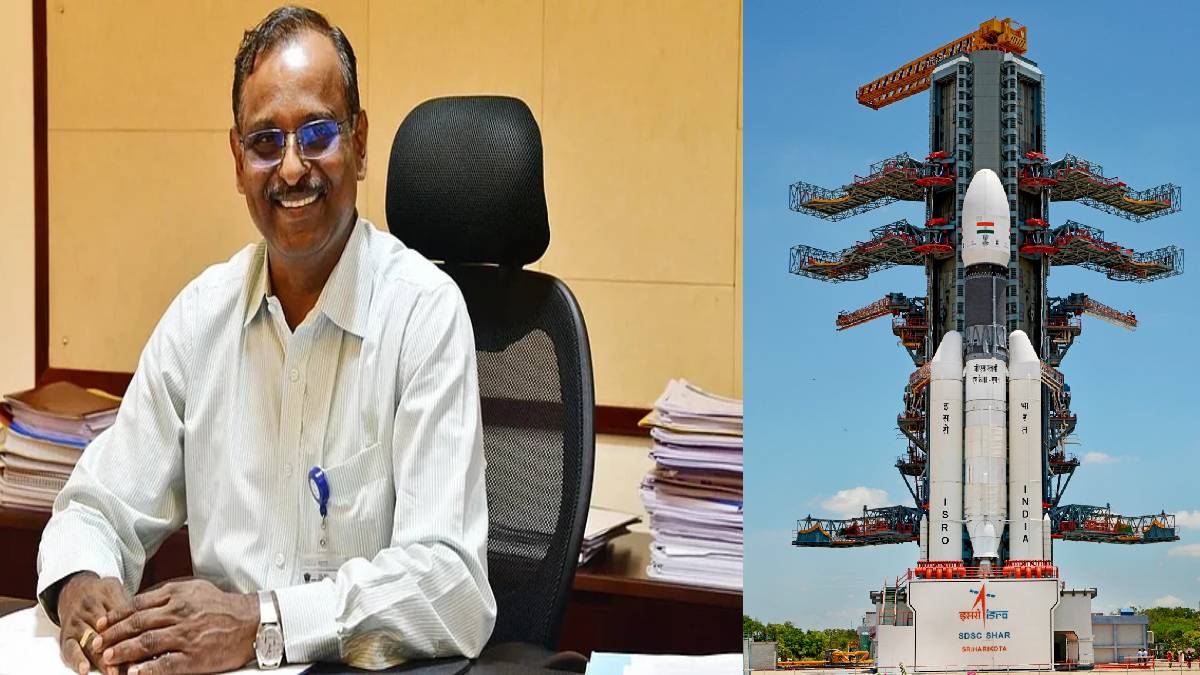
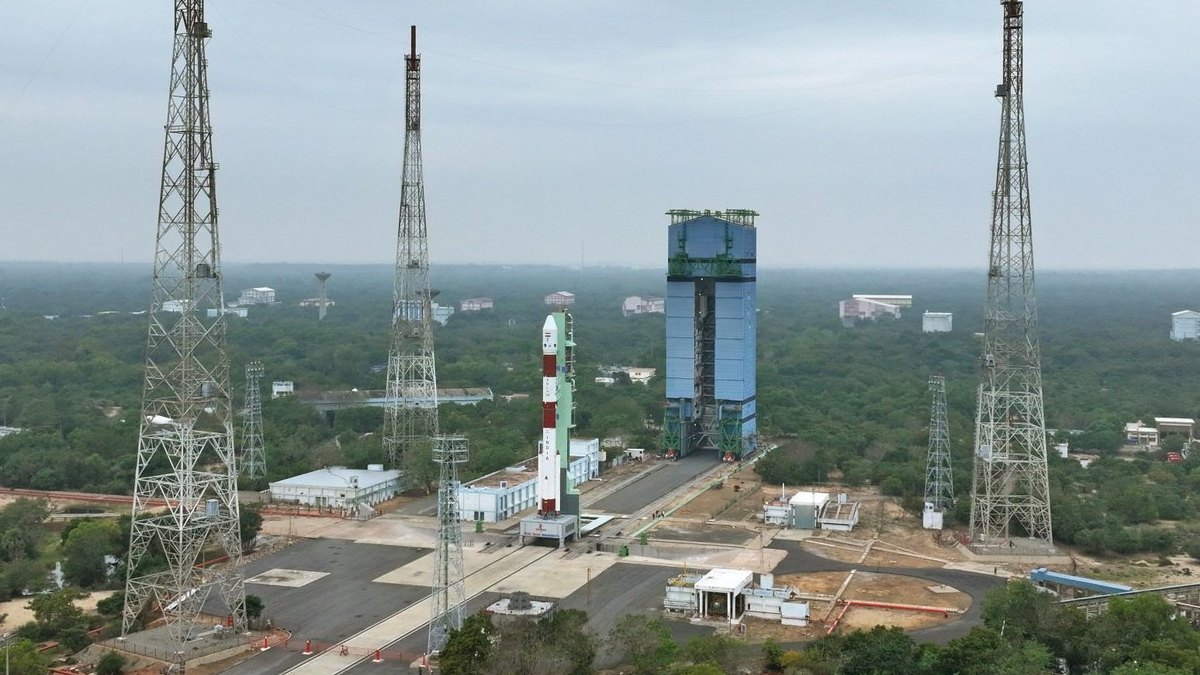
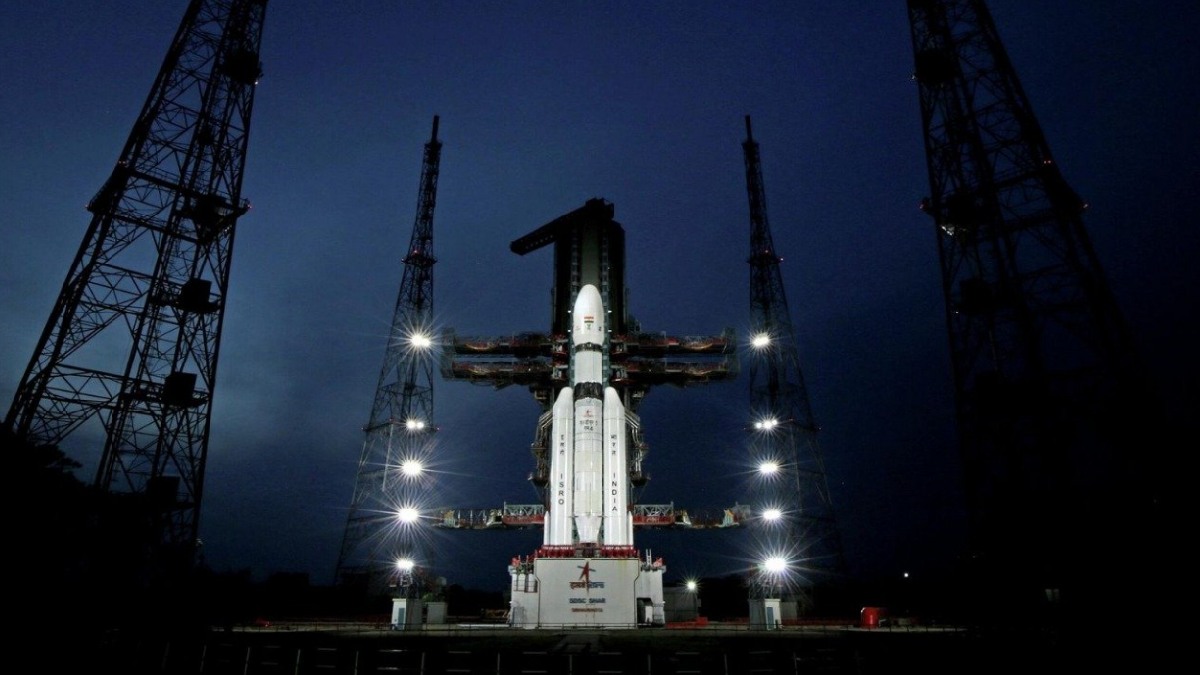
The Indian Space Research Organisation (ISRO) is geared up for another important space mission and is preparing for launch EOS-05, also known as GISAT-1A, on September 4, 2026.
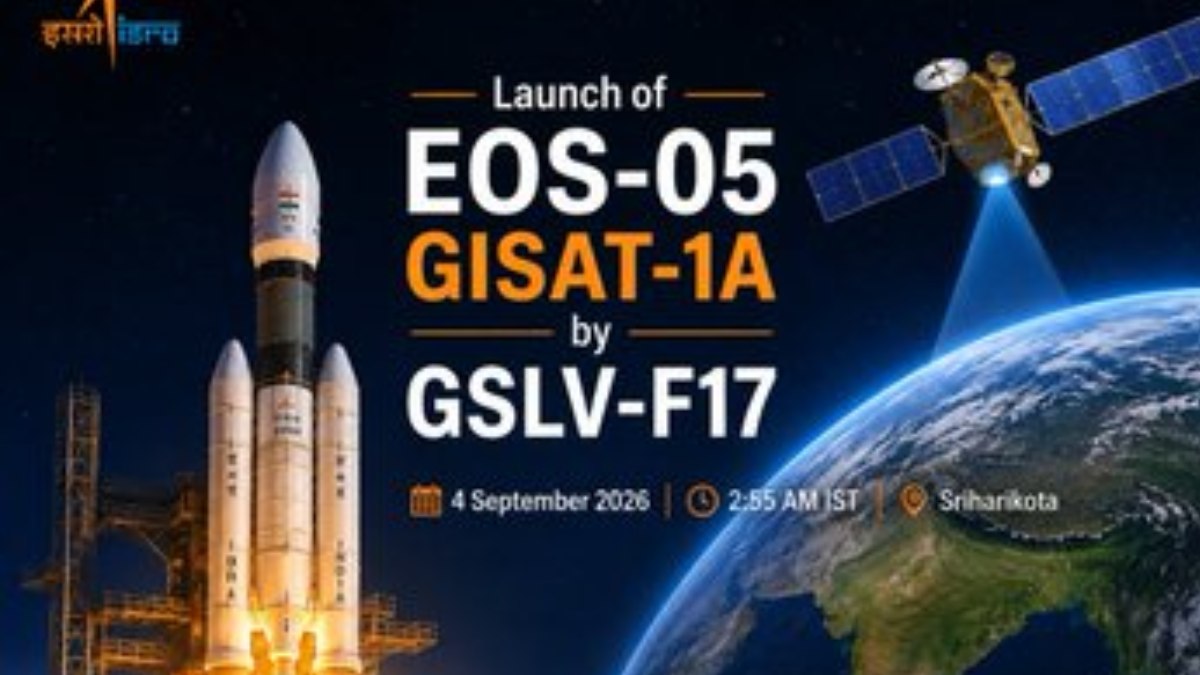
The Earth-observation satellite will be launched on board the GSLV-F17 rocket from the Second Launch Pad at the Satish Dhawan Space Centre in Sriharikota, Andhra Pradesh. The launch is scheduled at 2:55 am IST.
The mission is significant because EOS-05 is to provide frequent images of the Indian subcontinent from a geosynchronous orbit.
Unlike many Earth-observation satellites that move across different parts of the planet, a spacecraft in the geosynchronous orbit can remain in a continuous image of a large area.
What is EOS-05
EOS-05 is an advanced 'Earth Observation Satellite' developed by ISRO. As per the space agency, it will be India's first imaging satellite in geosynchronous orbit.

The satellite will be launched to a Sub-Geosynchronous Transfer Orbit by GSLV-F17 to get its intended orbit.
This position is ideally suited to watch events that can rapidly change. If the satellite could monitor large areas very regularly, weather monitoring, disaster management and other Earth-observation applications could be made much easier.
Why does the mission matter
One of the biggest advantages of EOS-05 is its potential for 'near continuous observation'. Frequent imaging can help to track cyclones, floods, forest fires and other large-scale events.
In disaster management, having accurate satellite imagery can help enhance situational awareness. That information will then help officials in assessing areas affected, tracking weather systems and planning for an immediate response.
The satellite will also strengthen India's overall Earth-observation capabilities. With more and more demand for high-quality satellite data, missions like EOS-05 can be employed for environmental monitoring or infrastructure and agricultural assessment.
A major mission for GSLV-F17
EOS-05 will be launched on GSLV-F17, the 19th flight of India’s Geosynchronous Satellite Launch Vehicle. ISRO says the rocket will have a four-metre-diameter ogive composite payload fairing for the mission.
The launch also has added significance as it follows the unsuccessful GISAT-1 mission in 2021.
EOS-05 is still being developed as the successor to that first one and a successful mission on September 4 will be a significant milestone in India’s search for geosynchronous Earth imaging.
If successful, EOS-05 will bring India another great tool to monitor its territory and surrounding regions from space.
And more importantly, it shows ISRO’s interest in building satellite capabilities which are capable of directly supporting weather observation, disaster response and national development.
With the launch coming soon, EOS-05 will be closely watched by the space community as India prepares to put its new “eye in the sky” into orbit.