Some of Russia’s wealthiest people have been moving billions of dollars abroad in recent weeks with the country’s economy in crisis, government finances in crisis and the economic impact of international sanctions in the long run. The capital transfers have been attributed to some business leaders closely linked to President Vladimir Putin, and the money is raising concerns among some of Russia’s oligarchs even as the government is trying to stabilize the economy.
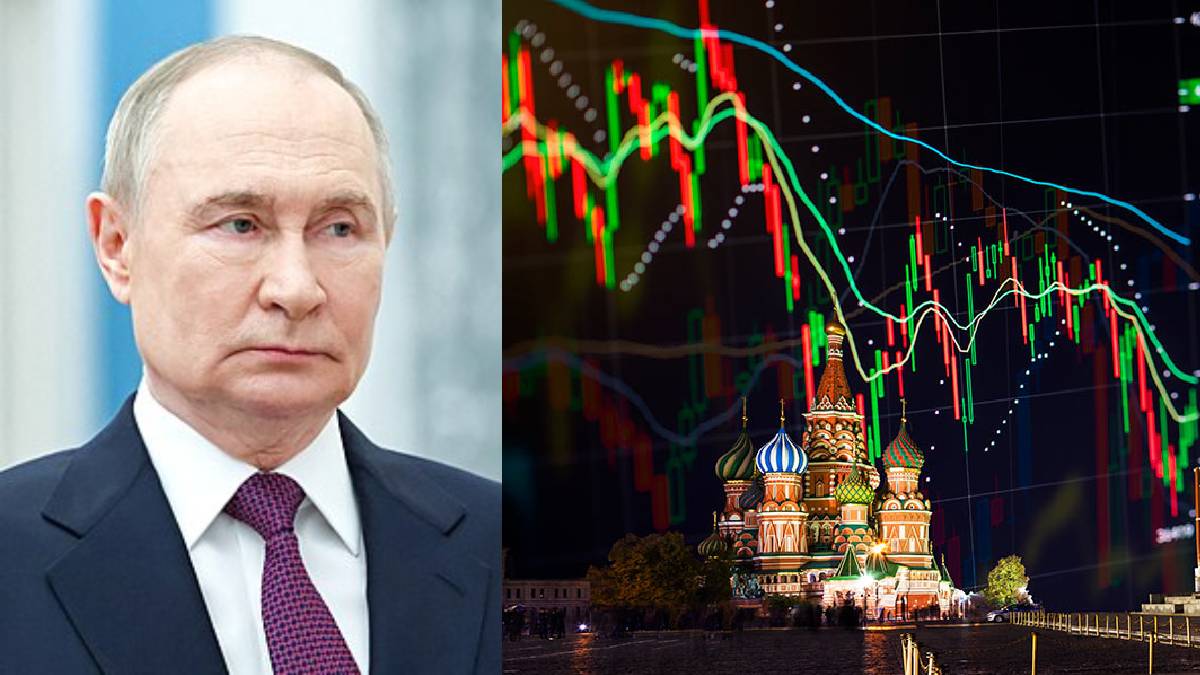
At a time when Russia has a huge fiscal deficit, the movement of wealth is occurring. Rising government expenditure on defence and security, as well as changing global trade patterns and the West’s continued sanctions in the region, have put pressure on the country’s already struggling public finances. Russia has continued to attract substantial financial revenue from energy exports, but the change in global commodity prices and restrictions on international financial transactions have drastically altered the economic picture for it.
Several of Russia’s richest people, including some close to Putin, have moved billions of dollars abroad after growing concerns about the country’s economy and the government budget. Read more in our exclusive story: https://t.co/NscAKVGtO8
— Bloomberg (@business) July 16, 2026
📷: Gavriil Grigorov/AFP pic.twitter.com/mL4Gjr7Ir2
High-net-worth people move capital around the world when economic uncertainty is high. Wealthy investors’ assets can be part of a diversified portfolio to reduce risks in their financial investments, keep their capital, and gain access to international markets. These choices could be overseas real estate investments, financial assets, private businesses, or international holding structures.
The concern of inflation, exchange rate fluctuations, changing regulations, and uncertainty in the face of future sanctions has pushed some Russian business leaders to build more geographical diversification of their assets, analysts say. And for companies across the world with big operations and entrepreneurs who have more global exposure, investment in a lot of countries can provide more financial flexibility and less exposure to domestic economic risk in any case.
Russia has been able to survive so many sanctions over the past few years in several sectors. The country has resumed trade with Asian, Middle Eastern, and other non-Western nations and has also used alternative payment systems and domestic financial systems. In the same way, the government is trying to support domestic industries, boost manufacturing, and promote import substitution in key sectors.
But economists say sustained fiscal pressure remains an important challenge. Big public spending, infrastructure, and defence expenditure remain significant budgetary needs for governments to keep up with. Balancing these demands with macroeconomic stability is an important challenge for governments.
The reported overseas movement of private wealth also reflects global investment trends. Increasingly, high-net-worth individuals in the world are diversifying their portfolios globally in order to deal with geopolitical, financial, and currency-related risks. In Russia, geopolitical events have also made investing more complicated.
Financial experts say capital outflows have consequences on an economy. While international diversification is a common wealth management strategy for many investors, the impact on domestic investment if money is not reinvested in the country can be severe. But if domestic conditions are excellent and investors have confidence in their own system, then they may invest in the domestic market.
For Russia, maintaining investor confidence will depend on economic growth, fiscal discipline, inflation control, exchange rate stability and the country’s changing international trade relations. Further development of domestic financial institutions and private investment will also be an important factor in future capital flows.
International markets are watching Russia’s political developments closely as geopolitical events continue to shape economic policy and global investment trends. Business leaders and politicians in such a global setting will probably continue to monitor Russia's government spending, economic growth, and financial stability, which will continue to be the focus of business leaders, policymakers, and investors who deal with it in an increasingly complex global environment.
Although some of the well-off Russians have put huge assets abroad, the development of the Russian economy will still depend on several domestic and international factors. Economic policy decisions, global demand for energy, trade relations, and global political developments will continue to be key determinants of investor confidence and long-term financial trends.