Scientists have achieved a breakthrough in synthetic biology by creating the first 'almost-living cell' from scratch, bringing researchers one step closer to understanding one of science's greatest mysteries—how life first emerged on Earth billions of years ago.
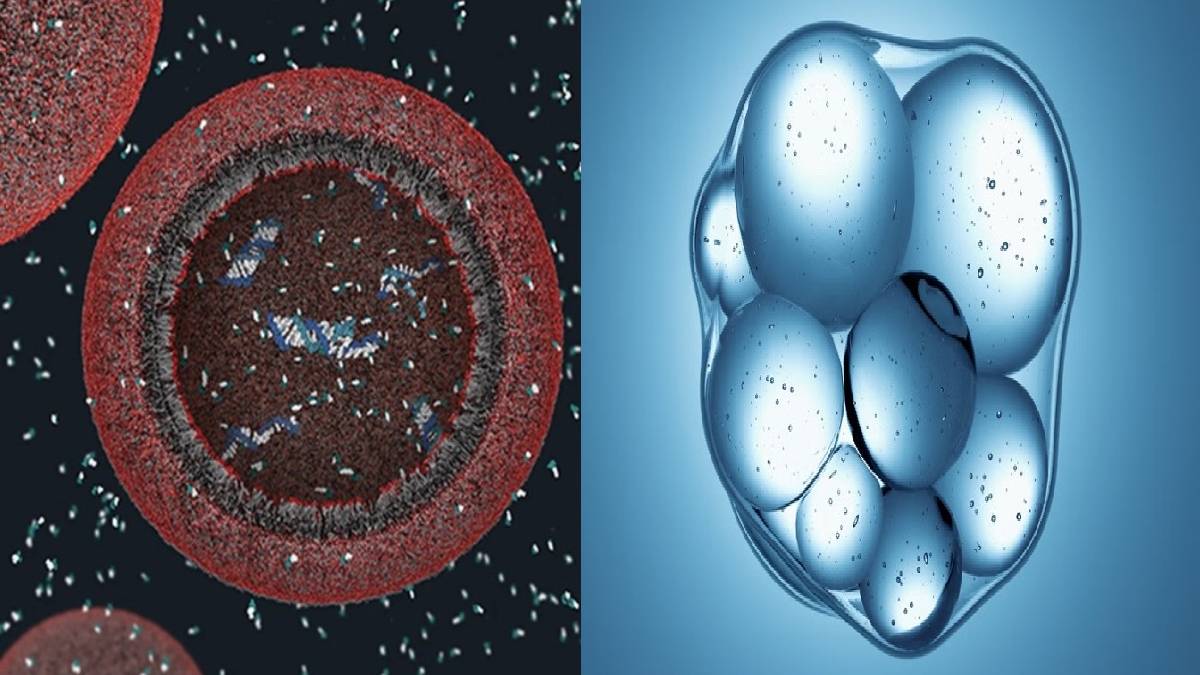
Unlike natural cells, our new synthetic cell was constructed with unique biological elements instead of being created from an existing living cell. While not a living cell, it can perform several biological functions and may be a powerful platform to study the earliest stages in life.
For decades, scientists have been trying to answer the most basic question: How did non-living molecules form into the first living cells? The process has been hard to recreate in a laboratory. The discovery provides scientists with a control system that mimics many of the features of primitive life.
The synthetic cell is designed to mimic several of the crucial processes of living organisms (such as maintaining an internal chemical environment, processing biological molecules, and carrying out basic cellular functions). While this cell cannot reproduce or evolve independently like a living organism, it is a big step toward understanding how the very essence of life could have developed from simple chemical building blocks in the first place.
One of the biggest advantages of building cells from scratch is that scientists can precisely control every component. That enables them to understand how individual molecules interact, how cellular membranes form, how energy is created, and how biological systems gradually become more complex. And such experiments would be very difficult or impossible with naturally evolved cells, whose complexity has accumulated over billions of years.
The achievement will have broad applications that go beyond understanding the origin of life. Synthetic cells will eventually be engineered to produce medicines, deliver targeted therapies, detect environmental pollutants, produce sustainable chemicals, or even help in space exploration via a role in environments where conventional biological systems may be unable to survive.
The research also contributes to the rapidly growing field of ‘synthetic biology,’ which combines biology, engineering, chemistry, and computer science to design and build biological systems with new capabilities. Scientists see synthetic biology revolutionizing healthcare, agriculture, renewable energy, and industrial manufacturing over the next few decades.
Knowing how the first cells formed is very important for the search for extraterrestrial life. Finding out what is needed to build life on a planet or moon will give us more insight into whether life can exist anywhere in the universe. And it will help us to choose the next mission for us to search for life beyond Earth.
Despite the excitement of the achievement, the synthetic cell is not a living organism. It does not possess all the traits of life: self-replication, autonomous evolution, and the ability to persist in the absence of any external help. Instead, it is a simple model that allows scientists to study the most fundamental biological processes in a controlled laboratory setting.
The development also raises important ethical and regulatory issues for the future of synthetic biology. As more sophisticated artificial biological systems are created, scientists stress that responsible oversight, transparency, and international cooperation will be crucial for the development of tomorrow’s artificial biology.
As we get closer to the discovery of biology, we may finally have some data on the evolution from chemistry to biology on Earth nearly 4 billion years ago. That could be a breakthrough in the understanding of life's earliest stages, and there could be a lot more in medicine, biotechnology, environmental science, and life beyond Earth.