Sri Lankan President Anura Kumara Dissanayake has reaffirmed Colombo’s commitment to ensuring that Sri Lankan territory is not used for activities directed against India, as Indian Defence Minister Rajnath Singh began a three-day official visit to the island nation.
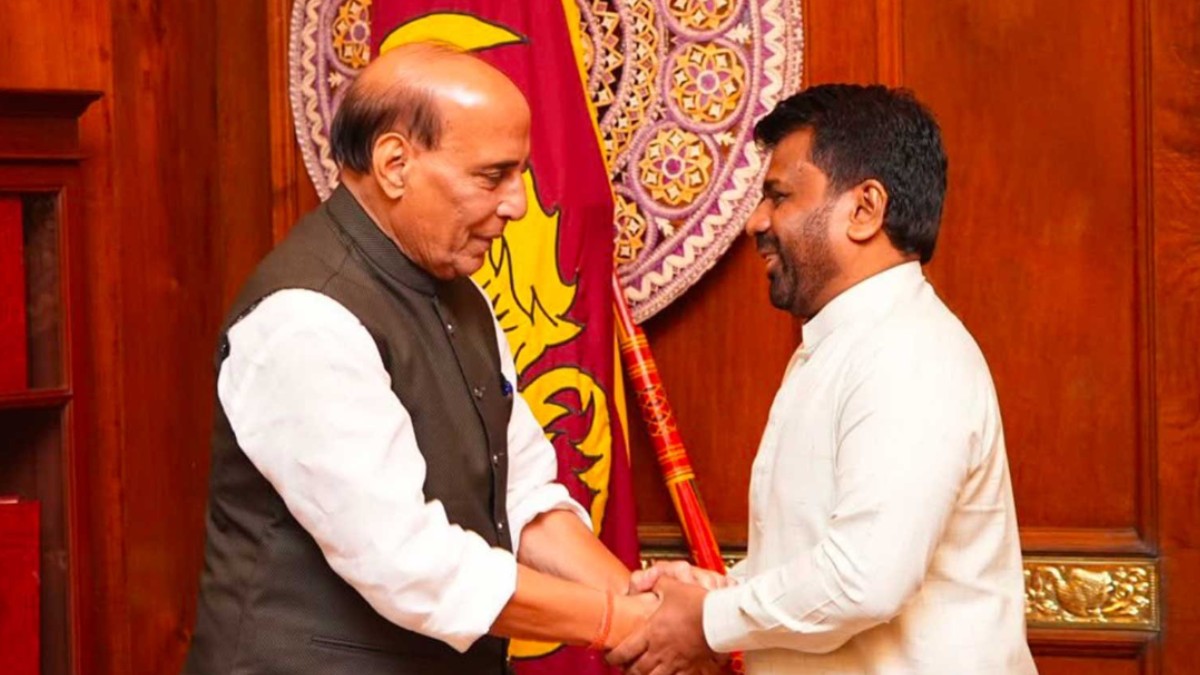
On September 8, 2026, Singh arrived in Colombo for a three-day trip that was aimed at strengthening defence, maritime security and bilateral cooperation between India and Sri Lanka. The visit, which runs until September 10, is the first official Sri Lankan visit by an Indian Defence Minister in 38 years.
Dissanayake reaffirms Sri Lanka's commitment
According to Singh’s meeting with President Dissanayake at Colombo on 9 September, the two sides talked about the long-standing relationship between the neighbouring countries, and the importance of cooperation in security and regional stability and how to support them.
The assurance that Sri Lankan territory would not be used to facilitate anti-India activities is especially important since India has a strategic interest in the Indian Ocean region. Sri Lanka is close to the ocean and it has been a maritime partner of India and a key player in the region’s security discussions.
Singh said his meeting with Dissanayake was warm and productive. He said India and Sri Lanka, as close neighbours and maritime partners, would continue working together for development, security, peace and prosperity in the region.

Defence cooperation takes centre stage
Defence and maritime security are core elements of Singh's three-day visit. The Indian Defence Ministry said the visit is intended to enhance cooperation in defence, economic engagement, maritime affairs and regional security.
The two countries will also exchange three key agreements during the visit. They include cooperation with cadet organisations of both countries, partnership between their defence colleges, and the maintenance of air defence equipment provided by India to Sri Lanka.
Sri Lankan Foreign Affairs Minister Vijitha Herath said the agreements would promote military training, knowledge sharing and institutional cooperation. One agreement will establish cooperation between the Sri Lanka Cadet Corps and its Indian counterpart, while another will link Sri Lanka's National Defence College with India's Defence Services Staff College.
Air-defence equipment agreement
The third agreement concerns the maintenance of 24 40mm L70 anti-aircraft guns that India provided to Sri Lanka Air Force.
According to Sri Lankan officials, India has already provided maintenance support for 18 of the weapons. The new agreement will cover maintenance of the remaining six systems and the work to be done with assistance from Mumbai-based Bharat Electronics Limited.
These arrangements show India’s continuing support for Sri Lanka’s defence capabilities and more institutional cooperation between the two countries.
Maritime security remains a priority
The visit is at a time when maritime security is much more important in the Indian Ocean. India and Sri Lanka are working together in the development of naval training, capacity building, maritime surveillance and regional security.
Singh's visit will be a good time for both countries to review existing defence arrangements and look for deeper cooperation and new areas of cooperation. Sri Lankan officials have said Sri Lanka does not only want to see through the military but also build mutual trust and the overall bilateral relationship.
A significant moment in India-Sri Lanka ties
Singh’s visit is the first by an Indian Defence Minister since K.C. Pant in 1988. The timing of the visit is just one more reminder of the growing importance for India and Sri Lanka in defence relations.
For New Delhi, Colombo’s commitment to protecting its territory from being used against India’s interests is an important security assurance. For Sri Lanka, more cooperation with India will allow for enhanced maritime capabilities, defence institutions and regional cooperation.
The three-day trip is thus expected to further deepen the strategic relationship between the two neighbouring countries, with defence, maritime security and regional stability among the topics of discussion.