In a remarkable medical case that has attracted international attention, Sri Lankan doctors have successfully removed a massive 3.1-kilogram bladder stone from a 55-year-old man - a stone doctors believe could have been one of the world's largest ever removed and successfully used for surgery. The extraordinary surgery took place last week at the Trincomalee hospital in eastern Sri Lanka and has since sparked debate across the world.
The patient was taken to the hospital after a stroke. Doctors found that he was having a very bad time when he urinated. In addition to that, the stone in his bladder was also examined on the first visit. What began as a routine investigation quickly became one of the most unusual urological cases ever.
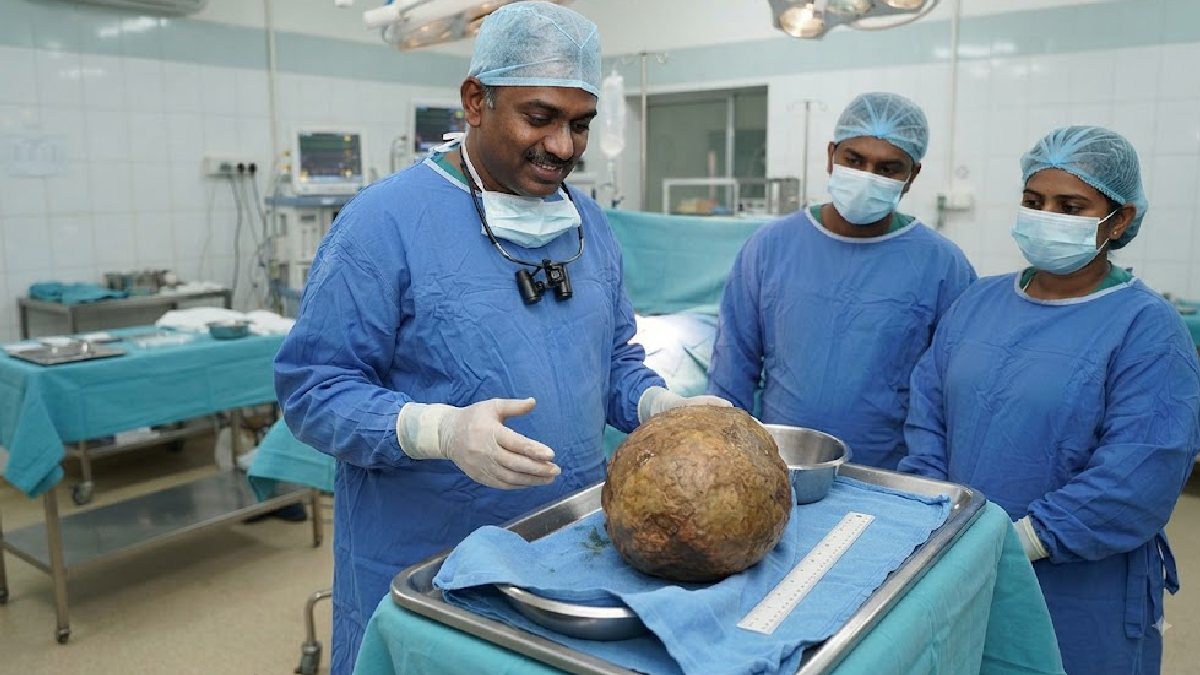
The surgical team, led by Dr Prahalahan Balakrishnan, successfully removed the giant stone during a complex operation. The bladder stone was about 3.1 kilograms 6.8 pounds heavy, much heavier than any bladder stone ever measured in the past. It was around 17 centimetres long and about as big as an ostrich egg, medical experts say, and weighed about as much as a newborn baby.
Dr Balakrishnan said in the BBC Sinhala statement that from available medical records and established cases, the stone seemed to be the largest bladder stone ever surgically removed. If verified, the discovery may surpass the current Guinness World Record and become a historic landmark in medical literature. The patient is recovering well and is in stable condition, doctors have said.
Medical staff believe the stone may have been developing in the patient’s bladder for five to ten years. Bladder stones form when minerals in urine crystallise and slowly build up to hard masses. This usually happens when the bladder fails to empty, in which case urine is stagnant and very concentrated. Minerals, like calcium and uric acid, may have a continuing effect and become stones if left untreated.
Most bladder stones are relatively small and pass naturally through the urinary tract. Some are as small as grains of sand and do not produce symptoms. However, larger stones can cause severe pain, urinary obstruction, infections, bleeding, and kidney-related complications. Doctors refer to stones larger than 4 cm as giant bladder stones. The Sri Lankan case far exceeds that threshold, which is extremely rare.
The previous record holder was a bladder stone that was removed from a patient in Brazil in 2003, which was a weight of about 1.9 kg (4.2 lbs) and 17.9 cm in length. The stone in Sri Lanka is much heavier, at 3.1 kg, which would be the largest bladder stone ever removed in medical history.
The case has also highlighted the importance of early diagnosis and treatment of urinary conditions. Urologists say symptoms such as difficulty urinating, frequent urinary tract infections, blood in urine, or persistent lower abdominal pain should not be ignored. Early medical intervention can prevent stones from growing to dangerous sizes and reduce the risk of complications.
The medical community is closely monitoring the case as the patient continues treatment for his other health problems. The stone’s size and weight could be verified, and official assessment of the stone’s size and weight may be a new world record and place Sri Lanka at the centre of one of the most intriguing medical stories with the largest number of medical cases to have happened to date.
The surgical team performed the successful surgery as well, and the surgical team in Trincomalee. They have not only contributed to the quality of life of the patient but also made it in medical history for removing what could be the largest bladder stone ever recorded.