Taiwan legislators in the past week approved a huge NT$240 billion ($7.6 billion) package for domestic drones to improve its military capabilities amid increasing fears of a war with China. The decision shows increasing focus on indigenous defence manufacturing in the areas of unmanned systems, surveillance and asymmetric warfare.
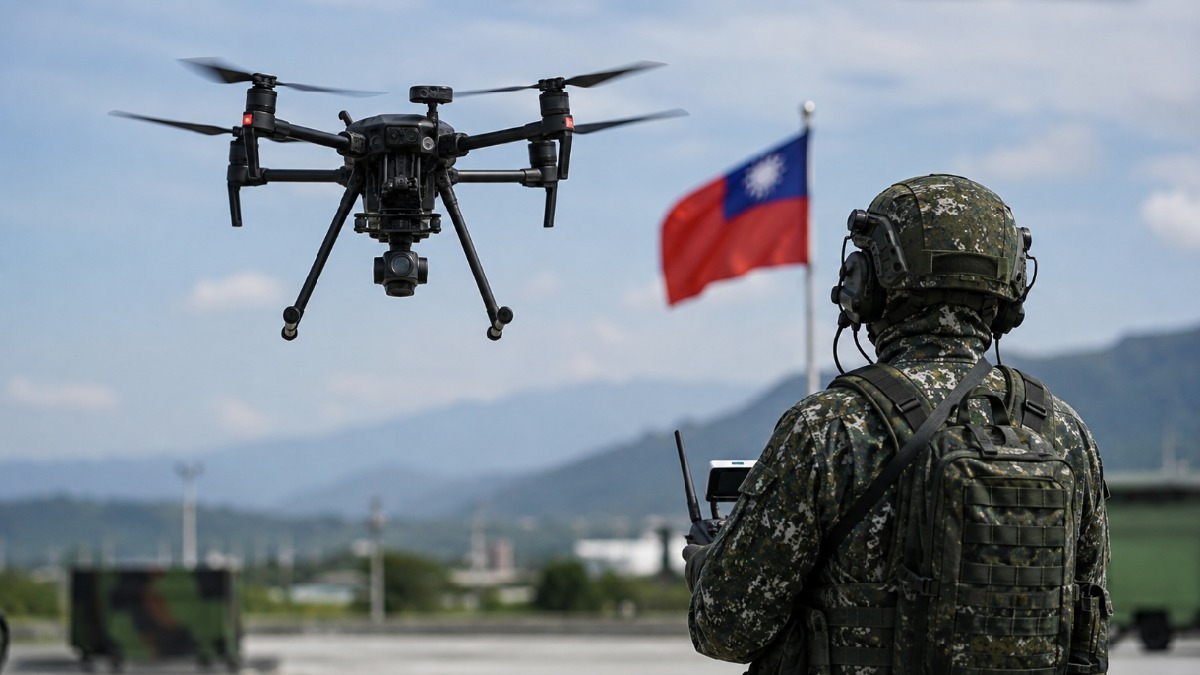
The drone funding package was approved after lawmakers rejected a proposal put forward by the government of President Lai Ching-te. Taiwan’s opposition-controlled parliament instead backed an alternative plan supported by the Kuomintang (KMT) and Taiwan People’s Party (TPP). The opposition proposal sets out NT$240 billion in spending over six years and puts the money in the annual budget.
Taiwan has intensified its defence preparations as it comes under increasing pressure from Beijing. China regards Taiwan as part of its territory and has repeatedly refused to rule out the use of force to bring the island under its control. Beijing is also increasingly active in Taiwan and its international partners’ sphere of influence, which has led to mounting fears of a future war.
President Lai had initially proposed up to NT$210 billion, approximately $6.6 billion, by a special budget for Taiwan-made unmanned vehicles. The programme included coastal surveillance drones, attack drones and unmanned surface vessels. The government had planned a distribution of the costs over more than five years, with the Defence Ministry responsible for procuring them.
The opposition-backed version increases the total allocation and extends the programme to six years. The KMT had initially demanded the annual spending be NT$40 billion, but later it agreed to allow more flexibility. The opposition also accepted a government role in the procurement process to allow for the legislation to pass.
Taiwan’s approval comes as it seeks to reduce external defence suppliers and build a stronger domestic military-industrial base as the country tries to do away with them. Local drone production could help Taiwan scale up manufacturing more rapidly in a crisis because there are fewer risks associated with overseas supply chains.
KMT lawmaker Hsu Chiao-hsin stressed the importance of establishing Taiwan’s drone industry. She said the island should encourage localisation and domestic production, and support manufacturers able to keep production in Taiwan and supply chains that are non-Chinese and comply with cybersecurity requirements.
The debate over drone funding has also attracted significant attention from the United States. Washington has pushed Taiwan to build up its own defence capabilities and spend more money on advanced weapons to combat a larger military force. The US Republican lawmaker Young Kim recently urged Taiwan to act fast because time was limited and said conflict in the past was in fact in line with lessons we have learned from.
The wars in Ukraine and Iran have helped to drive more interest worldwide in drones as fairly flexible and inexpensive military tools. In Ukraine, unmanned aerial systems have been employed in drone surveillance, targeting and attacks; this is a clear case in point in which smaller forces can be used to fight off larger conventional forces.
Taiwan’s drones are particularly relevant to its broader asymmetric defence strategy. The island faces China’s much larger military and so it is more and more concerned with weapons and technologies that could make any invasion more difficult and expensive. Unmanned aerial and maritime systems could help Taiwan and its surrounding waters to keep track of, monitor and defend itself in the air and land.
Taiwan’s overall military spending is also growing. Lai’s government has earmarked a record NT$1.1 trillion of defence expenditure for 2027 - more than three percent of the island’s gross domestic product. The government has argued that increased investment is necessary to strengthen deterrence and respond to the changing security environment.
But the approval of the drone package also demonstrates the political divisions around Taiwan’s defence policy. Lai’s government and opposition lawmakers have often fought over spending, funding and defence goals. But that drone budget passing shows a general political awareness of the ever-increasing importance of unmanned technology.
Cabinet spokesperson Michelle Lee said the government would take every step to secure funding as quickly as possible, despite its original proposal being rejected. National security would not be allowed to go without funds, she said.
Taiwan is positioning its domestic drone industry as a key part of its national security strategy by way of the new funding package. Given that military tensions in the Taiwan Strait continue to determine regional geopolitics, the island’s ability to produce drones and other defence equipment at scale would be crucial to strengthening deterrence and preparing for a crisis.