The Trump administration has a plan to drastically alter the application process for US passports and require parents and legal guardians to provide documentary proof of their citizenship or immigration status when applying for passports for their children. It’s part of the administration’s larger movement to curtail birthright citizenship and strengthen government investigations into citizenship claims.
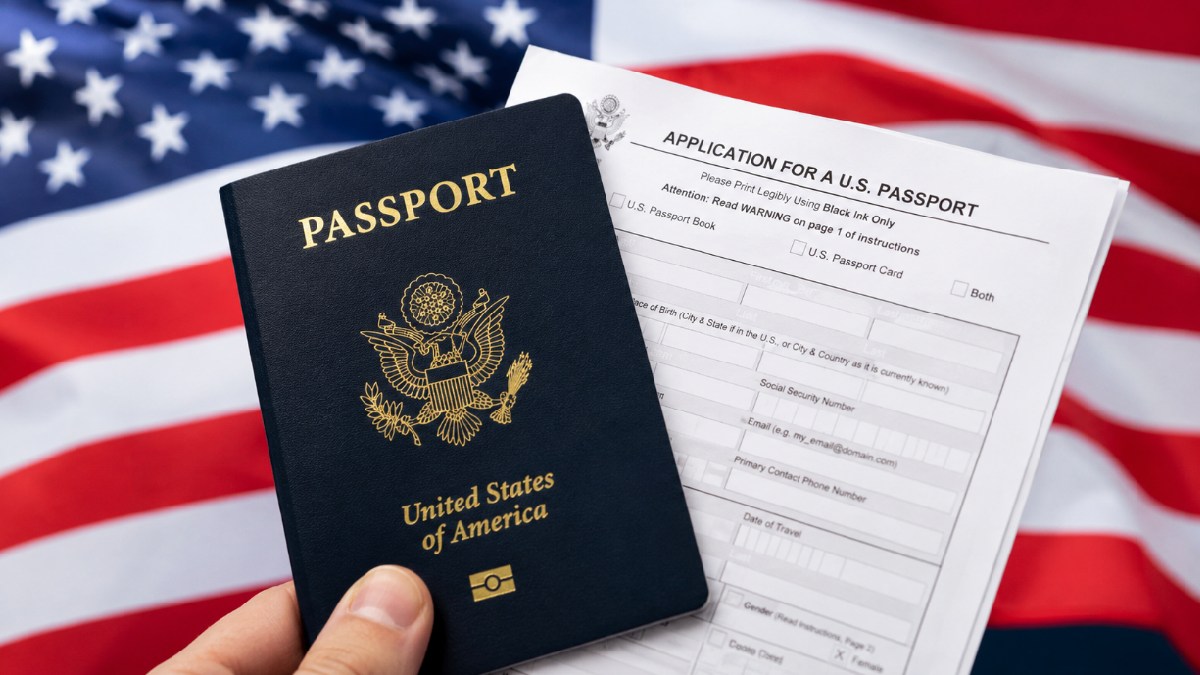
The U.S. State Department has drafted guidance that would require more parental information when passport adjudication. The change is coming just weeks after President Donald Trump’s executive order calling for an end to “birth tourism” and to extend the circumstances in which children born in the United States may not automatically qualify for citizenship.
Under the existing passport application process, parents applying on behalf of their US-born children are required to establish their relationship with the child and provide government-issued identification. Parents also provide information about their citizenship status on application forms. As part of the child’s passport application, however, they are generally not required to routinely submit documentary evidence of their immigration status.
The proposed guidance could change that requirement. The State Department draft suggests that the department will seek parental information and evidence of parental citizenship or immigration status when deciding whether a child falls under the provisions of the executive order.
If such a policy is implemented, parents or legal guardians might be asked to provide documents of their citizenship such as a valid US passport or a US birth certificate. Parents who are not US citizens may also be required to provide documentation proving their immigration status with an I-94 record or proof of lawful permanent residence (green card).
The additional information would be used by the government to determine whether the child qualifies for US citizenship under the administration’s new policy framework. So the proposal is potentially a major shift in the way passport applications for children born in the United States are reviewed.
A State Department press secretary defended the administration’s approach. Tommy Pigott told Reuters that the Trump administration intends to make sure the passport adjudication process reflects its interpretation of American citizenship rules. The administration has repeatedly argued that citizenship should be protected and that federal agencies should avoid improper or fraudulent citizenship claims.
The proposal also ties into the administration’s stated intention to deny citizenship in some circumstances. The new directive would target children whose parents fall into specific categories: a parent working for a foreign government in the United States, alleged fraud or commercial arrangements to obtain citizenship, or a parent classified as an “alien enemy.”
The passport changes are also at the helm of a campaign to change the long-standing interpretation of birthright citizenship which Trump is trying to change.
One of the legal issues is being heard by US District Judge Deborah Boardman in Maryland. Boardman, in Greenbelt, was skeptical of Trump’s new order, she said, calling it an unprecedented action, and she said the plaintiffs were allowed to amend their lawsuit so the court could consider whether the executive action should be blocked.
The Justice Department, however, argues that an immediate restraining order would be inappropriate. Government lawyers have said the legal challenge was premature because federal agencies had not yet publicly provided any guidance in terms of how the president’s directive would be put into practice.
Birthright citizenship has long been tied to the Citizenship Clause of the 14th Amendment to the US Constitution, which has historically been interpreted to give citizenship to people born on US soil, with limited exceptions, as well.
Trump made restricting birthright citizenship a key part of his immigration agenda after he came to the White House. His last executive order sought to limit automatic citizenship at birth to children who had at least one parent who is a US citizen or a lawful permanent resident.
That earlier attempt was challenged in court at once. In September the Supreme Court struck down the administration’s order, with a 6-3 decision that the order was unlawful. That ruling was yet another significant legal challenge to Trump’s attempt to fundamentally change the definition and application of birthright citizenship.
The passport proposal could, therefore, be yet another major issue between the Trump administration, immigrant rights groups and families. Those rules are intended to make it easier for the government to determine citizenship eligibility but opponents will claim parents who are entering the country need to prove their legal status and the government will put them under pressure to find passports for children born in the United States.
The proposal is still in the administration’s hands to develop policy for it as we speak. Any final implementation will be contingent on the State Department’s formal process and the outcome of ongoing legal challenges to Trump’s birthright citizenship agenda.