The United States’ stated priorities in its ongoing conflict with Iran are coming under renewed scrutiny after Vice President JD Vance said that keeping oil and gasoline prices affordable for American consumers is now a central objective of the administration.
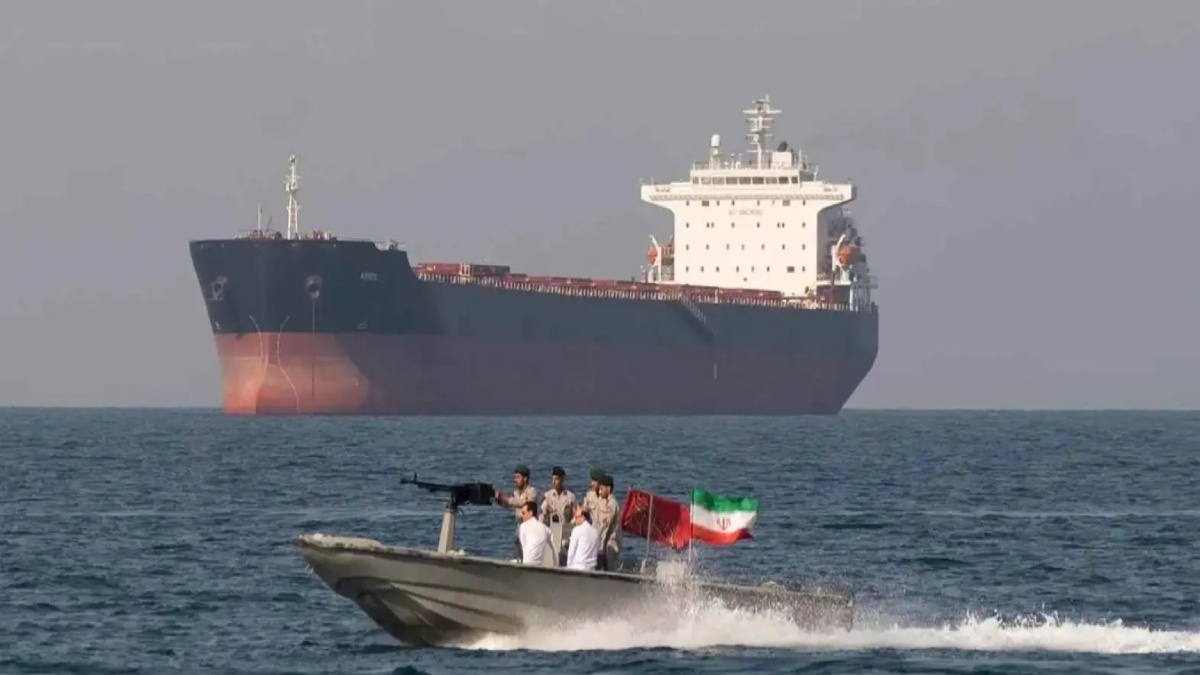
The comments are an important shift in emphasis as Washington faces continued disruption around the Strait of Hormuz, one of the world’s most important energy corridors. Recent reporting indicates that the administration is increasingly focused on restoring energy flows and stabilising fuel markets while continuing to address Iran's nuclear capabilities.
Vance’s comments are significant because preventing Iran from acquiring a nuclear weapon had been one of the main reasons for Washington’s approach to the conflict. The new statements suggest that the immediate economic effects of the conflict - namely higher energy prices - are now a much more significant factor in Washington's thinking. Vance has said that in a way that is in keeping with the economy at large and that prevents Iran from getting nuclear weapons, the administration wants to resolve the conflict and have stable energy prices.
The Strait of Hormuz is the centre of the problem. The narrow waterway connects the Persian Gulf to the Gulf of Oman and is a crucial route for international oil and gas shipments. A prolonged disruption is bad for not only Middle Eastern countries but also energy consumers and businesses around the world because oil is traded in a global market.
The recent tensions have already affected shipping and energy markets. Reuters on August 14 reported Brent crude at about $87.08 per barrel and West Texas Intermediate at $81.31 per barrel as markets were hit by uncertainty about the conflict and the possibility of a long-term US-based blockade. On the other hand, lower demand expectations and the elevated U.S. crude inventories have helped mitigate some of the upward pressure from geopolitical uncertainty.
The situation is one example of the interplay of geopolitics and energy prices. Even when a country produces very large quantities of oil locally, international crude prices can affect what consumers pay for fuel. A disruption in a major global supply route can therefore affect transportation costs, inflation and household budgets far beyond the immediate region where the conflict is taking place.
For the Trump administration, lowering energy costs has obvious domestic significance. Higher gasoline prices can increase commuting and transportation expenses and indirectly affect the price of products and services. Businesses that depend heavily on fuel could see higher operating costs and consumers can feel the strain on household budgets.
The administration's focus on energy markets speaks to both foreign policy and domestic economic realities. A stable supply of oil through the Strait of Hormuz would ease pressure on international crude prices and perhaps alleviate some of the inflationary effects of the conflict. But it is still difficult to achieve that goal because Washington and Tehran are still far apart on how to restore normal shipping through a waterway.
Iran has claimed control over the Strait of Hormuz but there are competing claims for navigation and control between Iran and the United States. Iranian officials have continued to insist that the waterway is under Iranian control, while Washington has sought to protect maritime navigation and pressure Tehran.
Vance has previously said Washington expects Iran to restore oil and gas flows through the Strait to levels seen before the conflict and ensure safe passage for commercial vessels. He has also emphasized that the United States would verify actions rather than relying on statements.
That demand remains one of the key issues in talks. Iran has been negotiating with Washington for concessions -- sanctions and other measures - before it agrees to re-open the waterway. There are reports that disputes over these demands have made it difficult to reach a satisfactory agreement.
But the American emphasis on Iran does not mean the Iranian nuclear issue has disappeared from American policy. In the current context, energy security and affordability may be the immediate priorities in addition to long-term concerns about Iran’s nuclear capabilities. The administration is trying to balance multiple objectives at the same time: restoring energy flows, maintaining pressure on Tehran and preventing further escalation.
The oil market itself is sending mixed signals. Geopolitical developments are still supporting prices but weaker demand expectations and increases in US inventories are putting pressure on prices. Brent crude fell yesterday as traders’ expectations of weak demand forecasts from major energy agencies and uncertainty surrounding Hormuz were among the reasons behind it, Reuters reported.
The US Energy Information Administration also predicted that some Middle Eastern oil production could be shut down through 2027 as the continuing disruptions could keep Middle Eastern oil production from having been disrupted for some time due to the long-term effects of the ongoing disruption, too, the US Energy Information Administration said. The conflict could impact the economy beyond the immediate crisis and the conflict would have effects well beyond the immediate crisis even if shipping through Hormuz is improved, its forecasts say.
This makes the administration’s goal of lowering domestic fuel prices extremely difficult. Oil prices depend on a variety of factors ranging from global demand, production levels, inventories, shipping conditions, geopolitical risk and expectations about future supply. Some aspects of government policy can influence some of these but not all, and cannot determine the global price of crude.
The Strait of Hormuz is especially important for the amount of energy that normally flows through it. Shipping restrictions might force traders and producers to find other routes or rely on stored supplies to increase transportation costs and tighten markets.
For consumers, the most obvious effect is often the price displayed in petrol stations. But the economic impact can be much bigger. Fuel is also an essential input to transport, agriculture, manufacturing, and logistics. A sustained increase in energy costs can therefore lead to higher inflation in general.
The political implications are equally key. With domestic economic concerns driving Washington's approach, the administration has to show that its Iran strategy will affect American consumers in real ways. A sustained period higher in fuel prices could make the conflict more difficult to defend politically, particularly for households who were affected at the pump.
But at the same time, the pressure on Iran to restore energy flow may also raise strategic questions for Washington. Any deal to reopen the Strait must also address security, freedom of navigation and the broader dispute over Iran’s nuclear programme. Temporary upward movement in oil shipments will not solve the underlying geopolitical conflict.
The latest developments therefore suggest a complex policy balancing act. Washington wants energy markets to stabilise, but it also wants to keep pressure on Tehran. Iran has its own economic and strategic interests and has used the Strait’s importance to strengthen its negotiating position.
For global markets, the biggest uncertainty remains how fast normal shipping can return. If the Strait is fully reopened and energy supplies are more predictable, oil prices may fall. If the disruption continues, geopolitical risk could still be embedded in crude prices.
The change in the United States’ focus also shows how closely foreign policy can become tied to domestic economic priorities. And while nuclear non-proliferation is already a security concern, the immediate impact of expensive energy on American households has become a crucial part of Washington’s calculations.
As talks and tensions continue to progress, markets will be closely monitoring developments around the Strait of Hormuz, U.S. policy statements, and Iranian responses. The oil price will eventually depend on whether energy shipments could return to more stable levels.
And for now, the US administration seems determined to make energy affordability a key measure of success in its Iran strategy. Vance's comments underline the importance Washington is putting on restoring stable oil flows and reducing pressure on American consumers, even as the bigger questions of Iran’s nuclear program and regional security remain unanswered.