Life on Earth will not last forever, but its end won’t come in the form of a catastrophic asteroid impact or a sudden global disaster. Scientists now predict that the planet’s final chapter will unfold slowly over billions of years as the Sun slowly becomes brighter, making the planet more hostile for life.
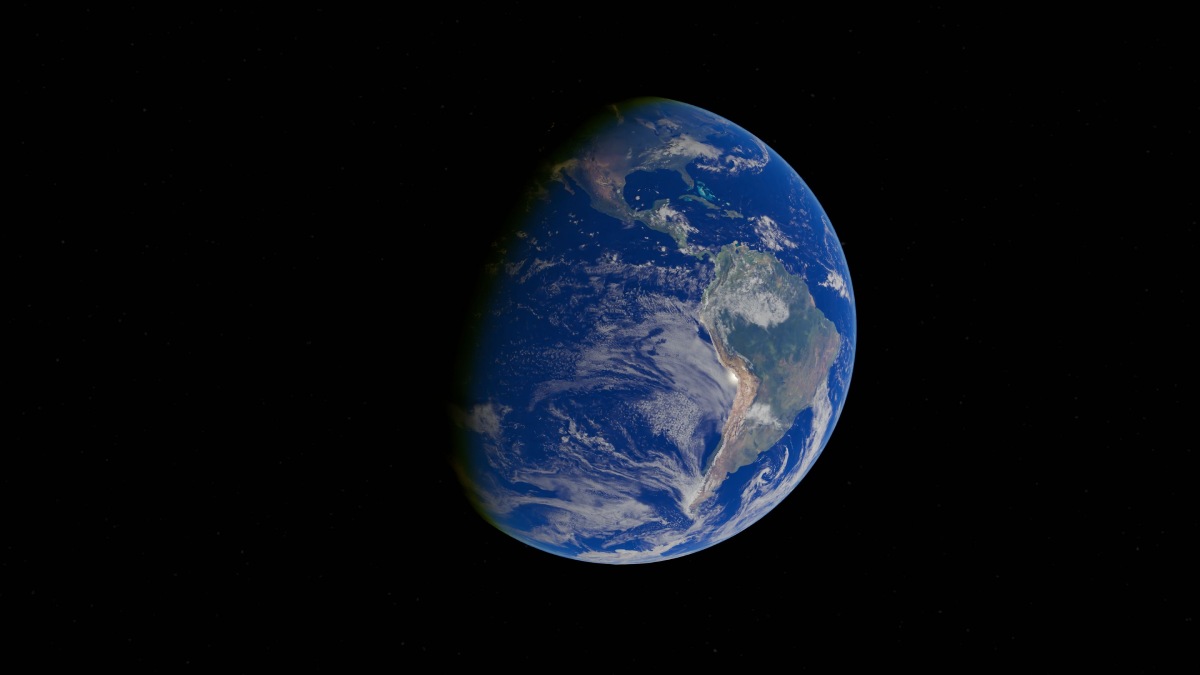
A new study published in JGR Atmospheres estimates that plant life on Earth may survive another 1.8 billion years before it is too tough for most vegetation. While this time period is beyond our reach, it is one of the most detailed predictions we have made about the future of life on Earth so far.
The researchers believe Earth’s vegetation could live almost until the planet ends up losing its oceans to space, marking the end of life on Earth as we know it.
The vegetative biosphere of Earth could survive up to around 1.8 billion years from now, about the same time that Earth would lose its oceans to space.
Why will Earth become uninhabitable?
The reason is not on Earth but in the Sun.
As stars age, they gradually become brighter. Scientists have long known that the Sun's energy output is slowly increasing so that over geological timescales the average temperature on the Earth is going to increase. That change is too slow to affect us now, but it will eventually have major consequences.
Over the next hundreds of millions to billions of years, increased solar radiation will cause temperatures to steadily climb. As the planet warms, oceans will slowly evaporate and rainfall patterns will change dramatically, and the atmosphere will lose increasing amounts of carbon dioxide.
So the decline of atmospheric carbon dioxide poses a serious problem for plants. Because plants depend on carbon dioxide as a source of photosynthesis (the conversion of sunlight into energy) to produce photosynthesis, declining CO₂ levels will eventually mean most vegetation cannot survive.
When the last plants disappear, scientists predict that animals—including humans—will also disappear due to the increasingly harsh climate.
How scientists arrived at the estimate
Researchers at the University of Colorado Boulder and Blue Marble Space in Seattle collaborated on the study. But rather than just using simple climate models, they developed an advanced three-dimensional climate model that simulates the atmosphere, cloud formation, rainfall, oceans, and atmospheric circulation over the next 2 billion years.
The researchers analyzed two possible future scenarios.
In the first scenario, atmospheric carbon dioxide is gradually decreasing as natural geological processes lock more carbon into rocks, and in the second scenario, carbon dioxide remains relatively stable while solar heating continues to increase.
Despite the different assumptions, both simulations came to the same result: Earth's vegetation will survive much longer than most previous scientific estimates.
Which plants would survive the longest?
The last survivors would be species that are already adapted to extreme environments.
Researchers believe drought-resistant plants such as cacti and other desert vegetation would be some of the last to survive Earth's increasingly hot and dry climate. Special kinds of photosynthesis that conserve water may also outlast more sensitive species.
Is this Earth’s last fate?
Not necessarily.
The scientists admit their models cannot predict how life might evolve over the next 1.8 billion years. Evolution could produce plants that could survive much hotter conditions than today's species.
The study also does not take into account future technological developments. If humanity—or another intelligent civilization—still exists, advanced technologies could change the Earth's environment and even move life beyond the planet.
Even if these are speculation, the present research provides a fascinating glimpse of Earth’s far distant future. And life on our planet is not going to end abruptly; it will gradually disappear as our Sun is slowly changing, reminding us that even worlds have lifespans measured on cosmic timescales.