India has rewritten the history of international science competitions with an all-around sweep at the IPhO 2026. All five members of the Indian team won gold medals, putting India among the best-performing countries in one of the world’s biggest science competitions.
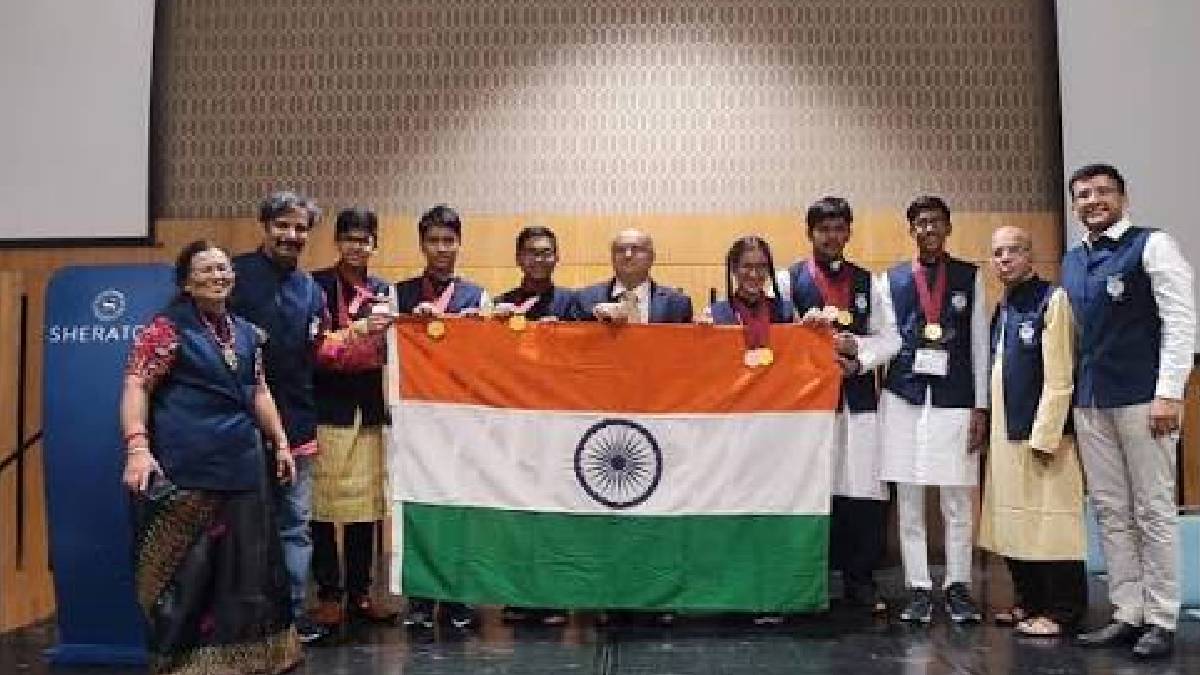
The great performance indicates the progress of India’s physics education, scientific research, and talent development. The International Physics Olympiad is considered one of the toughest international competitions for high school students, and the world’s brightest young minds from over 80 countries come together to compete in advanced theoretical and experimental physics.
Indian students had excellent analytical thinking, mathematical precision, and problem-solving skills in all the competitions. This is the result of years of preparation by the experts at the national-level selection, and on both sides (special camps and mentorship from experienced teachers and scientists).
The accomplishment is a proud one for India and an affirmation of India's excellent Olympiad training system. The international team students are selected through different stages of evaluation before they represent the country, so the achievement is even more meaningful.
Education experts believe this historical accomplishment shows India's increasing success in STEM education. In the last decade, Indian students have consistently achieved better results in the international Olympiads in math, physics, chemistry, astronomy, biology, and informatics. The gold medal collection at IPhO 2026 is yet another step forward.
The success also inspires thousands of aspiring young scientists across the country. It shows students that dedication, curiosity, and systematic preparation can allow them to compete with the best talent in the world.
Government officials, scientists, teachers, and institutions of higher learning hailed the Indian team for bringing global recognition to the country. They also praised the students’ dedication and cited teachers, mentors, parents, and training schools that helped them along the way.
Physics remains one of the basic sciences that drive technological innovation, from quantum computing and semiconductor technology to space exploration, renewable energy, and artificial intelligence. Achievements like these not only strengthen India’s academic reputation but also strengthen the country’s long-term scientific capabilities.
The impressive performance will encourage more participation in science Olympiads as well as research-oriented education among school students. It also reaffirms the need to invest in STEM education, develop scientific temperament, and provide opportunities for gifted students to succeed in the international arena.
As India celebrates this historic success, these five young physicists must be considered for the greatest achievement of their generation—to be the next generation of scientists, researchers, and innovators with their own achievements at the International Physics Olympiad 2026.