A 59-year-old madrasa in Uttar Pradesh’s Siddharthnagar district was partially demolished by local authorities on August 18 after officials said the structure was constructed on government land.
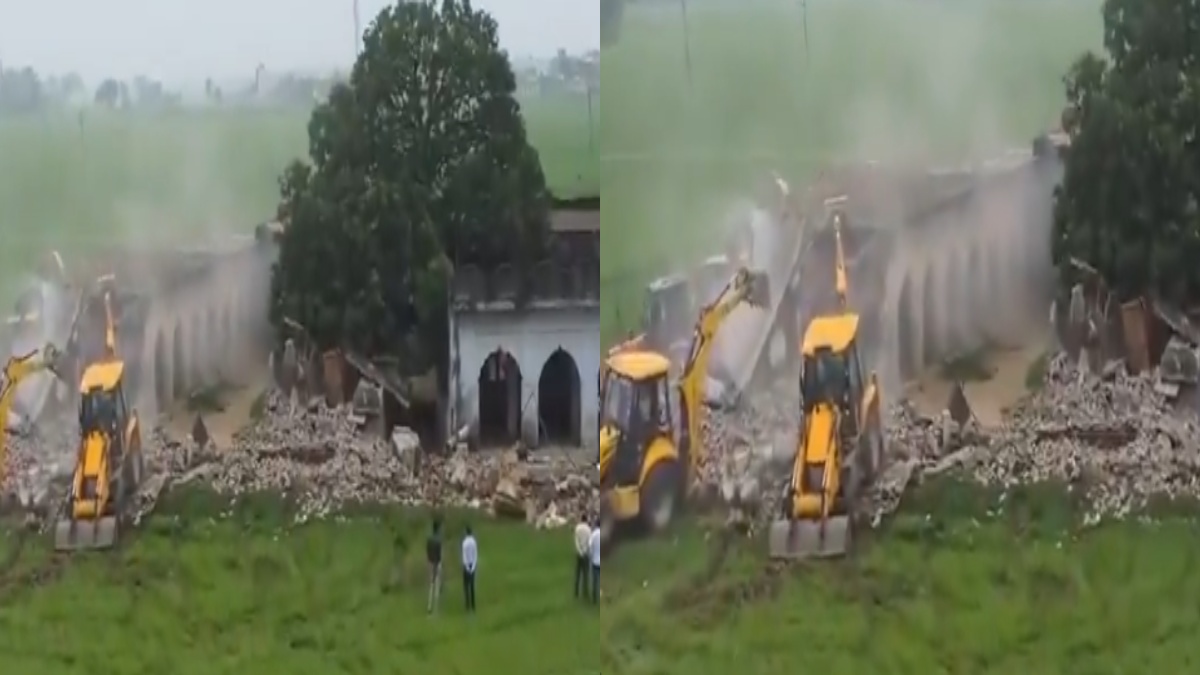
Heavy machinery and a large number of police were deployed to put it in place in Pipra Ramlal village in the Dumariaganj area. The demolition has attracted attention as the religious educational institution is old and has also ignited a political debate in the district.
According to accounts, the district administration considered the matter as an encroachment case and not an action directed at a religious institution. Officials said that the structure was on government property and that procedures had been initiated to remove the alleged encroachment. Local reports said that the action was carried out according to administrative order with a revenue official's report being part of the proceedings.
The operation started early on Tuesday with the Sub-Divisional Magistrate visiting the site along with police personnel who had come from several police stations. Six bulldozers were deployed during the operation, according to reports. The huge security arrangement was meant to protect people and maintain order while the demolition work was going on.
The madrasa had been standing at the site for nearly six decades so the action was significant for people in the area. The demolition took place around a portion of the madrasa and a mosque that authorities said was on government land. The action was done in line with the wider initiative to regain public land that they thought had been encroached upon, officials said.
The development also attracted a political response. Samajwadi Party workers arrived at the site to protest against the demolition. Police and protesters briefly clashed during the demonstration, according to reports. Opposition workers added to the political dimension of what the administration called an encroachment-removal project.
Land disputes involving a long-standing structure can be particularly sensitive because buildings may remain in place for decades before questions over ownership, land records or permissions become administrative matters. In such instances, authorities generally look at revenue records and other documents to establish the legal status of the land. In that case, officials said government ownership of the land was the reason for the action.
The Siddharthnagar administration has previously acted on allegedly unauthorised religious and educational structures. Previous enforcement operations in the district have included investigations into madrasas and mosques that were allegedly constructed without authorisation or on land that was encroached. This background provides context for the current action in Dumariaganj.
The case also comes in the context of a national debate about demolition drives and the legal safeguards that authorities must take when removing unauthorised structures. The Supreme Court in November 2024 set up safeguards for the demolition of properties in criminal proceedings, and there are still cases which are still under investigation as to whether authorities complied with those requirements. The Supreme Court in July 2026 ordered that parties who have been accused of breaches of its demolition safeguards should contact the relevant High Court.
That is the difference between the administration declaring that a structure is on government land and any final determination of the dispute and its authenticity.
The Siddharthnagar operation has been described by government authorities as an encroachment-removal action and the political opposition has been critical of the demolition. The legal and administrative records of the property will continue to be crucial for the full circumstances of the case.
For residents of Dumariaganj and surrounding areas, the demolition has raised questions about the future of the site and how it is going to affect the people associated with the madrasa.
The administration is working toward reclaiming government land; political opponents, however, have challenged the method and circumstances in which the action was made. It will be a matter of further official clarification to be able to know for sure how far the demolished part of the structure is and what remains of any other structure.
The incident shows the continuing challenges of public land management in Uttar Pradesh. Governments have a responsibility to protect public property and enforce land use rules, and the affected parties are entitled to due process and an opportunity to challenge administrative decisions through appropriate legal channels.
A 59-year-old madrasa was demolished with a bulldozer on the grounds that it had been built on government land.
— Puneet (@puneetbhatt_) August 19, 2026
📍 Dumariaganj, Siddharthnagar, Uttar Pradesh pic.twitter.com/q5wYQrvCY5
Both aspects are important when dealing with long-standing community institutions.
So the Siddharthnagar case will certainly continue to be discussed beyond the moment of demolition. The madrasa occupied government land, the age of the structure, the presence of numerous bulldozers and police personnel, and subsequent political protest have all been factors in the discussion of the case. In addition, administrative records, any legal issues, and comments from the government and local representatives are likely to continue to come into play.