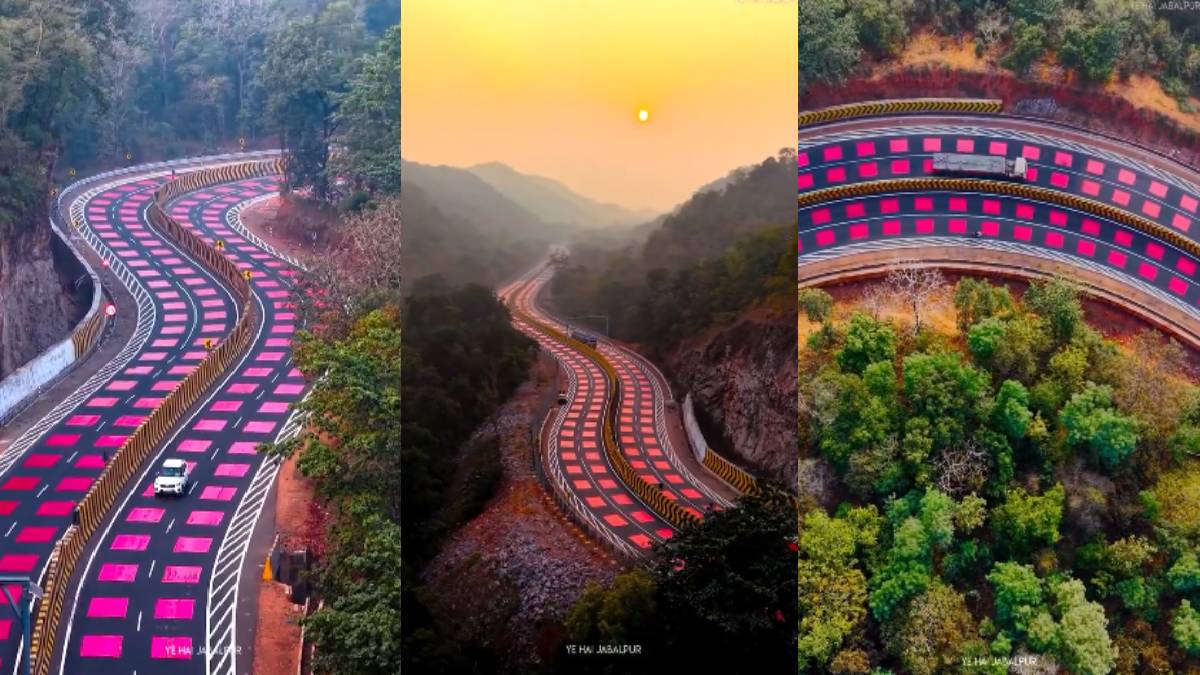
India has found a creative way to keep both animals and people safe on its highways. A special 2-kilometer stretch of road along National Highway 45 in Madhya Pradesh has been constructed with a bright red finish. This “Red Road” isn’t merely colorful — it’s meant to slow down vehicles in areas where animals frequently cross. The road is designed to lower the risk of accidents and save lives by alerting drivers.
Most highways go through forests and natural habitats. Those roads also connect cities and villages on the one hand, but they also cross animal-habiting regions. Tigers, leopards, deer and other smaller creatures navigate these corridors in a back-and-forth between parts of the forest. However, vehicles in rapid speed can crash into them, injuring or killing animals as well as humans.
India built its first “Red Road” on NH45 in Madhya Pradesh to protect wildlife. The 2 km bright, slightly raised surface warns drivers to slow down in animal corridors, reducing collisions and saving wildlife and human lives.
— Tansu Yegen (@TansuYegen) February 6, 2026
pic.twitter.com/24rJMltjjK
Both the government and environmental experts felt something needed to be done. Rather than just posting warning boards, they chose to make a road surface that immediately would be of interest to the driver. The bright red color is special, not to be ignored. It indicates danger, and reminds drivers to slow down.

The Red Road is raised slightly above the normal highway. Thus vehicles start to slow down as they enter the stretch naturally. Red paint also reflects, and it stands out even at night. Collectively, they form a powerful alert system.
Those who can see the red surface of a road know they’re headed into a wildlife corridor. By slowing down, they allow animals a chance to cross safely. This minimizes the chance of sudden accidents, which are common when animals show up on highways unexpectedly.
The Red Road’s greatest advantage is wildlife protection. Madhya Pradesh forest encompasses a large population of endangered species, which includes tigers. Such animals frequently wander across territories in search of food or a mate. Safe corridors are essential for their survival.
Red Road reduces collisions that can endanger life. Through the elimination of car accidents, the Red Road plays a major role in preserving life on that path for animals. It also saves lives. But it can eliminate other animals from an ecosystem's balance, which is so easily disturbed by unnecessary deaths. That method of preserving wildlife contributes its own conservation endeavors and respects the life of the environment.
The Red Road doesn’t just protect animals, it also protects the lives of human beings. Road accidents with wildlife can be hazardous to drivers and passengers. Vehicles may turn over, or drivers may lose control while trying to avoid running over an animal.
Red Road reduces those risks through traffic slowing. It also makes travelers more conscious. Tourists driving the stretch also learn that highways are places shared, not only by humans but also by animals. It gives a sense of duty and care.
The Red Road in India is an example of environmental infrastructure. Countries around the world have constructed bridges, tunnels and fences to aid in safe crossing of the animal road. India’s way is simple but effective.
Whereas building expensive structures is the typical route, this is using color and design changes for drivers. This invention illustrates the impact small changes can yield large changes. That development can complement conservation, it demonstrates. Roads can then be laid for people and be built according to nature.
The Red Road of Madhya Pradesh is much more than a stretch of road: it symbolizes the peaceful interaction of humanity and nature. In this way it saves lives and the environment by getting the cars to keep their pace at a reasonable pace--slowing down the flow of vehicles in animal corridors.
And if we make any gains, progress should not be achieved at the expense of nature. Such roads, if more are constructed across India, will make highways safer for everyone. The Red Road is a prime example of how a well-conceived design can safeguard not only humans, but animals as well so that travel becomes less brutal and more humane.