Tamil Nadu provides great news to wildlife conservation in India. Population evaluation of dugongs along the coast of Tamil Nadu has been carried out by the Wildlife Institute of India (WII), jointly with the Tamil Nadu Forest Department. The results are promising: A total of 270 dugongs have been recorded, with 158 of them in Palk Bay and 112 in the Gulf of Mannar. It is thus home to India’s largest viable dugong population today. The findings reveal the dugong population here is a strong and stable one, benefiting from solid conservation efforts and community involvement.
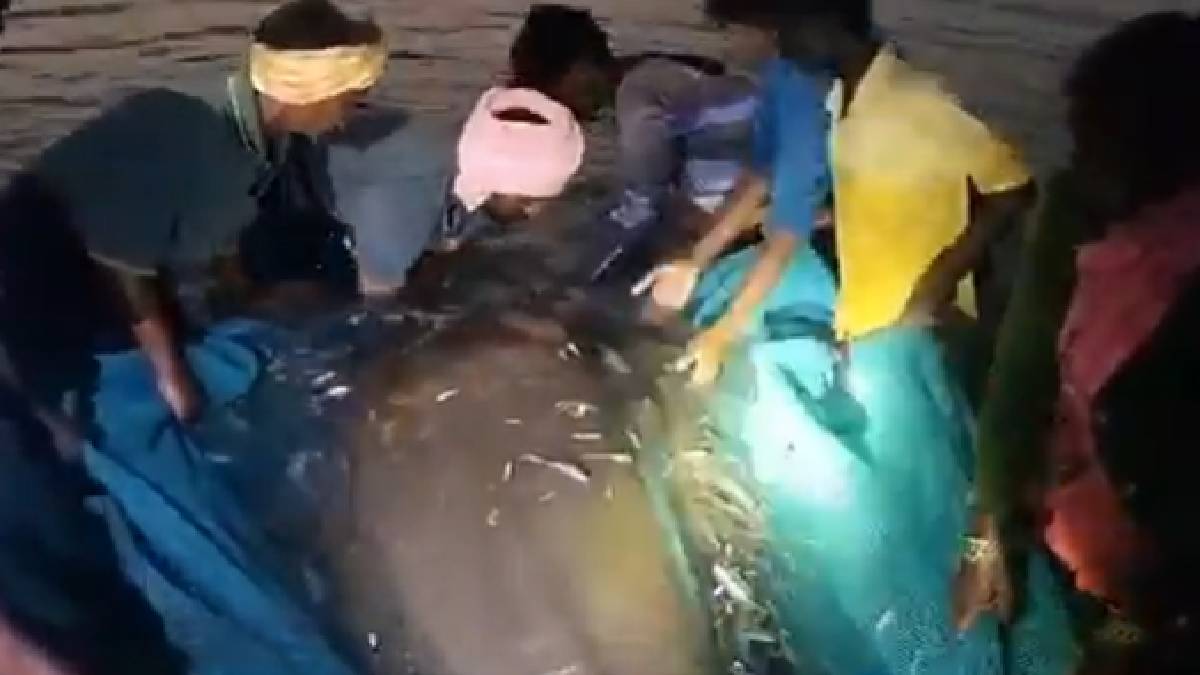
Dugongs, sometimes called “sea cows,” are sea mammals that feed on seagrass. They are shy and slow‑moving and are critical to maintaining healthy coastal ecosystems. But dugongs are also one of the populations at risk, internationally, from habitat loss, incidental capture in fishing nets, and hunting. In India, they have been declining for decades, so this was a unique and hopeful development from Tamil Nadu.
Big big news in wildlife conservation ! The Population estimation of Dugongs undertaken by the Wildlife Institute of India (WII) in TN with collaboration with the Forest Department, has estimated a total population of 270 dugongs along the Tamil Nadu coast including 158 dugongs… pic.twitter.com/9E2HjPhhf4
— Supriya Sahu IAS (@supriyasahuias) February 5, 2026
The survey measured 270 dugongs along the Tamil Nadu coast. Palk Bay and the Gulf of Mannar together now account for the largest viable dugong population in the country. That's significant, but researchers confirmed mother‑calf pairs were there which confirms active breeding. It’s something that suggests dugongs are not just existing, but are reproducing effectively in these waters.

The dugong population in Tamil Nadu has maintained stability due to the Dugong Recovery Programme implemented by WII and backed by CAMPA (Compensatory Afforestation Fund Management and Planning Authority). We also work with communities on conservation, and that is the part of the Tamil Nadu Forest Department. Many fisherfolk have been urged to steer clear of harmful practices, and awareness campaigns have made people cognizant of the necessity of protecting these delicate sea creatures.
Perhaps the most important step has been the launch of the Dugong Conservation Reserve in Palk Bay (covering 448 km² of core dugong habitat). This reserve protects dugongs from extinction in the long term by protecting the zones where they feed, breed and live.
Other notable achievements include the creation of India’s first Dugong Conservation Centre at Manora in Thanjavur District. Developed at a cost of Rs 40.94 crore under the auspices of World Bank Group, this centre intends to serve as a cutting‑edge hub of dugong research, knowledge generation and community engagement. It will equip scientists with sites to study dugongs in greater depth and also raise awareness of their importance.
A central element of this success has been community engagement. Conservation efforts have also engaged local fishing communities, who share the coastal waters with dugongs. They’ve evolved into partners in conservation in stopping harmful fishing practices, and reporting sightings. The collaborative approach emphasizes that conservation works best when people who live next to wildlife are participating.
The success story in Tamil Nadu is not only about dugongs. It also points to a bigger commitment to marine conservation in India. Preserving dugongs also involves safeguarding seagrass meadows, coral reefs and the myriad other kinds of life that rely on those ecosystems. Healthy coastlines sustain fisheries, shorelines and thousands of people’s lives.
The population count of dugongs in Tamil Nadu is an incredible accomplishment in wildlife conservation. With 270 dugongs breeding in Palk Bay and the Gulf of Mannar, India has a stronghold for the threatened species. The Dugong Recovery Programme, the establishment of the Dugong Conservation Reserve, and the forthcoming Dugong Conservation Centre at Manora mark a promising step for long‑term conservation. And more importantly is the confirmed presence of mother‑calf pairs, which indicates that dugongs are reproducing and that the population is thriving.
This is one more success story of proving that the most threatened species can even take a chance when you combine science, government, and the community. Tamil Nadu’s coast is a bright spot for the recovery of the dugong world today as a beacon for dugong conservation in India, a reminder that saving wildlife is not really about saving animals but preserving the health of our oceans and the future of our entire planet.