Agra, Uttar Pradesh: A potentially serious accident took place in Agra’s Etmad-Daula area with the auto-rickshaw falling into the deep pit filled with rainwater. The accident happened at the site where excavation works for a pipeline were being carried out.
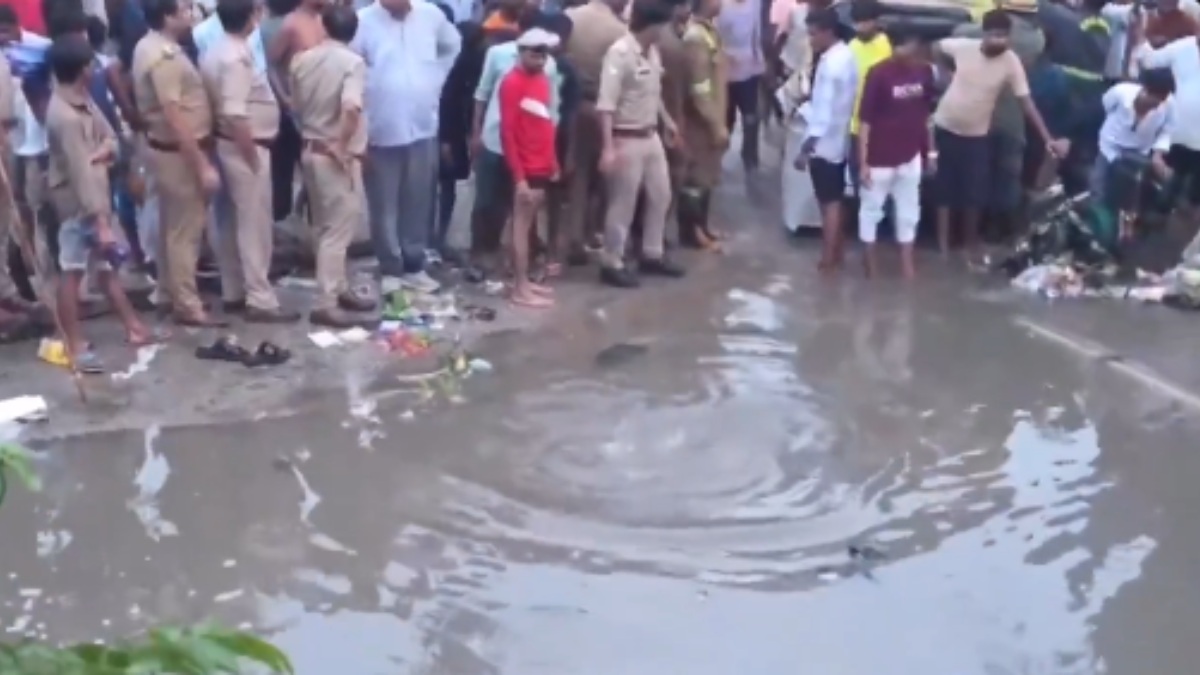
According to information available, the pit was 20 feet deep and had accumulated rainwater, so almost all the passengers in the car were swept away after the accident.
The excavation site is considered dangerous in monsoon season, when open pits are filled with water and so are difficult to find and identify. The pit was apparently dug by the Jal Nigam as part of pipeline work, the residents have claimed, and barricades and warning signs surrounding the excavation site were not put in place.
The auto-rickshaw was carrying five to six people, including three women and two female students at the time, when it fell into the water-filled excavation. It quickly sank in and it was dangerous for everyone inside. Rescuers were working under water and with the pit filled with rainwater, they had to reach the passengers and bring them to safety.
A resident named Rajendra immediately started to respond, he said. He jumped into turbulent water and helped rescue passengers trapped inside the submerged auto-rickshaw. His quick reaction was crucial in the early stages of the rescue operation. Local residents also participated and soon police were helping to pull everyone out of the pit.
In emergencies, it is very important to have immediate community response. In case of a vehicle falling into a water-filled excavation, every second is critical. The quick response by the residents and the quick action of police and other officials made sure that the accident did not produce a bigger tragedy.
After the passengers were rescued, authorities and local residents were focused on recovering the submerged auto-rickshaw. A crane was brought to the location to pull the vehicle out of the deep pit. The excavation was so deep that the vehicle was submerged under the rainwater.
The incident also forced officials to arrive at the site to assess the situation. Etmadpur MLA Dr. Dharampal Singh and police and administrative officials, who apparently visited the place after getting information of the accident, visited the site. The presence of officials indicated that it was being treated seriously and the excavation was being investigated.
The accident raised questions about the safety protocols that need to be followed when major infrastructure projects involve open excavations. Pipeline and roadwork often require deep trenches and pits, but such areas need to be clearly marked and protected, especially in close proximity to public roads. Barricades, reflective warning signs, lighting, and other safety measures can help prevent vehicles and pedestrians from accidentally entering dangerous zones.
The monsoon season is very important, and so too are these precautions. Heavy rainfall can fill excavated sites in a short time and so the depth and boundaries of a pit can be difficult to see. A driver driving near such a location might mistakenly mistake a water-filled excavation for an ordinary puddle or flooded section of the road. Without the presence of any barriers or warning signs, the danger of an accident is much greater.
Where infrastructure works are going on, people depend on authorities and contractors to identify hazards. Construction agencies and civic bodies should secure excavation sites and protect the local people from avoidable hazards. The Agra incident has therefore revived questions about whether there are proper precautions on site.
Although it was reported that the passengers were rescued safely, the accident could have been deadly if they were not rescued, given the depth of the pit and the fact that the auto-rickshaw was completely submerged. This incident makes you think about how quickly an apparently ordinary journey can transform into an emergency if roadwork is not well-maintained.
As a result, authorities could now investigate the excavation and whether safety barriers were put up, warning signs were visible, and how well enough had been done to prevent vehicles from entering the pit. Such an investigation might help to determine whether negligence or lapses in safety procedures are to blame for the accident.
The rescue also shows how the local population and emergency services should coordinate. Rajendra and the other people helped the passengers before the bigger recovery operation was completed. Police helped in the rescue and made sure that the area was safe.
For drivers, the incident is also a reminder to be extremely cautious along construction zones, especially in the presence of heavy rain. Drivers should reduce speed, look out for warning signs, and avoid taking roads where visibility is poor or construction activity is taking place. But motorists can only respond when hazards are properly marked and clearly visible.
The accident highlights the need for better monitoring of excavation sites by local authorities. Infrastructure development is necessary and desirable for urban development, but construction should be accompanied by public safety measures. Temporary worksites should not turn into permanent hazards for the people using the nearby roads.
The Agra accident was thankfully not worse than expected, and the victims escaped the accident thanks to the quick actions of local people and that of the police and officials. But it has shown the dangers of leaving deep excavations unprotected during the rainy season.
Agra: Auto-Rickshaw Carrying 5–6 Passengers Falls Into 20-Foot-Deep Water-Filled Pit
— Deadly Kalesh (@Deadlykalesh) August 8, 2026
Agra, Uttar Pradesh: A major accident occurred in Agra’s Etmad-Daula area due to alleged negligence by the Jal Nigam. An auto-rickshaw carrying 5–6 passengers, including three women and two… pic.twitter.com/qESjt2f1WY
The officials will also have to consider safety measures at the site and if more precautions are needed. Better barricading and signage on all open pits so they can be clearly identified could prevent a similar situation from taking place in the future.
The Etmad-Daula accident is a reminder that public safety is as important as infrastructure development. Proper barricading, visible warnings, lighting, and regular inspection of construction sites are the best way to reduce risk. In this case, the quick response of a local resident and the team’s rescue work saved the passengers from a potentially catastrophic accident.