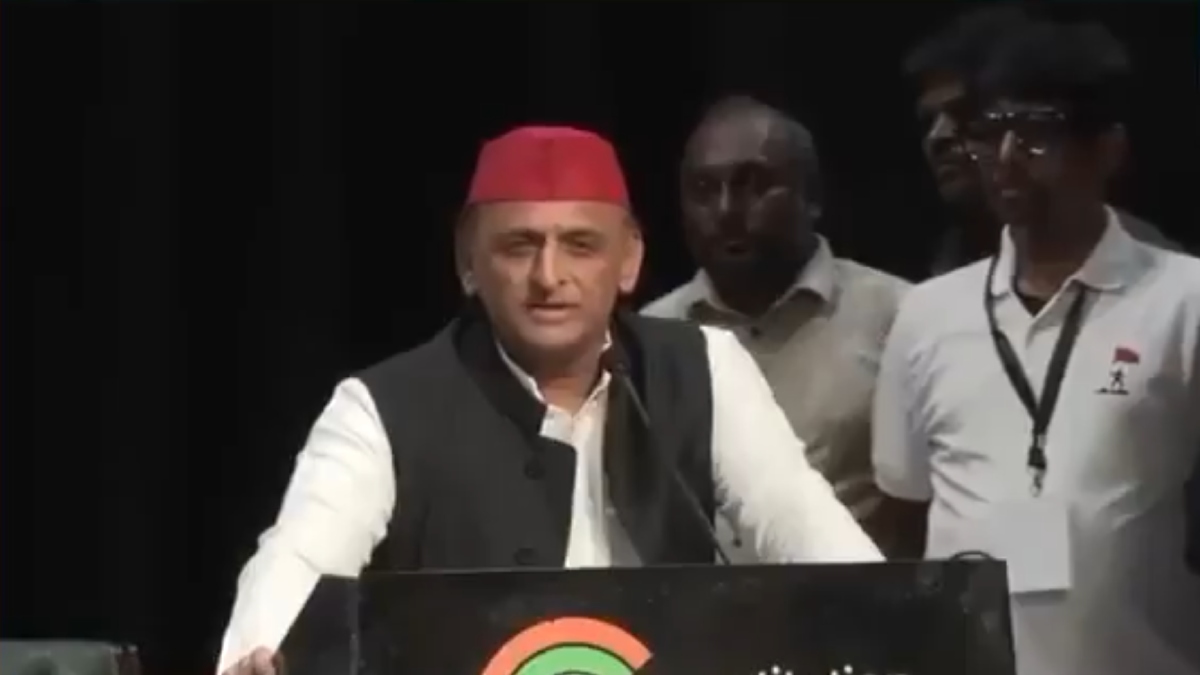
Samajwadi (SP) chief Akhilesh Yadav surprised political analysts and audience members when he gave a fluent English speech at the launch of the book Vaiko in Parliament in New Delhi on Wednesday. Yadav is known for addressing public events in Hindi but his shift to English was a first for him and he received a warm welcome from those who came for the launch.
The event was held to celebrate the launch of Vaiko in Parliament, a compilation of the speeches of Marumalarchi Dravida Munnetra Kazhagam (MDMK) founder and veteran Tamil leader Vaiko during his tenure as an MP. The gathering of different political parties saw the presence of leaders from various parties and Vaiko's influence on regional and national politics. Also present was the Leader of Opposition in Lok Sabha and Congress MP Rahul Gandhi.
As soon as he opened the programme with the words “Vanakkam and Good Evening, Everyone,” the audience became aware of the message. And the Tamil greeting “Vanakkam” was the theme of the event that was a celebration of the political life of Tamil Nadu’s most respected leader.
Yadav began by congratulating Vaiko and his son Durai Vaiko for writing a book on parliamentary speeches. “First of all, I congratulate Vaiko Ji and his son for bringing in such a collection of his speeches from the Parliament. And I think, each and everybody sitting in the hall has been with Vaiko Ji and his son all their lives,” he said.
Durai Vaiko, currently the Principal Secretary of MDMK and representing Tiruchirappalli (Trichy) in the Lok Sabha, is the one that is spearheading the party’s legacy alongside his father. Vaiko’s publication in Parliament is seen as an attempt to preserve the veteran leader’s contributions to parliamentary debates and public life.
In his speech, Yadav fondly recalled his interactions with Vaiko in the parliament during their time together. He said the MDMK leader was a passionate parliamentarian who consistently advocated for the interests of the Tamil people.
"I still remember the times when I used to be with your senior leader in the House. He was such a passionate leader, who used to fight for Tamil people and their daily problems," Yadav said. He also thought back to Vaiko’s speeches in Tamil and the emotion and conviction with which he spoke to Parliament.
"I used to listen to him when he spoke in Tamil. I saw the emotion he was having in the speech." He said that language never was a barrier in understanding the sincerity behind Vaiko’s words.
The speech was impressive not only for its language but also for the message, which spoke of national unity and respect for India’s linguistic diversity. Yadav had to start out with a Tamil greeting and end in English to convey his point to the people of India and to make his message more accessible to a wider audience.
Vaiko has enjoyed a long political career. He was an early member of DMK and after the revolt in Dravida Munnetra Kazhagam (DMK) he started MDMK in 1994. Vaiko was a powerful orator in both Lok Sabha and Rajya Sabha and supported Tamil rights, federalism, and regional autonomy and was respected across all parties.
पढ़ा-लिखा नेता बिना टेलीप्रॉम्प्टर के भी अंग्रेज़ी में शानदार स्पीच दे सकता है। 🔥@yadavakhilesh#AkhileshYadav #EnglishSpeech #Leadership pic.twitter.com/2hBEO4mbUA
— @PranshuYadav ⭐ (@pranshu_ahir) August 5, 2026
The launch of Vaiko in Parliament was not only a literary event but also a celebration of parliamentary traditions and democratic debate. Leaders from various political backgrounds in different branches of the political spectrum came together to thank Vaiko and to demonstrate the need for keeping parliamentary speeches that document key debates and legislative history.
Akhilesh Yadav’s rare English address was one of the highlights of the evening, drawing commentary from political circles and social media. His Hindi speeches and parliamentary debates are usually spoken in Hindi, but his confident English comments were another aspect of his public speaking skills.
At the end of the day, what is important is more than the release of a book. It is to be seen that dialogue in languages, respect between political leaders, and the importance of parliamentary debates are at the heart of India’s democratic journey.