The Allahabad High Court on Saturday dismissed a petition by the Muslim student to wear a headscarf in school uniform and headscarf (without discrimination) for a Muslim student to wear the headscarf. A common dress code in an educational institution can be enforced in the name of uniformity and uniformity in the uniform and universal in a school uniform, says Allahabad High Court. The decision has raised the question of religious attire, individual rights and uniformity of educational uniformity.
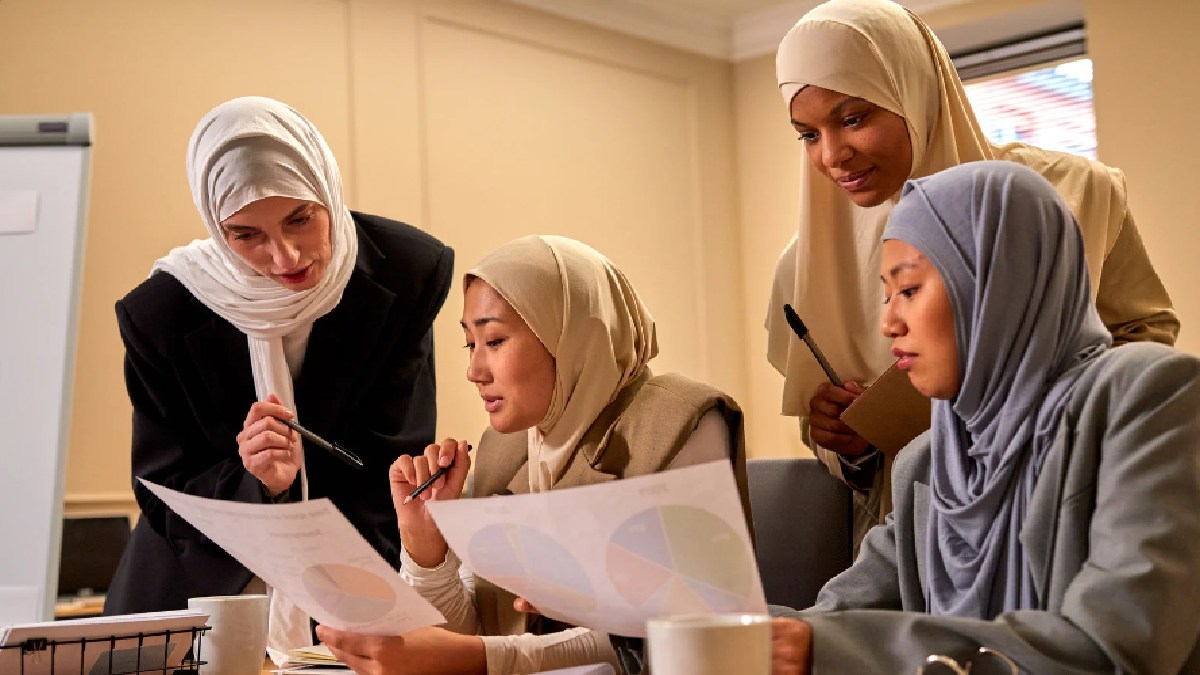
The case involved Sukaina Rizvi (a minor student at Tagore Public School in Prayagraj). She had come to court through her mother after she was admitted to Class XI. She wanted to continue wearing a headscarf while she attended school, saying that it was a fundamental part of her religious observance. The petition asked that she be allowed to wear the headscarf along with the school uniform.
A Bench of Judicial Justices J.J. Munir and Indrajeet Shukla rejected the appeal. The court held that a student cannot automatically be exempted from a prescribed uniform just on account of personal preference or a purported religious practice. Where a school's dress code is uniform, bona fide and non-discriminatory, the decision about the prescribed attire lies primarily within the administrative domain of the institution.
Rizvi, who attended the Attarsuiya-based school from Class VI to Class X and claimed that she had worn a headscarf in those years, was not opposed by the school authorities. She claimed that the school's earlier acceptance of the practice supported her request to continue wearing it after entering Class XI.
But the court did not accept the argument that previous tolerance caused the school to continue allowing the additional garment. The judges noted that the school may not have objected to the headscarf in the earlier years for several reasons. It could have been because of not enforcing its dress policy, because of courtesy or because it was administrative inertia. The court said the past could not hold the institution from enforcing the uniform policy.
The school maintained that its dress code applied equally to all students. If there was one student to add a piece of clothing to the prescribed uniform, that would be an exception to the rules, they said. Another female student belonging to the same religious community was also attending classes in the prescribed uniform without a headscarf.
The High Court placed a lot of emphasis on school uniforms. Not just to regulate clothing but discipline and institutional identity and the feeling of commonality for students are what uniforms are meant to do, the court said. Uniform dress codes are also a means of establishing a religion-neutral environment in an educational institution, it said.
Another aspect of the judgment was the student’s claim that wearing a headscarf was an essential religious practice of Islam. The Bench found that the petition did not provide sufficient factual or religious material to establish that wearing a headscarf inside the classroom was an obligatory practice and that failure to do so would fundamentally jeopardize the student’s faith.
The court cited previous judicial decisions regarding wearing hijab by students in schools or colleges. It also cited the judgments of other High Courts including the Karnataka High Court's 2022 Full Bench decision on hijab and school or college dress codes. Allahabad High Court called the Karnataka judgment persuasive and said it found no reason to take a different position in the present matter.
The ruling also distinguishes between a school changing its uniform and an individual student asking to add an item to the school's uniform. In this case, the school did not change its attire. That request was for an individual to break from the common dress code.
The judges also pointed out photographs given to them by students from different backgrounds such as girls from the Muslim community, attending the school wearing the prescribed uniform and without headscarves. This was relevant to school’s argument that the dress code was being implemented as a general policy which was not targeted at a particular religious group.
The decision underscores the ongoing legal tension between freedom of religion, individual freedom of expression and institutional requirements. While constitutional protections allow individuals to practice and express their faith there are legitimate norms that would make the state of law apply equally and at least in the case of general institutionalism.
The Allahabad High Court’s ruling is of course based on uniformity and non-discriminatory enforcement rather than individual exemptions based on a student’s religious and personal preference. It will become part of the broader legal and public conversation regarding religious attire in schools and the ability for schools to regulate students’ clothing.
In schools the ruling highlights a need for clear and consistent dress policy that is clearly defined in the policy and enforced. For students and parents it is a reminder that there is the ability for exceptions to institutional rules based on the particular circumstances, the claimed right being asserted and the legal basis for it to be seen as essential in the context of the constitutional context.