The Assam flood situation is also getting worse with 47 dead as heavy rains and overflowing rivers continue to wreak havoc in the state. More than 7.21 lakh people have been affected by the floods and thousands have been displaced to relief camps while damaging houses, roads, bridges, and agricultural land in Assam.
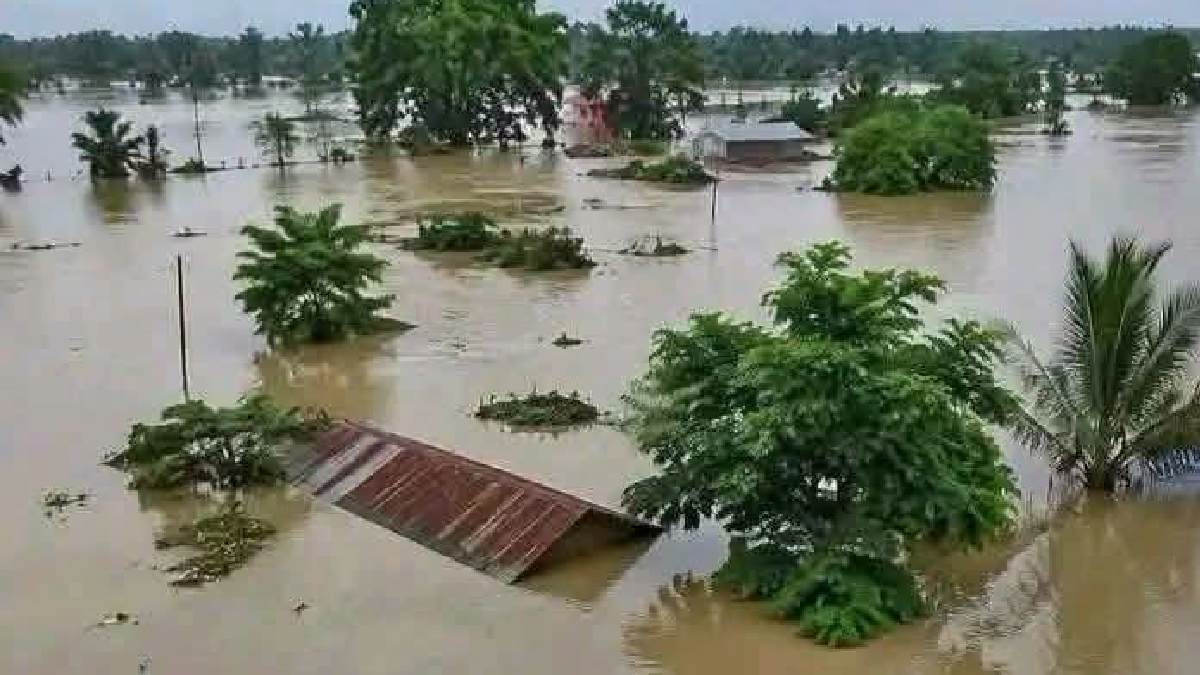
Many districts are still submerged as large rivers like the Brahmaputra and its tributaries continue to flow above the danger level.
Rescue and relief teams have expanded the search and rescue efforts with assistance from the State Disaster Response Force (SDRF), National Disaster Response Force (NDRF), Indian Army, and local volunteers and disaster relief agencies.
The Assam State Disaster Management Authority (ASDMA) said floodwater has inundated hundreds of villages and disrupted transportation, electricity supply, and communication networks in many areas, blocking roads and local communication systems. Schools have been closed in many of the flood-hit areas and road connections have been severely disrupted because of waterlogging and damaged infrastructure.
Thousands of displaced people have taken refuge in relief camps operated by the government. Food, drinking water, medical treatment, and other basic supplies have been supplied to families living in these camps. But continuous rainfall has made it difficult for rescue teams to reach remote villages.

Floods have also done immense damage to agriculture, with large swaths of cropland remaining underwater. Farmers are also hurting badly because standing crops have been destroyed during the peak agricultural season. Losses to farmers have left them at a disadvantage and unable to pay back loans.
Wildlife habitats have also been affected. Rising water levels have forced the animals in Assam’s protected areas (Kaziranga National Park, for example) to move to higher ground. Forest officials are monitoring wildlife movement and taking measures to minimize animal casualties on nearby highways.
Chief Minister Himanta Biswa Sarma has been closely monitoring the flood situation and has instructed officials to ensure continuous relief and rescue operations. District administrations should assist families in need immediately and maintain adequate supplies in relief camps.
The IMD has forecast additional rainfall for parts of Assam in the coming few days, and residents should be wary of rising flood levels and take evacuation advisories seriously.
Emergency teams are monitoring river levels consistently throughout the day and engineers are assessing embankments for signs of breaches. People should avoid flooded roads, keep updated through official weather bulletins, and cooperate with local authorities in evacuation efforts.
Assam experiences annual monsoon floods due to heavy rainfall in the Brahmaputra basin. When annual rains flood the fertile plains, they are replenished, but extreme rainfall events have become increasingly severe, affecting millions of people and causing significant economic losses.
With rescue efforts continuing and weather conditions remaining uncertain, the focus remains on safeguarding lives, restoring essential services, and providing timely assistance to those impacted by one of the state’s most challenging flood seasons.